


 New York Legalizes Medical Aid in Dying for Terminally Ill Patients
  Pentagon Ends Military Education Programs With Harvard University
  Trump Backs Nexstar–Tegna Merger Amid Shifting U.S. Media Landscape
  Netanyahu to Meet Trump in Washington as Iran Nuclear Talks Intensify
  U.S.-India Trade Framework Signals Major Shift in Tariffs, Energy, and Supply Chains
  Nighttime Shelling Causes Serious Damage in Russia’s Belgorod Region Near Ukraine Border
  Trump Signs Executive Order Threatening 25% Tariffs on Countries Trading With Iran
  India–U.S. Interim Trade Pact Cuts Auto Tariffs but Leaves Tesla Out
  Trump Lifts 25% Tariff on Indian Goods in Strategic U.S.–India Trade and Energy Deal
  Norway Opens Corruption Probe Into Former PM and Nobel Committee Chair Thorbjoern Jagland Over Epstein Links
  TrumpRx Website Launches to Offer Discounted Prescription Drugs for Cash-Paying Americans
  Iran–U.S. Nuclear Talks in Oman Face Major Hurdles Amid Rising Regional Tensions
  Trump Signs “America First Arms Transfer Strategy” to Prioritize U.S. Weapons Sales
  Trump Endorses Japan’s Sanae Takaichi Ahead of Crucial Election Amid Market and China Tensions
  Trump Allows Commercial Fishing in Protected New England Waters
  Trump Says “Very Good Talks” Underway on Russia-Ukraine War as Peace Efforts Continue
  China Warns US Arms Sales to Taiwan Could Disrupt Trump’s Planned Visit


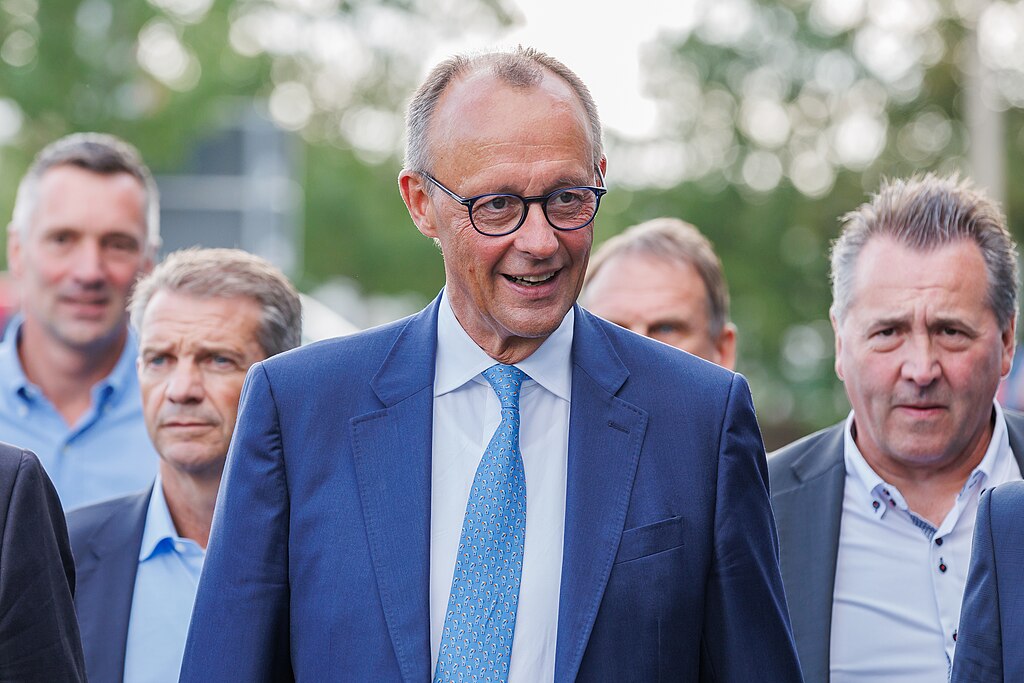
Friedrich Merz’s conservatives won Germany’s national election, yet before securing a coalition, he issued a directive to outgoing Chancellor Olaf Scholz, demanding consultation on all major decisions. His assertive approach sparked backlash, with Bild dubbing it “Conservatives want to put Scholz on a leash.”
Merz’s Christian Democratic Union (CDU) secured 28.5% of the vote but must find a coalition partner to form a government. Excluding the far-right Alternative for Germany (AfD), their only option is Scholz’s SPD, which remains skeptical of Merz’s leadership style. Critics fear his aggressive tactics could stall negotiations, leaving Germany politically adrift during economic struggles and global uncertainty.
Supporters argue that Germany needs strong leadership, especially with a potential shift in U.S. foreign policy under a new Trump administration. Merz has wasted no time engaging with global leaders, dining with French President Emmanuel Macron. He portrays himself as the face of change, advocating stricter migration policies and economic reform. However, his brash tone and rigid stances, such as an initial demand for mass migrant detentions, have led to accusations of authoritarian tendencies.
His 31-page parliamentary filing questioning civil society groups’ political neutrality raised concerns within the SPD and Greens, with some calling it undemocratic. Even within the CDU, voices caution against alienating potential allies.
Merz has already backtracked on key policies, including foreign affairs and migration, signaling unpredictability. His past ultimatum on Taurus missile deliveries to Ukraine later softened, fueling doubts about his consistency.
As the transition unfolds, Scholz’s government dismissed Merz’s demands, opting to engage with world leaders independently. The SPD warns Merz to recalibrate his approach if he hopes to lead, as skepticism over his suitability for chancellor grows.













