


 Alaska Air Q3 Outlook Misses Estimates as Higher Fuel Costs Weigh on Profit Forecast
  OpenAI Australia Data Center Switches Cooling Strategy After Recycled Water Plan Fails
  Australia ASIC Tightens Auditor Oversight After KPMG Leak Scandal
  Volkswagen Cuts 2026 Revenue Outlook as China Weakness, Trade Risks Weigh
  Wistron Opens $700M Texas AI Factory to Build Nvidia GB300 Superchips
  Amkor Stock Surges 17% After $1.5 Billion Nvidia AI Packaging Partnership
  Domino’s Weighs Appeal After Australian Court Rules Workers Were Misled on Pay
  Judge Approves Anthropic’s $1.5 Billion AI Copyright Settlement With Authors
  Coca-Cola Raises Diet Coke Prices in India as Iran Conflict Disrupts Can Supply
  Intel, AMD Seek Long-Term China Server CPU Deals as AI Demand Drives Supply Crunch
  Scandinavian Tobacco Group Sells BREAK and Moro Brands to Japan Tobacco for €176 Million
  Nvidia Reveals 9.3% Stake in AI Cloud Firm Nebius Following $2 Billion Investment
  AMD Unveils Helios AI Servers to Challenge Nvidia as OpenAI Adopts New Platform
  SAP Beats Q2 Revenue Estimates as Cloud Backlog and Business AI Demand Drive Growth.
  Nike Shifts China Online Sales Strategy to Boost Brand and Fight Local Rivals
  Morgan Stanley Downgrades Adobe, Workday as AI Transition Raises Growth Concerns


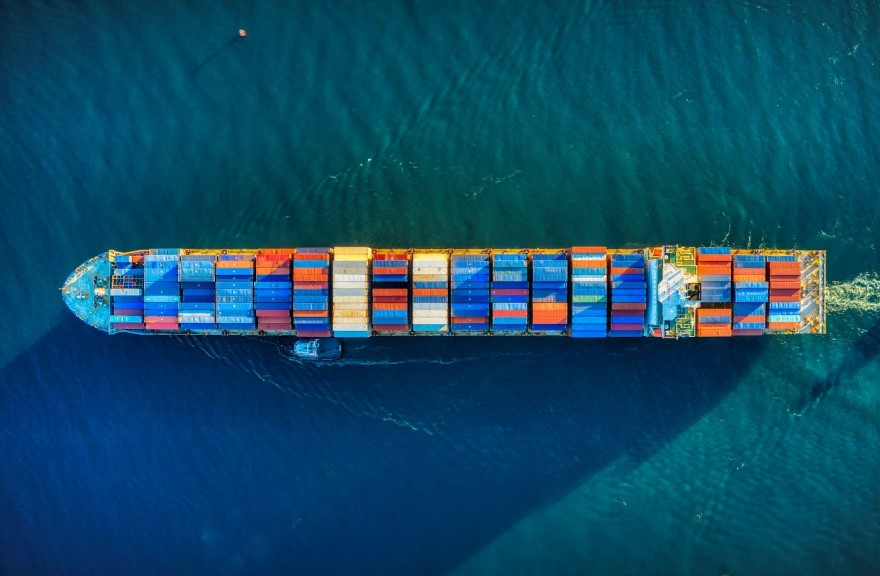
As a network of interconnected and interdependent parts, the supply chain is an extremely delicate system.
It is enough for one of them to fail to generate a domino effect that interrupts the proper operation of the chain, affecting the entire market and even the global economy.
That is what happened with the coronavirus pandemic, which hit practically all industries, paralyzing a large part of the supply chains and enormously reducing the efficiency of those that continued operating.
All this, combined with sanitary restrictions that limited container capacity and translated into a shortage of containers, led to a historic rise in shipping freight rates that reached its peak in the last quarter of 2021 when it reached $10,361.
Consequences on the container rate
According to a Statista study, the increase in freight rates "has not only served to cover rising costs", as shipping companies have reported "record operating profit margins" since the start of the pandemic.
Also, according to Statista, "in 2021 alone, the global container shipping industry made an operating profit of $110 billion. This means, almost three times more than what it earned during the previous 10 years combined.
On the other hand, some logistics companies point out in their 2022 annual report that, as container costs soared after the COVID-19 outbreak due to the shortage of containers, retailers and importers started to anticipate potential congestion and delay increases in the second half of 2022.
The progressive alignment of supply and demand, together with the energy crisis, inflation and reduced demand, will undoubtedly have an impact on "the container industry in 2023". But what can we expect this year?
Container shipping forecast in the short, medium and long term
Freight rate war
It may point to an all-out price war. They do not foresee an end to vessel and container capacity constraints, but they do estimate an improvement that that will trigger a price battle between the main players in the ocean freight market.
Moreover, it is expected that in the first half of 2023, freight forwarders will be able to trade with plenty of room for negotiation. Also, that contract rates will decrease as spot rates continue to fall.
Inflation and lack of consumer confidence
Almost all indicators point to a decline in global consumption, which will have a more noticeable impact during the first half of the year. This will translate into a greater availability to buy shipping containers in the main ports.
Further strikes
The year 2023 will continue to be a year of strikes, as a consequence of rising inflation and the obvious pressure on workers' pockets.
Funnel Effect in Container storage
Inflation and low demand will lead to an oversupply of container storage in major seaports, which will have an impact on the container price.
New container ships from 2024
This will be the year of the arrival of modern and larger container ships. Most of those, ordered by the major shipping lines, will arrive in 2024, when they are expected to reach close to 3 million TEUs.
Low contract rates due to spot rates
Looking at the long-term outlook, the vast majority believes that long-term contract rates will gradually rise this year. This is the year in which contract rates are expected to align with spot rates.
As supply and demand balance out, shippers will favor short-term contracts. Once these stabilize, long-term contracts will become much more affordable.
New supply chain models
There is also some consensus on the changes in supply chain models that will take place from now on.
Far from the globalized models used in the pre-pandemic era, companies are beginning to opt for models such as near-sourcing, nearshoring and reshoring to bring production closer to the final consumer.
This change in sourcing strategies will rebalance the supply chain.
The greater importance of friendshoring
Friendshoring or allyshoring, words used to refer to the transfer of logistics chains to countries with shared values, will also characterize the medium and long term in container transport.
Independence from China
Over the next decade, everything points to a progressive abandonment of China as the main manufacturing and production center that will start with a diversification to other Asian countries such as India or Vietnam.
This factor, like others listed in this article, will have a direct impact on long-term container transport contracts. This is a sector that is already undergoing far-reaching changes, which will continue in this decade of the 2020s.







