


 Russia Downs Over 50 Drones Near Moscow Ahead of Victory Day Ceasefire
  Trump Says U.S. Navy Destroyers Passed Strait of Hormuz Under Iranian Fire
  U.S., South Korea Launch Shipbuilding Partnership Initiative
  Trump Inspects Lincoln Memorial Reflecting Pool Renovation in Washington
  Trump Administration Releases New UFO Files and Apollo Mission Records
  U.S.-China Beef Trade Deal Hopes Rise Ahead of Trump-Xi Summit
  Mexico President Claudia Sheinbaum Reconsiders Early School Closure Plan Ahead of 2026 World Cup
  Lula and Trump Talks Signal New Phase in Brazil-US Relations
  Judge Delays SEC Settlement With Elon Musk Over Twitter Stock Disclosure Case
  US-Iran Ceasefire Under Pressure as Fresh Strait of Hormuz Clashes Shake Oil Markets
  US Launches Retaliatory Strikes on Iran Amid Rising Strait of Hormuz Tensions
  Pope Leo Calls for Peace as Vatican Seeks Better Ties With U.S.
  Trump-Xi Beijing Summit to Focus on Trade, Taiwan, and Boeing Deal
  Rubio Presses Italy Over Iran Support as Tensions Test U.S.-Italy Alliance
  US Revises UN Resolution on Iran Strait of Hormuz Attacks Amid Russia-China Opposition
  Ukraine-Russia Ceasefire Confirmed as Prisoner Swap Deal Advances
  Trump Announces Russia-Ukraine Ceasefire for May 9-11 Amid Ongoing Peace Talks


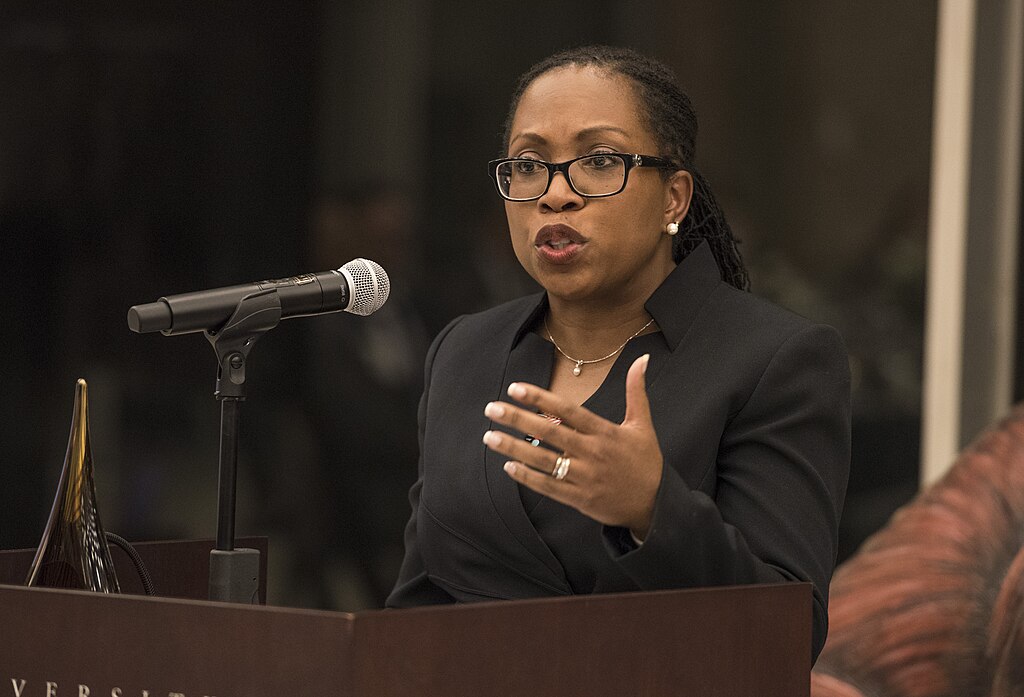
During recent Supreme Court deliberations on Tennessee's prohibition of gender-affirming medical treatments for minors, Justice Ketanji Brown Jackson drew a provocative parallel between such bans and historical prohibitions on interracial marriage. This comparison has ignited significant debate and public discourse.
Historical Context and Legal Parallels
Justice Jackson's analogy references the Supreme Court's landmark 1967 decision in Loving v. Virginia, which invalidated state laws banning interracial marriage. She suggested that, similar to those outdated prohibitions, current bans on gender-affirming care for minors may infringe upon constitutional equal protection rights. This perspective challenges the constitutionality of such bans, framing them as discriminatory practices.
Divergent Judicial Perspectives
The Court's conservative justices exhibited skepticism toward this viewpoint. Chief Justice John Roberts questioned the judiciary's role in medical regulatory decisions, implying that such matters might be better suited for legislative bodies. Justice Neil Gorsuch's silence during the proceedings left his stance unclear, adding an element of unpredictability to the Court's eventual ruling.
Public Reaction
Justice Jackson's comparison has elicited a spectrum of responses on social media:
-
@EqualityAdvocate: "Justice Jackson is spot on. Discrimination in any form is unacceptable."
-
@TraditionKeeper: "Equating medical procedures with marriage laws is a flawed analogy."
-
@HistoryBuff23: "Important to remember that bans on interracial marriage were once 'lawful' too. Progress requires challenging unjust laws."
-
@ParentProtect: "Protecting children from irreversible decisions isn't discrimination; it's responsibility."
-
@LegalEagle: "Interesting legal perspective. Shows how interpretations of equal protection can evolve."
-
@TransRightsNow: "Grateful for justices who understand the real-life impact of these laws on trans youth."
Implications for Transgender Rights
The Court's decision, anticipated by July, holds significant implications for transgender rights nationwide. A ruling upholding Tennessee's law could embolden other states to enact similar legislation, potentially restricting access to gender-affirming care for minors across the country. Conversely, striking down the law could affirm and expand protections for transgender individuals under the Constitution's equal protection clause.







