


 Valero Port Arthur Refinery Explosion Prompts $1M Lawsuit Over Worker Safety Negligence
  Lynas Rare Earths Signs Vietnam Deal with LS Eco Energy to Boost Magnet Metal Production
  Goldman Sachs Raises ECB Rate Hike Forecast Amid Persistent Energy-Driven Inflation
  Nanya Technology Shares Surge 10% After $2.5 Billion Private Placement from Sandisk and Cisco
  Citi Names Eric Farina and Rob Cascarino to Lead Global Infrastructure Financing Group
  AI is driving down the price of knowledge – universities have to rethink what they offer
  SpaceX IPO Filing Expected This Week as Valuation Could Surpass $75 Billion
  Meta Ties Executive Pay to Aggressive Stock Price Targets in Major Retention Push
  Glastonbury is as popular than ever, but complaints about the lineup reveal its generational challenge
  Google's TurboQuant Algorithm Sends Memory Chip Stocks Tumbling
  Britain has almost 1 million young people not in work or education – here’s what evidence shows can change that
  Time to buy local: war fuel price shocks reveal the folly of a long food supply chain
  SK Hynix Eyes Up to $14 Billion U.S. IPO to Fund AI Chip Expansion
  NAB Plans to Cut 170 Jobs While Expanding Offshore Operations
  The ghost of Robodebt – Federal Court rules billions of dollars in welfare debts must be recalculated


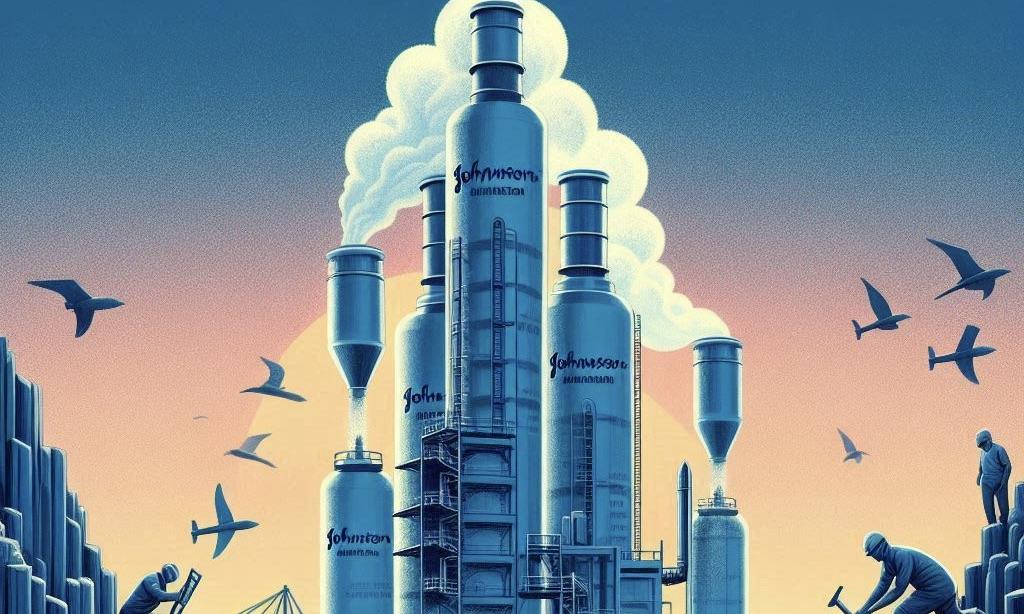
Johnson & Johnson's proposed $6.5 billion settlement to resolve tens of thousands of talc-related cancer lawsuits has surpassed a critical voting threshold, with over 75% of claimants reportedly in favor. However, legal challenges continue to loom as the company seeks to finalize the agreement.
J&J Reaches Critical Support in $6.5B Talc Settlement Vote, Awaiting Final Tally Amid Legal Scrutiny
Bloomberg reports that Johnson & Johnson has surpassed a critical support threshold for its proposed $6.5-billion settlement of tens of thousands of lawsuits claiming its infant powder and other talc products caused cancer.
According to Bloomberg, J&J established a challenge for its third attempt to resolve the litigation by placing a subsidiary in bankruptcy protection. More than 75% of claimants voted in favor of the proposal.
Bloomberg cited sources familiar with the negotiations, but Reuters has not independently verified the report. According to sources who spoke with Reuters, the votes are still being counted.
J&J spokesperson Clare Boyle stated that the company could not comment because the vote count still needed to be definitive. The company has previously expressed its confidence that its settlement proposal would ultimately garner sufficient support from plaintiffs to be pursued.
J&J is currently facing lawsuits from approximately 61,000 plaintiffs who have claimed that its baby powder and other talc products were contaminated with asbestos, resulting in ovarian and different types of cancer. J&J has denied the allegations and has stated that its products are secure.
The company established the 75% vote percentage as the benchmark for pursuing another bankruptcy proposal, which is anticipated to occur shortly soon, per a provision in U.S. bankruptcy law. The deadline for voting was July 26.
However, the subsidiary must obtain the ballots of 75% of the claimants to request that a bankruptcy judge enforce the agreement on all claimants.
Bankruptcy judges can enforce global settlements that irrevocably halt all related lawsuits and prohibit filing new ones. Without bankruptcy, any settlement that J&J achieves with specific clients would continue to grant holdouts or prospective plaintiffs the right to file a lawsuit, thereby exposing the company to the potential multibillion-dollar verdicts that motivated it to implement a two-step process in the first place.
J&J Faces Legal Battles Over Third Talc Settlement Attempt as Critics Label It a ‘Fake Bankruptcy’
The company has been embroiled in a contentious dispute with attorneys who oppose its third attempt to resolve the litigation through this maneuver.
Andy Birchfield, who represents plaintiffs opposed to the settlement, referred to J&J's voting procedure as a "fake bankruptcy election" that would not be able to support itself in court.
"No matter what tally is announced, I expect it will be challenged and eventually rejected so that juries can decide what to do about J&J's egregious conduct," Birchfield said.
J&J's third bankruptcy settlement attempt is distinct from its previous endeavors in that it exclusively addresses ovarian and other gynecological cancer claims. This approach is based on J&J's prior settlements with state attorneys general and individuals who had sued after developing mesothelioma, a rare form of cancer that is associated with asbestos exposure.
J&J's bankruptcy strategy continues to encounter legal obstacles. The Supreme Court recently ruled in Purdue Pharma's bankruptcy, which restricts the ability of courts to halt lawsuits against individuals and companies such as J&J that are not insolvent without the plaintiffs' consent.
J&J has stated that the Purdue judgment does not affect its settlement proposal, as U.S. bankruptcy law includes explicit legal protections for asbestos defendants who have not filed for bankruptcy. J&J has asserted that it is eligible for those safeguards because the lawsuits typically contend that the talc used in its products was extracted from underground mineral deposits containing asbestos.
According to certain legal professionals, J&J may not be eligible for the specific legal protections designed to encourage settlement payments by insurers with indirect liability for asbestos litigation.
Plaintiffs' attorneys also oppose J&J's strategy, contending that its most recent settlement should fail for the same reasons as its previous two. Even though the subsidiary was not in "financial distress," the courts rejected J&J's initial two talc bankruptcies. Consequently, J&J must confront comparable objections in this bankruptcy attempt.
Congress has proposed legislation restricting companies' ability to protect themselves from litigation by declaring a shell company bankrupt.







