


 Japan Election 2026: Sanae Takaichi Poised for Landslide Win Despite Record Snowfall
  Antonio José Seguro Poised for Landslide Win in Portugal Presidential Runoff
  Israel Approves West Bank Measures Expanding Settler Land Access
  China Warns US Arms Sales to Taiwan Could Disrupt Trump’s Planned Visit
  Jack Lang Resigns as Head of Arab World Institute Amid Epstein Controversy
  Taiwan Says Moving 40% of Semiconductor Production to the U.S. Is Impossible
  US Pushes Ukraine-Russia Peace Talks Before Summer Amid Escalating Attacks
  Trump Lifts 25% Tariff on Indian Goods in Strategic U.S.–India Trade and Energy Deal
  Anutin’s Bhumjaithai Party Wins Thai Election, Signals Shift Toward Political Stability
  Ghislaine Maxwell to Invoke Fifth Amendment at House Oversight Committee Deposition
  Trump Administration Appeals Court Order to Release Hudson Tunnel Project Funding
  Ohio Man Indicted for Alleged Threat Against Vice President JD Vance, Faces Additional Federal Charges
  Federal Judge Restores Funding for Gateway Rail Tunnel Project
  Nicaragua Ends Visa-Free Entry for Cubans, Disrupting Key Migration Route to the U.S.
  U.S. Lawmakers to Review Unredacted Jeffrey Epstein DOJ Files Starting Monday
  Bosnian Serb Presidential Rerun Confirms Victory for Dodik Ally Amid Allegations of Irregularities
  Bangladesh Election 2026: A Turning Point After Years of Political Suppression


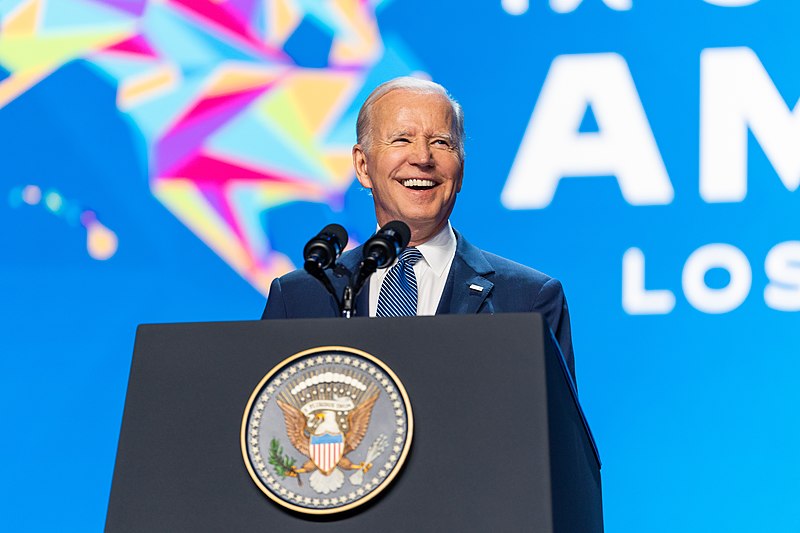
This week, US President Joe Biden signed legislation for the country’s Asian American Pacific Islander community. Biden signed the bill that would establish a museum for Asian Pacific history.
In a ceremony at the White House East Room Monday, Biden signed the legislation that would establish a museum dedicated to Asian Pacific history and culture, which would document the history and culture of the community in the country.
“I am honored to sign into law something that is long overdue and – the National Museum of Asian and Pacific American History and Culture here in Washington DC,” said the US leader in his remarks.
“Museums of this magnitude and consequence are going to inspire and educate. More than anything else, it is going to help people see themselves in the story of America – a story that makes us a better America, and it has made us a better America,” said Biden.
Vice President Kamala Harris, House Speaker Nancy Pelosi, and other members of Congress were also present at the signing.
In her remarks, Harris also talked about her Indian heritage, and that the museum will also tell the story of the hardships the Asian American and Pacific Islander community has faced in the country throughout its history, such as the Japanese internment camps and the Chinese Exclusion Act, the discrimination against South Asians following the 9/11 attacks among others.
The US leader also visited Philadelphia this week to speak at the AFL-CIO convention. Biden assured those in attendance that tackling the growing problem of inflation is a priority in his administration as the country grapples with rising prices.
In his remarks, Biden acknowledged that inflation is “sapping the strength of a lot of families,” which was worsened by Russia’s invasion of Ukraine.
However, despite assuring the public that his administration is prioritizing how to ease inflation, Biden admitted that he is running out of options to ease the price hikes due to an evenly-divided Senate and congressional Republicans determined to obstruct.
Biden touched on how these issues could make a difference in the upcoming midterms which would determine whether the Democratic Party maintains its majority or loses one or both chambers of Congress to the GOP.













