


 Hantavirus Cruise Ship Outbreak Triggers Global Health Alert
  Debate over H-1B visas shines spotlight on US tech worker shortages
  Morgan Stanley Bets on Optical Component Stocks in Greater China Tech Sector
  Broadcom Eyes $35 Billion AI Chip Financing Deal With Apollo and Blackstone
  Nike Tariff Refund Lawsuit Sparks Consumer Backlash Over Price Increases
  Columbia Student Mahmoud Khalil Fights Arrest as Deportation Case Moves to New Jersey
  Every generation thinks they had it the toughest, but for Gen Z, they’re probably right
  UOB Q1 Profit Meets Expectations as Loan Growth Offsets Lower Interest Rates
  Why a ‘rip-off’ degree might be worth the money after all – research study
  Time to buy local: war fuel price shocks reveal the folly of a long food supply chain
  Infineon Raises 2026 Outlook as AI Data Center Chip Demand Surges
  Disaster or digital spectacle? The dangers of using floods to create social media content
  Heritage, desire and diplomacy: why China still values scotch whisky
  Maersk Q1 Earnings Beat Expectations as Iran Conflict Clouds Shipping Outlook
  Sony Forecasts Lower 2027 Profit Despite Strong Music and Sensor Growth
  Booked to travel through the Middle East? Here’s why you shouldn’t cancel your flight


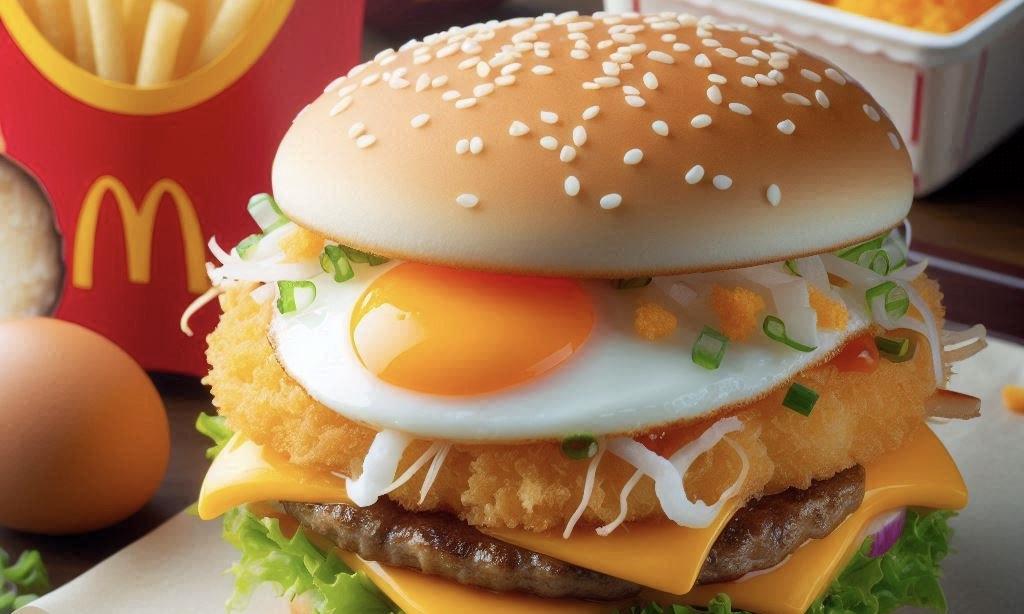
McDonald’s Japan has brought back the popular Tsukimi Burger, but is it worth paying more than double the price of the Egg Cheeseburger? A detailed comparison of ingredients and value sheds light on whether the Tsukimi Burger lives up to the hype.
From Tradition to Trend: McDonald’s Tsukimi Burger Faces Value Test Against Egg Cheeseburger
The latest release of McDonald’s Tsukimi Burger raises the question: is it over-hyped marketing?
The Japanese tradition of “tsukimi,” or “moon-viewing,” was once a quiet occasion in early autumn, with people enjoying tsukimi dango (moon-viewing dumplings) while admiring the night sky. Over the years, however, this custom has evolved into a culinary trend, with fast-food chains offering special seasonal items, often featuring eggs as the star ingredient. In the culinary world, “tsukimi” has become synonymous with dishes containing eggs, as the round yolk resembles the moon.
According to SoraNews24, McDonald’s first introduced its Tsukimi Burger in 1991, and since then, it has maintained its reputation as one of the go-to places for moon-viewing-themed items. However, with the Tsukimi Burger now a recurring staple, the question arises: is McDonald’s relying too much on tradition, or is it still offering value?
P.K. Sanjun, a long-time fan of McDonald’s offerings, decided to find out. Recently, he’s been enjoying the Egg Cheeseburger, or “Eguchi,” which debuted in 2015 at a budget-friendly price. Even though the Eguchi is still available for a modest 240 yen, the new Tsukimi Burger comes in at 490 yen—over twice the price. Curious to see if the Tsukimi Burger justifies the price difference, P.K. purchased both to compare.
Eguchi Offers Better Value Than McDonald’s Tsukimi Burger Despite Premium Ingredients
In terms of weight, the Eguchi surprisingly outweighed the Tsukimi Burger, coming in at 166 grams versus the Tsukimi’s 151 grams. Although the Tsukimi Burger boasted sesame seed buns and a creamy tomato sauce, the patties and eggs in both burgers appeared identical. The Tsukimi Burger does include bacon, which is typically more expensive than the Eguchi’s cheese, pickles, and onions.
After a thorough comparison, P.K. concluded that while the Tsukimi Burger does offer some premium ingredients, the price difference between the two isn’t easily justified. For those who value the seasonal experience of tsukimi, the Tsukimi Burger may be worth the extra yen. However, for cost-conscious consumers, the Eguchi provides a similar experience at a better value, leaving more room to explore other seasonal tsukimi offerings.
Ultimately, whether the Tsukimi Burger is worth the hype depends on how much value one places on its seasonal story and premium touches.







