


 OpenAI AI Agent Reportedly Breached Hugging Face, Raising AI Safety Concerns
  SAP Beats Q2 Revenue Estimates as Cloud Backlog and Business AI Demand Drive Growth.
  Rubio Rejects AI ‘Kill Switch’ Claims as U.S. Defends American Technology Abroad
  Samsung Eyes Up to $1.14 Billion Investment in AI Startup Mistral
  Intel Stock Slips After Earnings Rally Despite Strong AI-Driven Revenue Growth
  Cathay Pacific Sees H1 Profit Surge on Strong Travel Demand
  Macquarie Names Greg Ward as CEO, Signaling Stability and Strategic Continuity
  Alaska Air Q3 Outlook Misses Estimates as Higher Fuel Costs Weigh on Profit Forecast
  Coca-Cola Raises Diet Coke Prices in India as Iran Conflict Disrupts Can Supply
  Elon Musk Fuels SpaceX-Tesla Merger Speculation After Earnings Call
  Domino’s Weighs Appeal After Australian Court Rules Workers Were Misled on Pay
  Nike Shifts China Online Sales Strategy to Boost Brand and Fight Local Rivals
  Intel, AMD Seek Long-Term China Server CPU Deals as AI Demand Drives Supply Crunch
  IBM Q2 Earnings Miss Estimates as Software Growth Offsets Infrastructure Weakness
  Volkswagen Cuts 2026 Revenue Outlook as China Weakness, Trade Risks Weigh
  Alphabet Q2 Earnings Beat Estimates as AI Spending, Google Cloud Growth Fuel Outlook


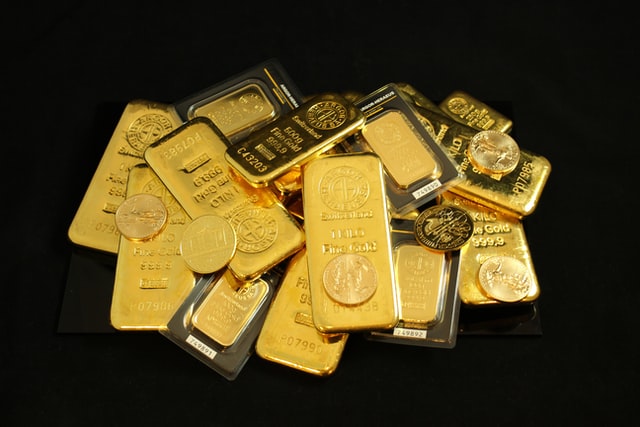
After attaining an all-time high of more than $2,000 per ounce in August 2020, the price of gold steadily decreased throughout the fourth quarter of that year. Despite starting the year above $1,900 per ounce, gold has struggled to regain its historic highs for 2021.
The expectation of interest rate hikes, monetary tightening by the US Federal Reserve (Fed), and the economic impact of previous global catastrophes have maintained gold in a range-bound trading range at $1,800 per tonne.
This article will explore the gold price predictions for next 5 years along with different facets that affect its price.
In the United States, the inflation rate has risen to 6.2%, the highest in 30 years. The Consumer Price Index (CPI) for the United Kingdom surpassed 4% in October, reaching 4.2%, according to figures released on November 17. It is the highest since 2011 and nearly twice the Bank of England's target rate of 2%.
As per World Gold Council data, gold steadied at $1,864 per ounce on November 17.
Gold Price Forecast for the Next Five Years: Long-Term Gold Outlook
Ole Hansen, Saxo Bank's Head of Commodity Strategy, said that precious metals such as gold and silver would trade higher in the next few years. This is because the commodity super-cycle rally raises the entire commodity sector.
He further points out that the danger of extended high inflation could boost the market demand for reliable assets like gold. He also stated that the worldwide climate change issue would keep prices high due to a lack of several critical commodities essential to traverse this transition effectively.
Hansen concluded, "Using a reasonable yearly growth rate of 5% for gold, I would not be astonished if the yellow metal traded beyond $2,300 in five years."
Last year, the Australian Government's Chief Economist forecasted that gold prices would fall by an estimated 4.3% per year after 2021. The price will reach $1,634 an ounce in 2023, given the global economy's revival and a rising interest rate.
"Rising real bond yields are projected to be a significant driver in reducing institutional investment demand for gold. As interest rates ascend, the opportunity cost of maintaining gold rises, reducing its appeal as a financial asset," it stated.
The World Bank anticipates that the price of an ounce of gold will decline to $1,663 in 2023 from $1,711 in 2022. Moreover, it will plunge to $1,623 and $1,584 in 2024 and 2025, respectively.
The Factors Influencing the Future of Gold Pricing
-
Inflation
According to a recent CNBC poll, investors are most concerned about inflation in 2022. Inflation has been slowly rising over the last year. There appears to be no end in sight since the primary drivers of inflation are all in place - supply chain concerns, manufacturing issues, loads of money from the Fed that hasn't yet reached the economy, and rising food prices.
In fact, inflation might become worse, and the Fed's minor interest rate hikes of 0.50% and 0.75% are insignificant compared to the recent 8.6% inflation.
-
Stock Market Recession
The stock market bubble has burst this year, and the effect could be disastrous because equities have never been as overpriced as they were, per the Buffett Indicator. Gold prices would certainly rise if the market began to face a correction or crash.
-
International Conflict
Global tensions may continue to escalate, putting a further burden on a previously well-oiled international supply system. Past data and core movers of precious metal valuations will likely continue to push gold up.
-
Debt in the United States
The currency's standing could also be jeopardized. The US federal debt is approaching $30 trillion. This enormous sum is now 150% greater than the current US GDP.
Record government deficits and increasing inflation weaken both the buying power of the currency and worldwide confidence in the dollar, putting the dollar's role as the world's reserve currency in jeopardy.
It further pushed the currency down as foreign countries and corporations decided to abandon the dollar in favor of a superior alternative.
Final Words
Some investors may want to preserve gold exposure in their portfolio for diversity and as a hedge against declining stocks and bonds. However, whether gold is a sound investment for you varies depending on your appetite for risk, the market forecast, and whether you anticipate it to rise or decrease further.
It is advisable to do your homework and remember that historic results are no guarantee of future results. Finally, never put money into investments that you cannot afford to lose.
This article does not necessarily reflect the opinions of the editors or management of EconoTimes







