


 Australia Launches Royal Commission Into Antisemitism After Bondi Beach Hanukkah Attack
  Russia Launches Massive Drone and Missile Attack on Ukraine’s Energy Infrastructure
  Trump Weighs New National Security Tariffs on Key U.S. Industries After Supreme Court Ruling
  Trump Weighs Potential U.S. Military Strike on Iran as Nuclear Talks Intensify
  Trump State of the Union 2026: Economy, Inflation, and Midterm Election Stakes
  Peter Mandelson Arrested in London Amid Jeffrey Epstein Ties Investigation
  Thousands March in Lyon After Killing of Far-Right Activist Quentin Deranque
  South Korea Urges Russian Embassy to Remove ‘Victory Will Be Ours’ Banner Ahead of Ukraine War Anniversary
  U.S. Ambassador Charles Kushner Barred From French Government Meetings Amid Diplomatic Dispute
  FedEx Sues U.S. Government for Refund of Trump-Era Emergency Tariffs After Supreme Court Ruling
  Ukraine Responds to U.S. Demarche After Novorossiysk Strike Impacts American Interests
  U.S. Imposes Steep Countervailing Duties on Solar Imports from India, Indonesia and Laos
  Islamic State Claims New Attacks on Syrian Army as Violence Escalates Under President Ahmed al-Sharaa
  Democrats Warn Trump’s China Tech Security Pause Threatens U.S. National Security
  Northeast Winter Storm Triggers State of Emergency, Travel Bans and Thousands of Flight Cancellations
  Mexico Kills ‘El Mencho’ in Major Military Raid, Escalating War on Cartels
  India and Brazil Strengthen Trade Partnership with New Mining and Steel Cooperation Pact


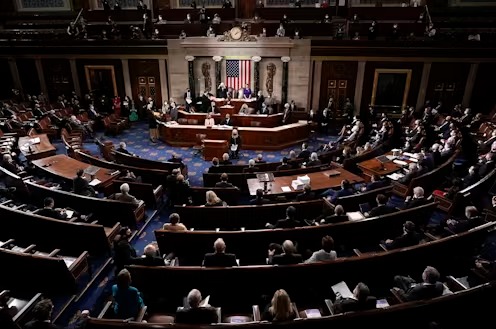
The U.S. House of Representatives narrowly failed to pass the ROTOR Act on Tuesday, delaying critical aviation safety reforms that would have mandated Automatic Dependent Surveillance-Broadcast (ADS-B) technology across aircraft fleets by 2031. Despite bipartisan support and emotional appeals from families of crash victims, the bill fell one vote short of the two-thirds majority required under fast-track legislative rules.
Lawmakers voted 264-133 in favor of the aviation safety bill, which had previously passed the Senate unanimously in December. However, 132 Republicans and one Democrat voted against the measure after the Pentagon raised last-minute concerns. The Department of Defense warned the legislation could create “significant unresolved budgetary burdens” and pose operational security risks to national defense activities.
The ROTOR Act was introduced following the January 2025 midair collision between an American Airlines regional jet and a U.S. Army Black Hawk helicopter over Washington, D.C., killing 67 people in the deadliest U.S. aviation disaster since 2001. The National Transportation Safety Board (NTSB) concluded that ADS-B technology could have prevented the crash by alerting pilots nearly a minute before impact. NTSB Chair Jennifer Homendy called the bill’s failure “despicable,” emphasizing that the agency has recommended mandatory ADS-B implementation for over 20 years.
ADS-B is a modern aircraft tracking and safety system designed to enhance situational awareness and prevent midair collisions, particularly in congested airspace. The proposed law would have required military aircraft to use ADS-B during routine training flights, though sensitive missions would have been exempt.
Victims’ families expressed devastation, arguing that misinformation contributed to the bill’s defeat. Meanwhile, House Transportation Committee Chair Sam Graves plans to introduce the ALERT Act, a broader aviation safety proposal critics say lacks strong ADS-B requirements.
Aviation groups, including the Air Line Pilots Association, pledged to continue advocating for expanded ADS-B mandates, stressing that improved situational awareness is essential to preventing future aviation disasters and saving lives.













