


 China Set to Hold Benchmark Lending Rates Steady for 15th Month
  US Treasury Buybacks Ease Global Bond Yield Surge
  Japan Inflation Rises, Boosting BOJ Rate Hike Bets
  BOJ Holds Rates at 1% as Inflation Outlook Eases, October Rate Hike Still Possible
  Trump Says Iran Talks Halted as Strait of Hormuz Dispute Fuels Oil Concerns
  BSP Sees Philippine Inflation Easing, Keeps Policy Options Open
  Asian Currencies Steady as Dollar Weakens After Treasury Bond Buybacks
  BOJ Minutes Signal More Rate Hikes as Inflation Risks Grow
  Chile Central Bank Holds Interest Rate at 4.5% as Inflation and Global Risks Persist


 Add as a preferred source on Google
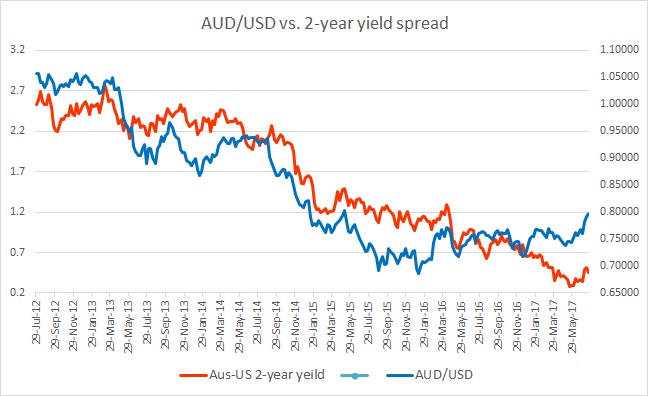
The chart above shows, how the relationship between AUD/USD and 2-year yield divergence has unfolded since 2012.
- It can be seen even with a naked eye, that the pair and the yield spread between 2-year treasury and 2-year Australian government bond have enjoyed a very close relationship.
- While the Reserve Bank of Australia (RBA) reduced rates after the financial crisis of 2008/09, it soon started increasing interest rates due to higher commodity prices and higher inflows from other western economies. However, as commodity prices started declining in 2011, RBA started reducing rates since the end of 2011.
- RBA reduced cash rates from 4.75 percent in 2011 to 2 percent by the summer of 2015. And the yield spread between the two countries declined from 2.53 percent 1.2 percent. During the same period, the Australian dollar declined from 1.056 against the USD to 0.728 against the dollar.
- The exchange rate bottomed in August around 0.69
- However, there has been divergence since then. Between now and the summer of 2015, the RBA reduced rates further by 50 basis points, while Fed raised rates by 100 basis points. The yield spread also declined from 120 basis points to just 46 basis points. However, the AUD/USD didn’t make further low, instead, it has moved higher from 0.728 in July 2015 to 0.8 as of today.
- We believe, that expectations of a rebound in commodities as well as Chinese economy are playing parts here. However, sooner or letter the due would have to converge, which we expect would come in terms of rate hikes from RBA and increase in the spread in favor of the Australian dollar.
FxWirePro launches Absolute Return Managed Program. For more details, visit http://www.fxwirepro.com/invest







