


 Nvidia Pauses AI Cloud Financing Deals Amid Antitrust Concerns
  HP Stock Drops 9% Despite Q3 Earnings Beat and Raised 2026 Outlook
  Pinterest Stock Falls as CFO Julia Brau Donnelly Resigns
  Apple’s Phil Schiller Steps Back as Leadership Shake-Up Accelerates
  Toyota Global Sales Fall as China Demand Slumps
  OpenAI Rejects Apple Trade Secret Theft Claims
  SpaceX Mobile Network Could Cost Up to $130 Billion, Bernstein Says
  MediaTek Shares Jump 10% on Nvidia’s $3.5 Billion Investment
  Meta Agrees to $18 Billion Settlement, Tightens Teen Social Media Rules
  Shein Hong Kong IPO to Raise $1.7 Billion at $26.5 Billion Valuation
  Amazon Secures 200 MW Wind Power Deals in Sweden
  Trump Buys SpaceX Shares After Record IPO
  Nvidia Options Price in $280 Billion Earnings Swing
  PayPal Shares Sink as $50 Billion Takeover Bid Collapses
  Google Expands Gemini Enterprise With AI Tools for Legal Sector
  South Korea Unveils Record $597 Billion 2027 Budget to Boost AI and Chips


 Add as a preferred source on Google
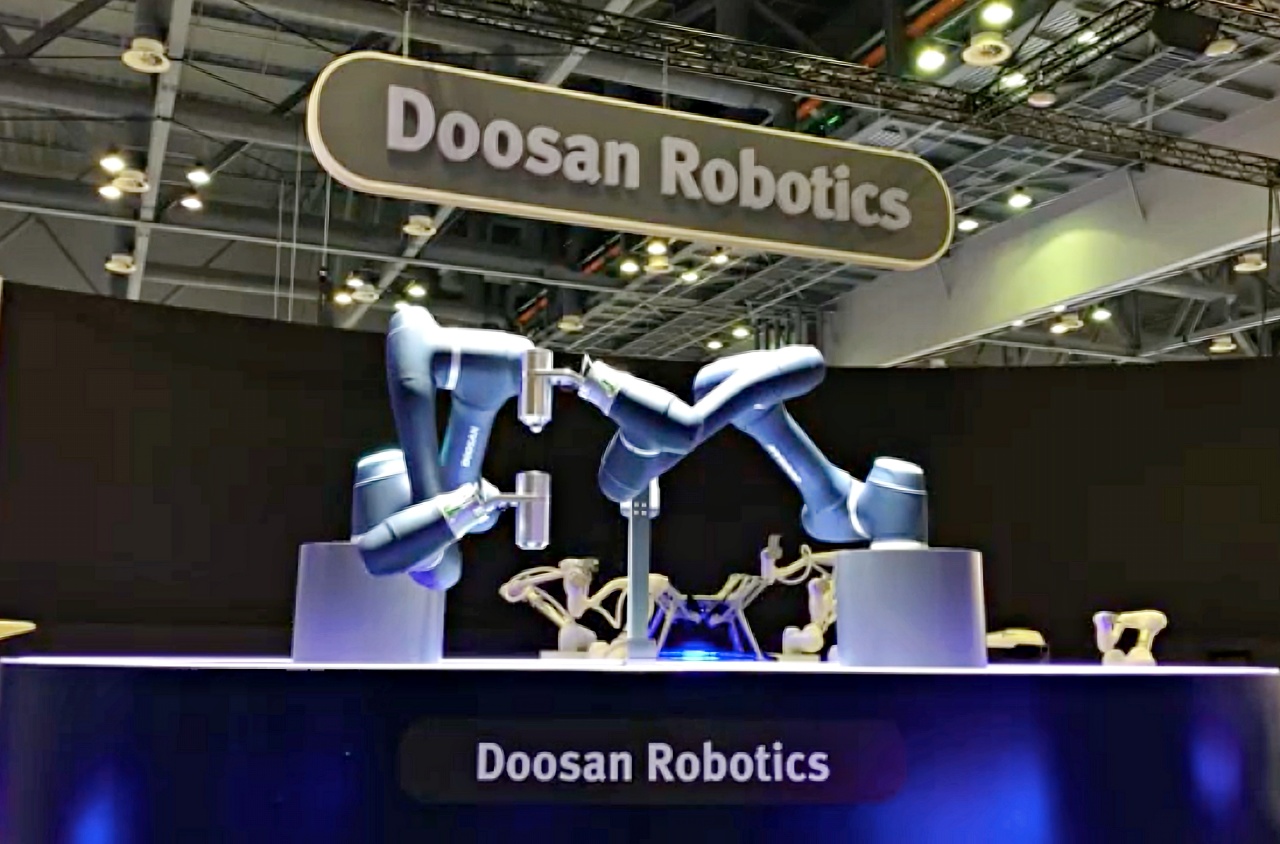
Doosan Robotics and LG Electronics have developed an automatic charging machine for electric vehicles. The companies’ collaborative project is now being tested in South Korea.
Doosan Robotics and LG Electronics’ pilot testing for the EV charging robot comes after they have completed the development of an automated charging solution for electrified cars.
Pilot Operation of Automated Charging Station
According to The Korea Herald, the system uses state-of-the-art collaborative robots to simplify the EV charging system and process. This method combines LG Electronic’s 100-kilowatt fast chargers with Doosan’s highly competent collaborative robotics technology to replace the manual system of holding the large charging cables that drivers usually find a hassle.
LG Electronics and Doosan revealed they started testing the EV charging robots late last week at the LG Science Park in Seoul’s Gangseo-gu district. The park is an urban research and development (R&D) complex where more than 20,000 individuals work for eight LG affiliates, startups, and other partner companies.
How the Charging Robot Works
As usual, the EV is parked manually in the charging area. The car is fitted with a camera that transmits information to the charging system, and then the driver completes the authentication.
Once done, the AI-based 3D vision camera installed on the collaborative robot determines the location of the EV charging port. The robot will connect the charging cable to the unit, and charging will begin.
Once the battery is full, the robot will remove the charger and return it to its original position. The driver will be automatically charged for the service.
“We implemented the solution by installing high-performance torque sensors on the six joints of the collaborative robot to precisely control external forces and secure the industry’s highest level of safety-related certification,” Yonhap News Agency quoted Doosan Robotics as saying in a statement.
The company’s chief executive officer, Ryu Jung Hoon, also stated, “This solution is a technology that is difficult to implement to the extent that it can only be developed if the sensitivity, precision, and safety of collaborative robots are all secured. We will respond to the rapidly growing electric vehicle charging market.”
Photo by: Doosan Robotics Media Library/YouTube







