


 Trump Says Iran Offered Major Energy Concession Amid Ongoing Negotiations
  Trump's Overhaul of American History: Museums, Monuments, and Cultural Institutions
  Trump Administration Settles Lawsuit Barring Federal Agencies from Pressuring Social Media Censorship
  G7 Foreign Ministers Gather in France Amid Global Tensions and U.S. Policy Uncertainty
  Maduro Faces Rare Narcoterrorism Charges in U.S. Court
  WTO Reform Talks Begin in Cameroon Amid Global Trade Tensions
  US-Iran Ceasefire Talks Underway: What You Need to Know
  Trump to Visit China in May for High-Stakes Xi Summit Amid Iran War
  Iran Demands Lebanon Be Part of Any Ceasefire Deal With Israel and the U.S.
  Taiwan Arms Deal on Track Despite U.S.-China Summit Uncertainty
  U.S.-Iran Peace Talks Gain Momentum Amid Ongoing Conflict
  FEMA Reinstates $1 Billion Disaster Prevention Grant Program After Court Order
  Denmark Election 2026: Frederiksen Eyes Third Term Amid Trump-Greenland Tensions
  Russia Strikes Kharkiv and Izmail as Cross-Border Drone War Escalates
  Bachelet Pushes Forward With UN Secretary-General Bid Despite Chile's Withdrawal
  Cuba Receives Humanitarian Aid Convoy Amid U.S. Sanctions
  U.S. Deploys Elite 82nd Airborne Troops to Middle East Amid Iran Tensions


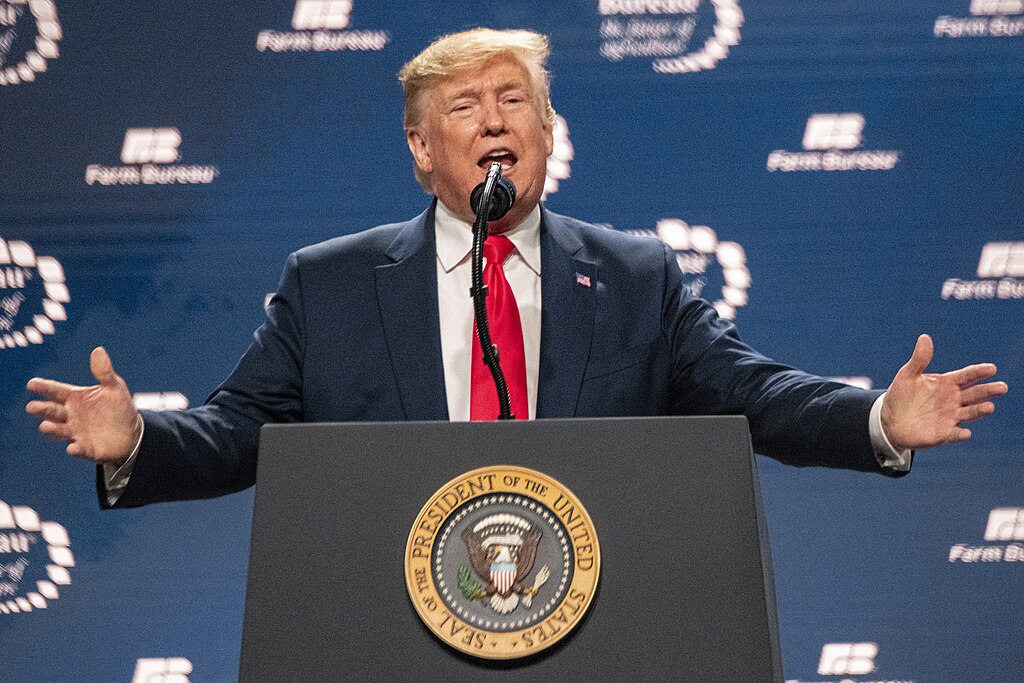
As election momentum begins to shift, former President Donald Trump is once again resorting to ominous predictions of national disaster if his opponent, Vice President Kamala Harris, wins the White House. This pattern, noted by Washington Post columnist Aaron Blake, is a familiar tactic for Trump, especially when he finds himself on the defensive in the race.
In recent weeks, Trump has intensified his rhetoric, warning that a Harris presidency would lead to the obliteration of Social Security and Medicare, the destruction of the U.S. economy, and even the end of American energy independence. His dire predictions have included claims that Harris would “end” fracking and, according to some of his allies on Fox Business, potentially “ban” oil altogether.
Blake points out that Trump’s warnings have escalated to the point of predicting annihilation. In a particularly dramatic statement on social media platform X (formerly Twitter), Trump declared that “there will be no future under Comrade Kamala Harris,” ominously suggesting that her policies could lead the United States into a “Nuclear World War III.”
This apocalyptic tone is not new for Trump. Blake notes that the former president has a history of making dire predictions about his political opponents, predictions that often do not come to pass. For instance, during the 2020 election, Trump warned that under President Joe Biden, gas prices would soar to $6 or $7 per gallon. While gas prices did rise, they never reached those levels. Now, Trump is claiming that under Harris, gas could hit $9 per gallon.
Trump’s penchant for hyperbole extends beyond economic forecasts. In the 2020 campaign, he warned that China would “own” the United States if Biden were elected and repeated a common GOP claim that Democrats would eliminate the Second Amendment. None of these predictions have materialized, yet Trump continues to employ this strategy, using Harris as the new focal point for his apocalyptic warnings.
Blake highlights that while hyperbole is a common feature in politics, Trump’s use of specific, catastrophic predictions sets him apart. This approach allows for a closer examination of his track record, which, as Blake argues, has been less than accurate. Despite this, Trump persists in using fear-based tactics, especially when his campaign faces challenges.
As the election draws closer, Trump’s reliance on these doomsday scenarios is likely to increase. For his supporters, these warnings serve to reinforce their fears about a Harris presidency and galvanize their loyalty. For his critics, however, it highlights Trump’s tendency to prioritize sensationalism over substance.
In the coming weeks, the effectiveness of Trump’s apocalyptic rhetoric will be put to the test as voters weigh the credibility of his claims against the reality of his previous forecasts.







