


 Serica Energy to Acquire Pharos Energy for £145.7M, Sending PHARP Shares Soaring
  Oracle Stock Rises After Winning Up to $6.99 Billion U.S. Defense Software Contract
  Nvidia Invests $1 Billion in Naver as South Korea AI Data Center Expansion Gains Momentum
  Johnson & Johnson Proposes $5.5 Billion Talc Settlement to Resolve U.S. Ovarian Cancer Lawsuits
  Intel, AMD Seek Long-Term China Server CPU Deals as AI Demand Drives Supply Crunch
  Domino’s Weighs Appeal After Australian Court Rules Workers Were Misled on Pay
  Brown-Forman Rejects Sazerac’s $15 Billion Takeover Bid as Family Backs Independence
  Coca-Cola Raises Diet Coke Prices in India as Iran Conflict Disrupts Can Supply
  Trump Administration Monitors OpenAI Incident as Lawmakers Push AI Kill Switch Bill
  Galp Shares Fall After Q2 EBITDA Miss Despite Profit Beat and Higher Dividend
  Amkor Stock Surges 17% After $1.5 Billion Nvidia AI Packaging Partnership
  Tech Stock Positioning Nears Neutral as Investor Rotation Enters Final Phase, Deutsche Bank Says
  CXMT IPO Debut in Shanghai Puts $85.5 Billion Chipmaker in Spotlight
  Rubio Rejects AI ‘Kill Switch’ Claims as U.S. Defends American Technology Abroad
  SAP Beats Q2 Revenue Estimates as Cloud Backlog and Business AI Demand Drive Growth.
  OpenAI AI Agent Reportedly Breached Hugging Face, Raising AI Safety Concerns
  Volkswagen Cuts 2026 Revenue Outlook as China Weakness, Trade Risks Weigh


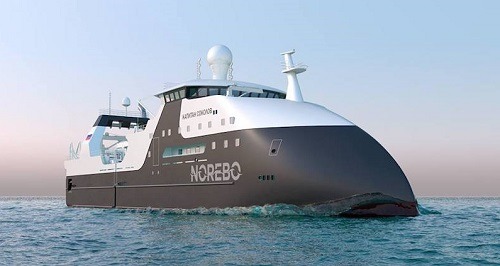
In response to the rapid spread of COVID-19 in the first half of 2020, China took the unilateral decision to shut its borders to Russian imports.
This was a blow for Russia’s fishing industry, which exports close to $600m of pollock to China every year. Not only is the versatile pollock a staple of the Chinese diet but factories in the ports of Dalian and Qingdao provide processing services for fishing businesses across the world.
As Russia’s cold storage facilities reached their maximum capacity late last year, the supply of H&G and wholeround pollock began to outstrip global demand, resulting in prices falling by almost 15% between November 2020 and January 2021.
The pandemic’s impact on supply chains and price levels has raised important questions about sustainability and waste in the fishing industry. Despite the challenges of the past eighteen months, some businesses have continued to prioritise a conservationist approach.
Norebo, the Russian fishing giant whose fleet supplies household names like McDonalds and Birds Eye, started in 1997 in Murmansk, where it is still based today. The company was founded by Vitaly Orlov, an entrepreneur driven by his desire to improve marine sustainability and bring employment and prosperity to Russian communities.
“To build a fishing industry Russia can be proud of means, first and foremost, protecting our fisheries. Cod, haddock, pollock – these are some of the treasures of the seas and an essential part of the planet’s food security. To continue enjoying these riches for years to come, we need to preserve marine ecosystems including sometimes fragile sea beds.”
For Orlov, putting environmental stewardship at the heart of Russia’s fishing industry has always been a necessity.
To protect fish stocks, Norebo has kitted out its vessels with state-of-the-art technology to maximise the efficiency of its catch. This has allowed the company to minimise wasteful fishing practices and maximise the utilisation of each fish. In terms of Norebo’s environmental impact, Orlov has made sure that his business is an active member of the Marine Stewardship Council (MSC). This means that its fishing quotas as part of national catch correspond with the scientific advice on what is safe to fish in a given area.
Yet just as importantly, Norebo is in tune with the economic and social responsibilities required of a large employer. The company enforces an 18+ policy on its vessels, follows internationally recognised safety standards, and pays it staff considerably more than the national average. This approach has made Norebo the jewel in Murmansk’s crown, where it is both the biggest employer and the largest taxpayer. Norebo carefully considers its environmental, social, and economic impact, which forms its approach to business. For Norebo, this is the key to organisational success and sustainable development.
Sergei Sennikov, Norebo’s Chief Sustainability Officer, is proud that the company operates on the same employment standards as merchant fleets. Company representatives also tour schools across Russia to advertise the security and opportunities of a career in the industry. Norebo has built a strong relationship with the World Wildlife Fund (WWF) and continues to support its efforts on marine conservation with a focus on vulnerable marine habitats in Arctic waters. Sennikov notes that the company is also driving the debate on sustainable consumption, a necessity for maintaining biodiversity and a thriving fishing industry.
Norebo is firmly in line with the WWF’s outlook on marine conservation. The Fund’s Russian arm, WWF Russia, has called for innovative technology to maximise catch efficiency.
Norebo and WWF Russia are also working closely together to secure the conservation of Russia’s and Norway’s marine reserves. In November 2016, they collaborated with scientific advisors to map out the vulnerable ecosystems in the Barents and Norwegian seas. This has ensured that fishing in both these territories proceeds at a sustainable rate.
Evgeniy Shamrai, former Deputy Director of the Polar Research Institute of Marine Fisheries and Oceanography (PINRO), praised the ongoing agreement, noting that it has enabled ‘’a transition to a higher quality level, another step in the development of an ecosystem approach to fisheries management’’.
In terms of the fishing industry’s commercial outlook, COVID-19’s impact on global supply chains has undoubtedly been a stumbling block. Restaurants rely on ‘just-in-time’ delivery and consumers want to eat fresh, responsibly sourced fish.
The Russian government recognises these challenges and is making diplomatic efforts to restore supply chains to their pre-pandemic pomp. They will be aware that companies like Norebo are both the backbone of the national fishing industry and the lifeblood of numerous communities.
While global trade is still recovering from the shock of 2020, major industry players will continue to drive the sustainability agenda and protect employment opportunities across their territories. Marine biodiversity has a bright future if other companies would only follow suit.
This article does not necessarily reflect the opinions of the editors or the management of EconoTimes







