


 Petrobras Joins Brazil’s New Diesel Subsidy Program
  Vietnam, US Trade Deal Could Be Signed Soon, To Lam Says
  fnny Beta Launches With a Simple Idea: Find an Event, Show Up, Get Rewarded
  Canada Unveils Bill to Fast-Track Major Resource Projects
  China Reviews Broadcom Switch Use in State Data Centres
  U.S. Stock Futures Rise Ahead of Trump-Xi Summit, Middle East Risks Weigh
  Oil Prices Tumble on U.S.-Iran Diplomacy Hopes, Supply Relief
  Asian Stocks Mixed Ahead of Trump-Xi Meeting
  NASA, Boeing Discuss Expanding Starliner Missions
  Nike Earnings at Risk as UBS Cuts Price Target to $42
  Gold Prices Rise as Oil Slump Eases Fed Rate Hike Fears
  Westinghouse Targets $50 Billion Valuation in U.S. IPO
  France Debt-to-GDP Ratio Seen Hitting Record 119.3% in 2026
  Yen Weakens as Dollar Gains on Widening US-Japan Rate Gap
  Vietnam Stocks Join FTSE Emerging Market Indexes, Unlocking Billions in Foreign Investment
  U.S. Dollar Hits Eight-Week High After Fed Rate Hike


 Add as a preferred source on Google

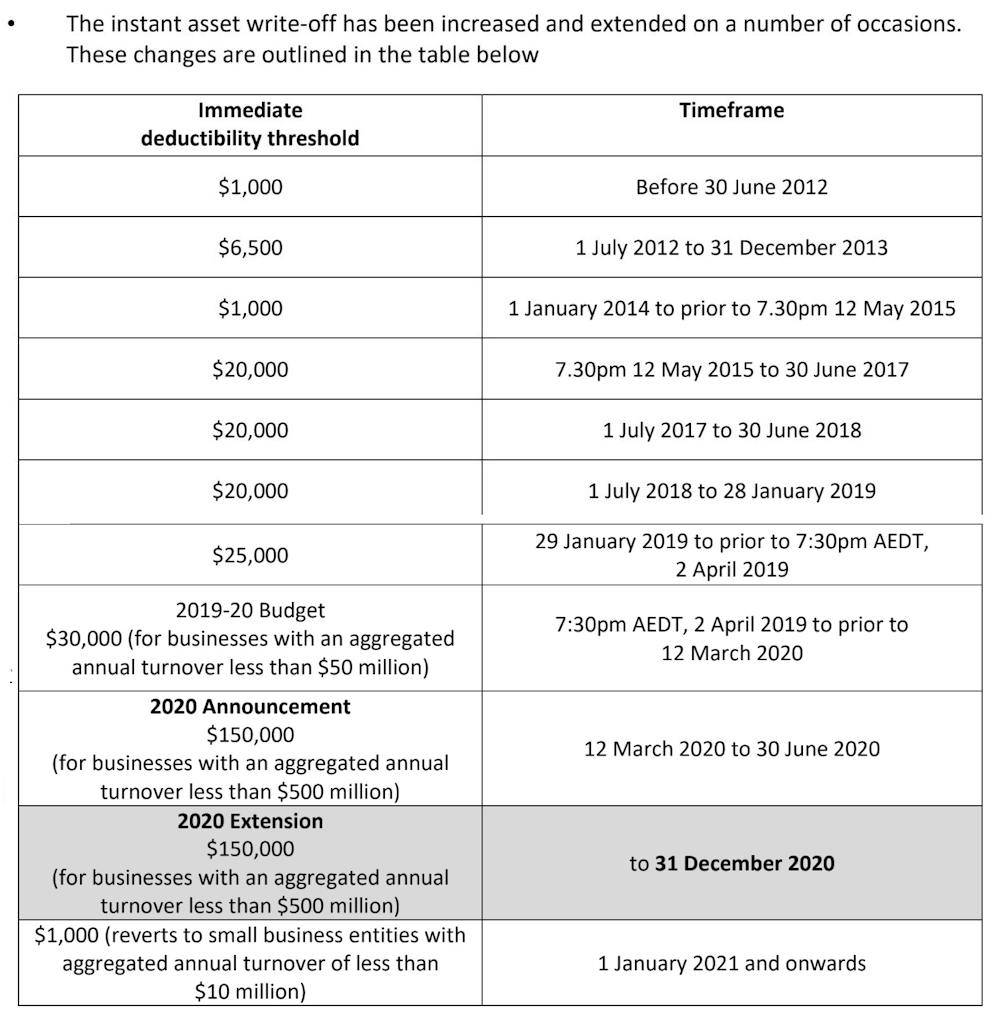
In its latest move to spur business investment, the government will extend its $150,000 instant assets write-off until the end of the year.
The six-months extension, which will be legislated, will cost $300 million in revenue over the forward estimates.
As part of the government’s pandemic emergency measures, in March it announced that until June 30 the write-off threshold would be $150,000 and the size of businesses eligible would be those with turnovers of under $500 million.
The government is battling a major investment slump. Bureau of Statistics capital expenditure figures show non-mining investment fell 23% in the March quarter and 9% over the year to March.
Spending on plant and equipment fell 21%, spending on buildings and equipment plunged 25%.
An extra six months
Apart from giving businesses generally more time to claim the write-off, the government says the extension will help those which have been hit by supply chain delays caused by the pandemic.
The write-off helps businesses’ cash flow by bringing forward tax deductions. The $150,000 applies to individual assets – new or secondhand - therefore a single enterprise can write off a number of assets under the concession.
With rain breaking the drought in many areas, farm businesses are getting back into production, so the government will hope the extension will encourage spending on agricultural equipment.
About 3.5 million businesses are eligible under the scheme.
The instant asset write-off has been extended a number of times over the years, and its (much more modest) thresholds altered.
On the government’s revised timetable, from January 1 the write-off is due to be scaled down dramatically, reducing to a threshold of $1000 and with eligibility being confined to small businesses – those with an annual turnover of below $10 million.
But there will be pressure to continue with more generous arrangements, to head off the danger of a fresh collapse in investment.
In a statement, treasurer Josh Frydenberg and small business minister Michaelia Cash said the government’s actions “are designed to support business sticking with investment they had planned, and encourage them to bring investment forward to support economic growth over the near term”.
Commonwealth Government







