


 FxWirePro: Daily Commodity Tracker - 21st March, 2022
  Oil Prices Trim Gains After Trump Rules Out Iran Strikes Before Midterms
  Asian Currencies Mixed as Yen Weakens, Dollar Holds Firm
  Iran Refuses to Halt Uranium Enrichment Amid US Nuclear Demands
  Oil Prices Slip as Trump Rules Out Iran Strike Before Midterms
  Mike Rogers Calls for End to US-Canada Tariff War
  Dollar Near 18-Month High as Euro, Yen and Pound Weaken
  Best Gold Stocks to Buy Now: AABB, GOLD, GDX


 Add as a preferred source on Google
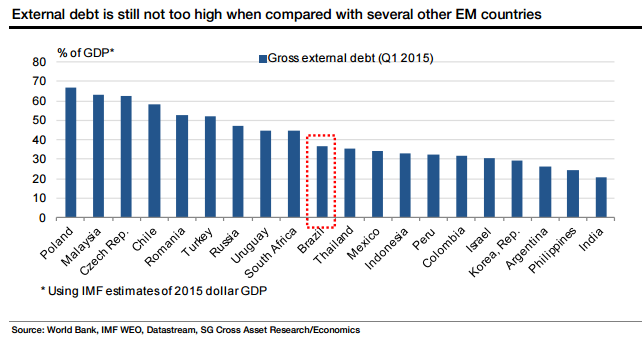
Brazil's external debt (ED) to GDP ratio - which declined to nearly 17% of GDP in 2008 and still stood at a moderate 25.2% at the end of 2013 - rose to 41% of GDP in Q3 15. While the increase in 2014 was driven by a rise in external borrowing, the recent increase in the ratio has been driven purely by the depreciation in the BRL that led to a contraction in dollar GDP. With the USD to BRL exchange rate expected to stay close to USD1= in Q4 15, the ED to GDP ratio is expected to rise to 45% of GDP this year.
Despite this significant increase, Brazil's ED to GDP ratio remains fairly comparable to that of most EM countries, including some Latam countries (Chile in particular). Furthermore, when looked at in isolation, it seems that the ED to GDP ratio itself is not all that threatening. Rather, it is Brazil's macro and financial situation that is responsible for the discomfort with the current level of ED to GDP ratio.

- News

- Economy

- Central Banks
- Investing
- Research
- Roundups
- Digital Currency
- Insights
- Technical Analysis
- Technology
- Business
- Law
- Health
- Nature
- Fintech
- Science
- Topic
- Opinions
- ©Econometrics LLC . All Rights Reserved.
Brazil’s external debt is not among the worst in the EM world
Wednesday, September 30, 2015 8:53 PM UTC
Editor's Picks



- Market Data
Most Popular




