


 China's Trade Surplus Surges Past Forecasts in Early 2026
  IEA Releases Record 400 Million Barrels of Oil Amid U.S.-Iran War
  ANZ and Westpac Forecast Two RBA Rate Hikes in March and May 2026
  U.S. Solar Market Contracts in 2025 as Trump Rolls Back Renewable Energy Incentives
  Bank of Japan Expected to Hold Rates at 0.75% Before June Hike Amid Middle East War Uncertainty
  Asian Markets Retreat as Oil Prices Surge Toward $100 Amid Middle East Tensions
  Gold Prices Climb Above $5,200 as Iran War Uncertainty and Inflation Data Loom
  Iran-U.S. Oil Tensions Escalate as Revolutionary Guards Threaten Strait of Hormuz Blockade
  IEA Plans Record Emergency Oil Release Amid Iran Strait of Hormuz Crisis
  RBA Rate Decision: Deputy Governor Signals Genuine Debate Ahead of March Meeting
  Dollar Stabilizes Amid Iran War Uncertainty as Oil Prices Remain Elevated
  Asia FX Steady as Iran War Signals and U.S. Inflation Data Weigh on Sentiment
  Chinese AI Stocks Surge as Tencent, MiniMax, and Zhipu Launch Agentic AI Programs
  Trump Administration Launches Trade Investigations Against 16 Countries Over Industrial Overcapacity
  Oil Prices Surge Toward $100/Barrel After Tanker Attacks in Iraqi Waters
  Asian Currencies Face Pressure as U.S.-Iran Conflict Weighs on Markets
  Dollar Strengthens Amid Oil Price Surge and Inflation Fears


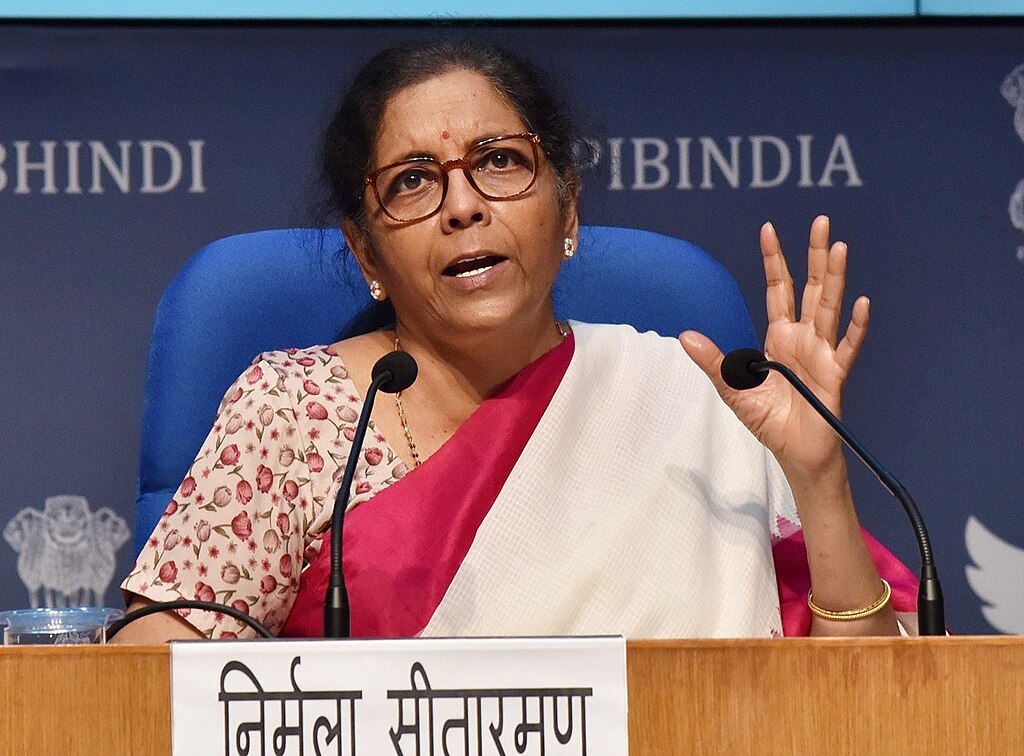
India’s central government is set to present its annual budget on Sunday, a closely watched event as Prime Minister Narendra Modi’s administration seeks to accelerate domestic reforms while navigating rising global uncertainties. Finance Minister Nirmala Sitharaman will unveil the budget for the next fiscal year at 11 a.m. local time, with expectations that it will focus on strengthening India’s economic resilience amid challenges such as steep U.S. tariffs, slowing global growth, and heightened geopolitical tensions.
The budget comes at a time when the government must balance reform ambitions with fiscal discipline. Recent income and consumption tax cuts are expected to reduce government revenue by around 1.5 trillion rupees, or roughly $16 billion, in the current fiscal year. As a result, New Delhi is under pressure to control spending as a share of gross domestic product while sticking to its deficit target of 4.4% of GDP for the 12 months ending in March.
Speaking ahead of the release of the government’s annual economic survey, Prime Minister Modi emphasized a shift toward long-term solutions aimed at fostering predictability and global trust. The survey projected India’s economic growth at between 6.8% and 7.2% for the fiscal year beginning in April, underscoring the country’s position as one of the world’s fastest-growing major economies.
In recent months, the Modi government has introduced a series of policy reforms to boost private investment and domestic demand. These include tax relief measures, a sweeping overhaul of labour laws, and initiatives to open up the traditionally tightly regulated nuclear power sector. More reforms are widely expected in the upcoming budget, particularly those aimed at improving ease of doing business and attracting foreign investment.
Manufacturing remains a central focus of the government’s economic strategy. Officials are preparing a third major push to raise manufacturing’s share of the economy, alongside plans to ease investment rules in defence manufacturing. Gross government borrowing is projected to increase to between 16 trillion and 16.8 trillion rupees in the next fiscal year, up from 14.6 trillion rupees currently.
On the global front, India is pursuing trade diversification to cushion the impact of external shocks, including recently imposed U.S. tariffs of up to 50% on certain Indian exports. A landmark trade agreement with the European Union is among the steps being taken to protect growth and strengthen India’s long-term economic outlook.













