


 U.S.-Iran War: Rubio Says Finish Line Is Visible as Diplomatic Talks Begin
  Ukrainian Drones and the #MadeByHousewives Movement: Kyiv Fires Back at Rheinmetall CEO
  Ukraine Open to Energy Ceasefire Amid Global Oil Crisis
  Myanmar's Military Chief Steps Down to Pursue Presidency After Controversial Election
  U.S. Army Investigates Military Helicopters Flying Near Kid Rock's Home and Anti-Trump Protests
  Rubio Directs U.S. Diplomats to Use X and Military Psyops to Counter Foreign Propaganda
  Trump Administration Resumes Partial Asylum Processing After Temporary Halt
  Rubio Calls for Democratic Transition and Free Elections in Venezuela
  U.S. Senators Challenge FCC Chair Over Nexstar-Tegna Merger Approval
  Trump Weighs Ending Iran Campaign With Strait of Hormuz Still Closed
  California's AI Executive Order Pushes Responsible Tech Use in State Contracts
  Trump Signals U.S. Military Exit From Iran Within Weeks After Declaring Nuclear Mission Accomplished
  Canada's Arctic Military Expansion Sparks Hope and Concern Among Indigenous Communities
  U.S. Senator Pushes to Permanently Block Chinese Automakers from American Market
  FBI Labels Michigan Synagogue Attack as Hezbollah-Inspired Terrorism
  Israel Passes Death Penalty Law Targeting Palestinians in Military Courts
  Bessent: Global Oil Market Well Supplied as U.S. Eyes Hormuz Navigation Control


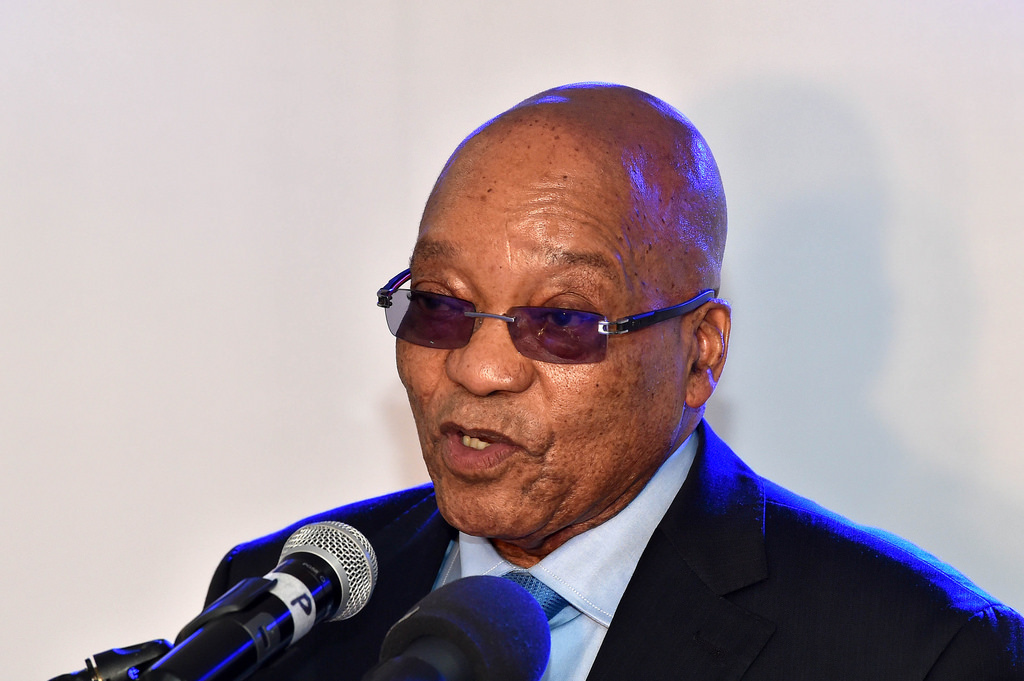
Why now? Will he really #PayBackTheMoney? How much of it will he pay back? These are some of the questions on the lips of many South Africans.
This after President Jacob Zuma’s surprise announcement that he would pay part of the R246 million of public money that was improperly spent on his private homestead at Nkandla.
Zuma’s about-turn came three days before the deadline set by the Constitutional Court for an out-of-court settlement with political opposition parties over the Nkandla furore.
His offer, after more than three years of denial, also comes at the dawn of the 2016 parliamentary calendar.
There are many permutations explaining why now is the perfect time for Zuma to finally submit to the mounting pressure to #PayBackTheMoney.
-
Many people suggest he chose this moment to limit the lambasting expected from opposition parties during his upcoming State of the Nation Address.
-
One could even say that his act of “benevolence” would auger well for the governing African National Congress’s (ANC’s) campaign in the upcoming local government elections.
-
It might be a stretch, but with a Constitutional Court case looming, he might have even had a change of heart.
The cases against Zuma were lodged by opposition parties, the Democratic Alliance and the Economic Freedom Fighters. They want the Court to force President Zuma to comply with the Public Protector’s report Secure in Comfort. They argue that the report contains enough ammunition to prove that the President should be held liable for the misuse of public money on his Nkandla residence.
If no settlement is reached between Zuma and the opposition parties that took him to court in a bid to force him to pay, the case against him will go ahead on February 9. A close call considering the State of the Nation address is only 2 days after the court date.
Regardless of the reason, moments such as these are sure to have lasting implications for Zuma’s administration and legacy, as well as the future of the ANC.
Zuma no lame duck president
President Zuma’s influence over South African society has shrunk ignominiously since the start of his second term in office in 2014. But his power base remains strong. Whether it is in the National Executive Committee of the ANC or his cabinet, he appears to remain invincible.
Zuma has the means and backing to weather just about any political storm at this point. He fears neither the public, nor opposition parties.
He has endured saga after saga with elegant ease. Allegations of sexual assault, misogyny, corruption and nepotism have haunted his political career since before his first inauguration to the presidency in 2009.
Like water off a duck’s back, crises slide gently off him. He is resilient, a leader that has built his reputation on charisma ahead of substance and ethics. If he were the leader of an authoritarian state, he would be well placed to never have to relinquish his power.
His laughing off the growing #ZumaMustFall campaign is a testament to this.
But the timing of his announcement that he’ll pay back a portion of the Nkandla invoice arguably shows that he does fear losing a case before the country’s Constitutional Court.
Implications for the governing ANC
The overall consensus of the average disillusioned ANC supporter at this time is that,
The party will survive Jacob Zuma.
In civil society, support for Zuma has weakened considerably, but support for the former liberation movement remains strong, although it is declining. The party has taken a hard knock in the hearts and minds of many South Africans, but many expect that it will be able to reinvent itself once Zuma relinquishes his throne.
But the ANC would do well not to be nonchalant. The party is at a critical juncture. It is losing support. The outcome of the 2016 local government elections should provide a firm indicator whether the party keeps or ditches Zuma before the 2019 general elections.
Perhaps a severe electoral loss - at both this year’s municipal elections and the 2019 general elections - would jolt the ANC into realising it might have become complacent in the years Zuma has headed the party and state.
One thing is certain: South Africans are in for yet another unhinged political year.
 Giovanni Poggi does not work for, consult, own shares in or receive funding from any company or organization that would benefit from this article, and has disclosed no relevant affiliations beyond the academic appointment above.
Giovanni Poggi, Lecturer in Political Science, Nelson Mandela Metropolitan University
This article was originally published on The Conversation. Read the original article.







