OpenAI Expands Enterprise AI Strategy With Major Hiring Push Ahead of New Business Offering
  Weight-Loss Drug Ads Take Over the Super Bowl as Pharma Embraces Direct-to-Consumer Marketing
  Missouri Judge Dismisses Lawsuit Challenging Starbucks’ Diversity and Inclusion Policies
  Hims & Hers Halts Compounded Semaglutide Pill After FDA Warning
  Global PC Makers Eye Chinese Memory Chip Suppliers Amid Ongoing Supply Crunch
  TrumpRx Website Launches to Offer Discounted Prescription Drugs for Cash-Paying Americans
  CK Hutchison Launches Arbitration After Panama Court Revokes Canal Port Licences
  Amazon Stock Rebounds After Earnings as $200B Capex Plan Sparks AI Spending Debate
  Once Upon a Farm Raises Nearly $198 Million in IPO, Valued at Over $724 Million
  Rio Tinto Shares Hit Record High After Ending Glencore Merger Talks
  Instagram Outage Disrupts Thousands of U.S. Users
  Baidu Approves $5 Billion Share Buyback and Plans First-Ever Dividend in 2026
  Nvidia, ByteDance, and the U.S.-China AI Chip Standoff Over H200 Exports
  SoftBank Shares Slide After Arm Earnings Miss Fuels Tech Stock Sell-Off
  Alphabet’s Massive AI Spending Surge Signals Confidence in Google’s Growth Engine
  SpaceX Prioritizes Moon Mission Before Mars as Starship Development Accelerates


TORONTO, March 31, 2016 -- Have you ever thought about what your hair conditioner, your car windshield, and cooking tools may have in common? OK, probably not, but they do have something in common. All these products can be made with silicones. These polymers are so versatile that you can find them in countless everyday products—from the practical, such as caulks and spatulas, to the purely fun, such as the Silly Putty™ that you played with as a kid.
|
|||||
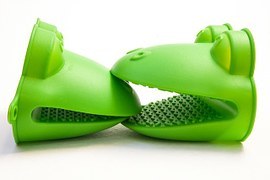
Although these polymers aren't typically referred to as plastics, they share many similarities. The true name for these materials is polysiloxanes, another one of those plastic "poly" words like polyethylene, polystyrene, polyvinyl chloride, etc. But the common term is silicones.
Polymers are marvels of modern chemistry. And yet, silicones have a unique molecular structure. While the backbone of many modern polymers is carbon, silicones are built primarily with atoms of silicon— the same element used to make glass.
Silicones exhibit properties common to both glass and plastics. Like glass, they resist moisture, stand up to extreme temperatures, and don't react with most materials. Like plastics, they are lightweight, strong, and able to assume many forms.
Silicones are so versatile that you probably use them multiple times a day. Depending on their composition, silicones can vary from liquid to gel to rubbery to hard. So they're used in a broad range of products, including electrical insulation, consumer electronics, household appliances, automobiles, aerospace, medicine, clothing, and much more.
A special quality about silicones is one they share with many other polymers: they offer a wide variety of important environmental benefits. Here are some examples:
- Alternative energy: Because of their ability to withstand long periods of sun exposure, silicones are used throughout solar cell manufacturing and installation. And durable silicone adhesives are used to bond the rotary blades of wind turbines so they can stand up to constant cycling for years and years.
- Construction: Thanks to their insulating and adhesive properties, silicone sealants play an integral role in improving energy-efficiency in buildings, where they're used to prevent unwanted airflow, helping indoor spaces stay cool in summer and warm in winter.
- Waste reduction: Silicones are used to make and protect a wide range of products, including washing machines, army tents, personal computers, and auto parts. Silicones help these products last longer and perform better—when they last longer, we create less waste because we don't have to replace them as often.
- Recycling: Recyclers use silicone technology to remove inks and envelope adhesives from paper. Silicones are gentle on paper, allowing it to retain its fibre strength so it can be used to make new paper products.
- Denim processing: Silicones can help reduce the amount of energy, water, and other resources needed to make our blue jeans. For example, today's jeans are soft and wearable even when they're new—a new silicone softening technology allows manufacturers to combine processing steps, which can save about 15 litres of water for each pair of jeans.
Innovative, practical, versatile … plus all the potential environmental benefits. Do you love silicones yet?
Today's intelligent plastics are vital to the modern world. These materials enhance our lifestyles, our economy and the environment. For more information, visit www.intelligentplastics.ca.
A photo accompanying this release is available at: http://www.globenewswire.com/newsroom/prs/?pkgid=39668
CONTACT: Darlene Gray
         Canadian Plastics Industry Association
         905.678.7748 ext. 239