


 FDA Pilot Program Eases Rules for Nicotine Pouch Makers
  Astronomers have discovered another puzzling interstellar object − this third one is big, bright and fast
  Eli Lilly’s Inluriyo Gains FDA Approval for Advanced Breast Cancer Treatment
  NASA's Artemis II Mission: First Crewed Lunar Journey Since Apollo
  Cogent Biosciences Soars 120% on Breakthrough Phase 3 Results for Bezuclastinib in GIST Treatment
  Trump Administration to Launch Autism Initiatives Targeting Acetaminophen Use and New Treatment Options
  SpaceX Pivots Toward Moon City as Musk Reframes Long-Term Space Vision
  Blue Origin’s New Glenn Achieves Breakthrough Success With First NASA Mission
  Trump and Merck KGaA Partner to Slash IVF Drug Costs and Expand Fertility Coverage
  Lost in space: MethaneSat failed just as NZ was to take over mission control – here’s what we need to know now
  SpaceX Prioritizes Moon Mission Before Mars as Starship Development Accelerates
  Is space worth the cost? Accounting experts say its value can’t be found in spreadsheets


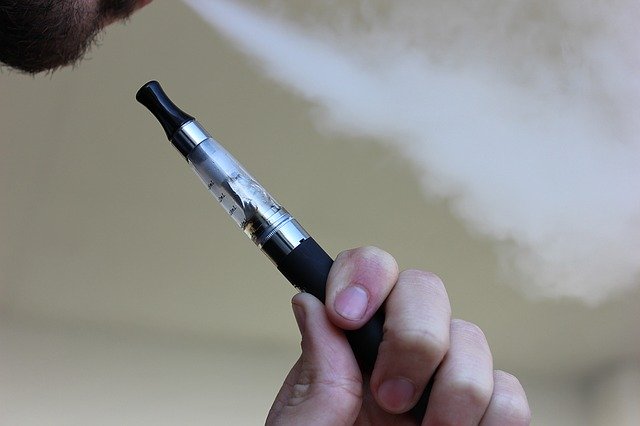

By now, we are all familiar with guidance on how to reduce your risk of contracting coronavirus: wash your hands, wear a mask, social distance. But here’s another important piece of advice: don’t vape.
Smoking has been shown to be a risk factor for more severe forms of COVID-19, and now vaping is under fire for similar reasons. A recent study, published by researchers from Stanford and the University of California, San Francisco showed that vaping significantly increases the likelihood of a COVID-19 diagnosis among young people aged 13 to 24 in the US.
The researchers conducted a survey in which they asked participants whether they ever vaped, smoked or both (defined as “dual use”), and whether they were current users. Participants were then asked if they had experienced symptoms, been tested for COVID-19 or had a positive diagnosis.
The results suggested a strong association between vaping or dual use, and being diagnosed with COVID-19. In fact, having ever vaped or having been a dual user makes you at least five times more likely to have had a diagnosis of COVID-19. That risk rises by seven-fold for current dual users. What was most striking about this study was that the authors didn’t find a similar increased risk of the disease among smokers. The increased likelihood of a diagnosis appears to be driven primarily by vaping.
There were some anomalies: the study also appears to suggest that having ever vaped places you at higher risk of COVID-19 than if you currently vape. No account was taken of the myriad flavourings and devices available: were there particular flavours, or devices which are more strongly associated with risk of COVID? We don’t yet know.
So why might vaping increase your risk of getting COVID-19? Here are some possibilities.
Vaping helps the virus get into your cells
Viruses can’t replicate outside of a host cell – in order to get in, they need to attach onto a specific receptor. The more receptors present in our bodies, the greater our susceptibility to infection. SARS-CoV-2, the virus which causes COVID-19, attaches to a receptor called ACE-2.
Studies have shown people who smoke have increased expression of ACE-2 on lung cells, a change largely driven by nicotine exposure. So it seems likely that a similar mechanism may be at play when lung cells are exposed to nicotine-containing vape.
Vaping damages your lungs
E-cigarettes can directly damage lung cells. This damage is likely to lead to reduced lung function and leave you more susceptible to lung infections, including COVID-19.
The lungs are constantly exposed to the viruses and bacteria that we breathe in, and it’s important that the immune system acts promptly to remove these. But vaping damages key immune cells such as macrophages and monocytes, which recognise and respond to invading pathogens. This makes it harder for the body to effectively respond to infections.
Research in our group showed that exposing already harmful lung pathogens to vape made them more virulent, and cause more inflammation. For some bacteria, the observed effect was greater when exposed to vape, compared to cigarette smoke. Increasingly we are seeing evidence that e-cigarettes make it harder for the lungs to effectively fight infection, while at the same time increasing inflammation in a way which eventually causes damage to the lungs.
Should I stop vaping?
This study should come as a stark warning to vapers, and in particular young people, about the risk of vaping, particularly against the backdrop of the coronavirus pandemic.
We need to move away from ambiguous public health messaging around vaping, in which we suggest that it’s “safer” than smoking. This, often government-led narrative, suggests that vaping is predominantly used to help people quit smoking. But the numbers of people vaping who have never smoked are increasing steadily.
It further fails to acknowledge the danger of vaping on its own and the hazards associated with people who both smoke cigarettes and vape. The coronavirus pandemic isn’t going away any time soon: we need to understand where the risks lie, and develop strategies to reduce our risk.







