


 Netanyahu Defends Israel at UN as Delegates Stage Walkout
  Taiwan Thanks US for Support Ahead of Trump-Xi Summit
  Yemen Violence Displaces 130,000 as Civilian Toll Rises
  US Senate Rejects Iran War Powers Resolution in 50-49 Vote
  Mexico-US Trade Talks Delayed to October as Tariff Negotiations Continue
  Trump, Xi Focus on Trade and AI at White House Summit
  Netanyahu Takes Aim at Mamdani as Israel Election Nears
  Abbas Reaffirms November 28 Palestinian Elections
  Trump, Xi Visit US National Archives After White House Summit
  Sudan Rejects US Legitimacy Remarks, Defends Sovereignty
  South Korea, US Discuss Warship Building Cooperation
  Kremlin Says No Decision Yet on Putin-Trump December Summit
  Najib Razak Seeks Stay of 15-Year 1MDB Prison Sentence
  Trump Asks Supreme Court to Restore Third-Country Deportations
  EU Defence Build-Up Too Slow for 2030 Russia Readiness Goal
  Judge Orders Trump to Restore White House Access for CNN, MS NOW and Politico
  Russian Missile and Drone Attack on Kyiv Kills Two, Damages Maternity Hospital


 Add as a preferred source on Google
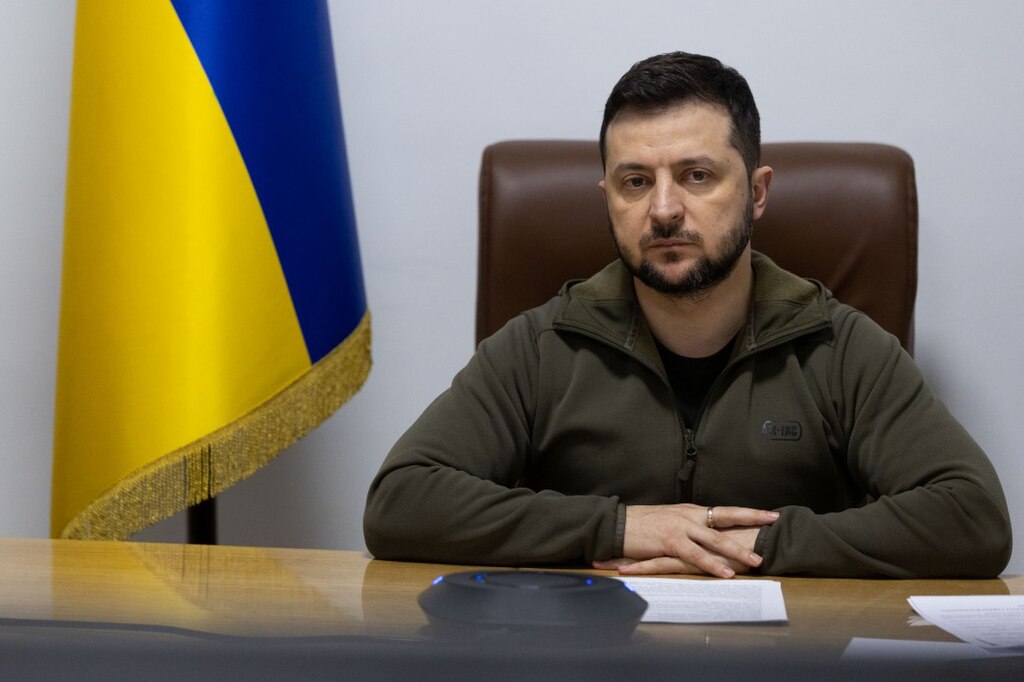
Ukraine and its European allies are finalizing a set of “refined documents” outlining a new peace proposal aimed at ending the war with Russia, President Volodymyr Zelenskiy announced after a series of high-level diplomatic meetings. The move comes as Kyiv faces increasing pressure from the United States to reach a swift agreement, even as Ukrainian officials push back against elements of a U.S.-backed plan viewed by many as too accommodating to Moscow.
Zelenskiy said that discussions with British, French, and German leaders in London produced updated components for the proposed framework, which are now ready to be submitted to Washington. He emphasized that Ukraine and its European partners have strengthened their positions and expect to coordinate closely with the U.S. to determine practical next steps. Kyiv continues to seek firm, long-term security guarantees to prevent future Russian aggression should a peace deal be reached.
Finnish President Alexander Stubb revealed that allies have been working on three key documents: a 20-point peace framework, a package of security guarantees, and a reconstruction plan for Ukraine. According to Stubb, negotiations have reached their most promising stage since the war began, suggesting that momentum toward a potential agreement is building.
Meanwhile, U.S. President Donald Trump has intensified pressure on Zelenskiy to consider concessions, arguing that Russia currently holds the battlefield advantage. Russian President Vladimir Putin has demanded full control of Ukraine’s eastern Donbas region—an ultimatum Zelenskiy has repeatedly rejected.
At a U.N. Security Council session, U.S. Deputy Ambassador Jennifer Locetta said Washington aims to bridge the divide between Kyiv and Moscow to achieve a permanent ceasefire and a mutually agreed peace that preserves Ukraine’s sovereignty. Russia’s U.N. envoy Vassily Nebenzia claimed Moscow’s proposals are realistic, warning that each new plan becomes less favorable to Ukraine and insisting Russia will accomplish its goals militarily or diplomatically, with a preference for diplomacy.







