


 North Korea Warns South Korea Over US-Led Defense Role
  Trump, Xi Visit US National Archives After White House Summit
  Pezeshkian Says US Must Choose When Iran War Ends
  Xi Calls for Deeper U.S.-China AI Cooperation in Trump Talks
  Judge Orders Trump to Restore White House Access for CNN, MS NOW and Politico
  Kremlin Says No Decision Yet on Putin-Trump December Summit
  NATO Boosts Intelligence Sharing Amid Russia Hybrid Threats
  Trump Asks Supreme Court to Restore Third-Country Deportations
  Trump, Xi Focus on Trade and AI at White House Summit
  Saudi Arabia, Turkey and Pakistan Plan Urgent Defence Talks Over Houthi Attacks
  North Korea Rejects Nuclear Test Warning, Calls Nuclear Status Irreversible
  Ghana Says Western Support Growing for Slave Trade Reparations
  US Backs Musk in Fight Against EU’s €120 Million X Fine
  Sudan Rejects US Legitimacy Remarks, Defends Sovereignty
  EU Defence Build-Up Too Slow for 2030 Russia Readiness Goal
  South Korea, US Discuss Warship Building Cooperation
  What ‘Taiwan Independence’ Means as Xi Presses Trump on US Policy


 Add as a preferred source on Google
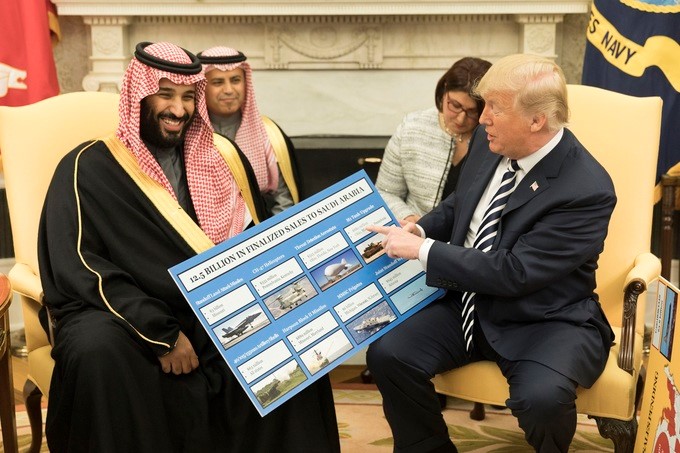
The United States and Saudi Arabia moved to significantly deepen their strategic and economic ties on Tuesday as President Donald Trump and Saudi Crown Prince Mohammed bin Salman announced a sweeping set of agreements at the White House. According to a White House fact sheet, Riyadh committed to boosting its investment in the U.S. to an unprecedented $1 trillion, marking a substantial increase from the $600 billion pledge made earlier this year during Trump’s visit to the kingdom. The president had been urging Saudi leaders to reach the trillion-dollar mark, and the latest commitment reflects the growing alignment between the two countries.
During the meeting, Washington and Riyadh finalized deals across several high-impact sectors, including nuclear energy, critical minerals, and artificial intelligence. These areas have become increasingly important in global competition, and the expanded cooperation signals shared ambitions to strengthen technological and industrial capabilities. While the agreements cover a broad range of initiatives, U.S. officials did not provide detailed timelines, leaving many specifics to be ironed out in future discussions.
One of the most notable developments is the signing of the U.S.–Saudi Strategic Defense Agreement, designed to accelerate defense collaboration and open the door for additional military contracts. As part of this framework, the two nations agreed to move forward with potential future sales of Lockheed Martin’s F-35 fighter jets to Saudi Arabia—an advancement that would mark a significant upgrade to Riyadh’s air capabilities. Additionally, Saudi Arabia committed to purchasing nearly 300 American-made tanks, reinforcing its long-term defense partnership with Washington.
Although logistical details remain limited, the scale of the investment and defense packages underscores the continued strategic importance of U.S.–Saudi relations. The expanded cooperation is expected to shape economic, technological, and security landscapes for both countries, positioning the partnership as a key driver of growth and geopolitical influence in the coming years.







