


 Netanyahu Says Israel May Join Flydubai Crash Attempt Probe
  US Appeals Court Keeps Trump IRS Case Sanctions in Place
  US Conducts Non-Nuclear Explosion Test to Boost Nuclear Detection
  Israeli Settlers Attack West Bank Village, Block Palestinian Family’s Return
  Tim Scott Blames Democrats as CLARITY Act Stalls in Senate
  US Alcohol Ban Exposes Canada’s Internal Trade Barriers
  Wicker Urges US to Uphold Taiwan Security Commitments
  Trump Demands Powell Resign Over Fed Renovation Cost Overruns
  TRUMP Memecoin Launches New Dinner Contest
  Pentagon Launches Autonomous Warfare Command
  Polymarket Traders Bet on Trump AI Rename to ‘Super Intelligence’
  TSA Removes Chairs for Airport ID Check Officers
  US Officials See China Taiwan Invasion Before 2028 as Less Likely
  Netanyahu Vows Probe Into Foiled Flydubai Crash Attempt
  CNN, Politico and MS NOW Seek Court Order Blocking Trump White House Ban
  US Sanctions Iran Weapons Procurement Network
  California Leads Lawsuit Over Trump’s $810 Million Funding Cuts


 Add as a preferred source on Google
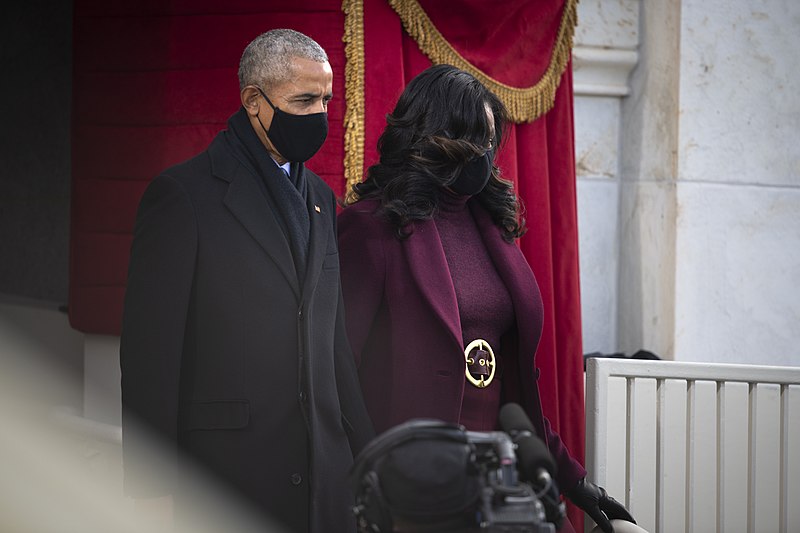
This week, former US President Barack Obama and former first lady Michelle Obama returned to the White House for the unveiling of their presidential portraits. The unveiling of the portraits marks another return to tradition as the custom of unveiling a predecessor’s portrait briefly stopped during Obama’s immediate successor’s administration.
The Obamas returned to the White House Wednesday for the unveiling of their presidential portraits in an event hosted by President Joe Biden, who served as Obama’s vice president for two terms. The unveiling of the portraits also comes more than five years since Obama left office in 2017.
“There are few people I have known with more integrity, more decency, and more courage than Barack Obama,” said Biden. “Nothing could have prepared me more for being president of the United States than being by your side for eight years.”
Artist Robert McCurdy painted a photorealistic portrait of the former Democratic president, while artist Sharon Sprung painted the former first lady’s portrait. The presidential portraits are hung in the rooms and walls of the White House.
The unveiling is also another tradition among presidents, with the current president hosting an unveiling of the presidential portraits of their predecessor. However, Obama’s portrait unveiling did not take place during his successor Donald Trump’s time in office.
“Thanks to your decency and thanks to your strength, maybe most of all thanks to your faith in our democracy and the American people, the country’s better off than when you took office and we should all be deeply grateful to you for that,” said Obama to Biden.
On the same day, Senate Majority Leader Chuck Schumer said the temporary funding to keep the government running past the current fiscal year that ends on September 30 may be extended until mid-December.
Schumer told reporters that he plans to attach a permitting reform bill that would aid the country’s energy industry to the stopgap funding legislation.
However, some Senate Republicans are hoping to hold out until next year on finishing the 2023 fiscal year spending in the hopes that the GOP reclaims the majority at least in the House following the midterm elections in November.







