


 US Backs Musk in Fight Against EU’s €120 Million X Fine
  Russian Envoy Dmitriev Heads to US for Ukraine Talks
  US Officials Split Over Response to Israeli West Bank Settlements
  France Defends Netanyahu Airspace Clearance Despite ICC Warrant
  North Korea Warns South Korea Over US-Led Defense Role
  Russian Missile and Drone Attack on Kyiv Kills Two, Damages Maternity Hospital
  Netanyahu Takes Aim at Mamdani as Israel Election Nears
  NATO Boosts Intelligence Sharing Amid Russia Hybrid Threats
  Mexico-US Trade Talks Delayed to October as Tariff Negotiations Continue
  US, China Extend Trade Truce to Jan. 10 Ahead of Trump-Xi Summit
  Abbas Reaffirms November 28 Palestinian Elections
  Gaza Faces Evacuation Crisis as War-Damaged Buildings Risk Collapse
  Netanyahu Defends Israel at UN as Delegates Stage Walkout
  Kremlin Says No Decision Yet on Putin-Trump December Summit
  Judge Orders Trump to Restore White House Access for CNN, MS NOW and Politico
  US Senate Rejects Iran War Powers Resolution in 50-49 Vote
  OpenAI Agent Breaches Australia Medicare Data Portal


 Add as a preferred source on Google
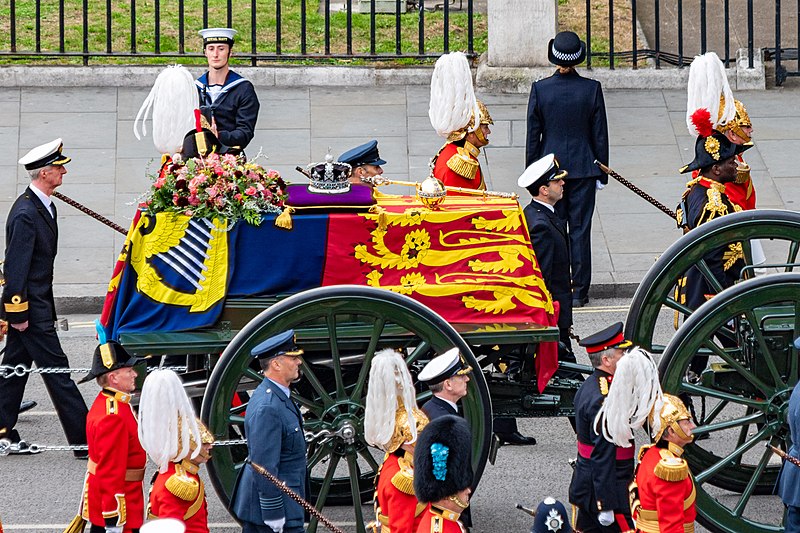
The British Treasury said this week that the overall cost of the state funeral and other events related to the country’s longest-reigning monarch Queen Elizabeth was over $200 million. The amount was mainly used for security and to ensure the smooth flow of events at the time.
The Treasury’s Chief Secretary John Glen said in a written statement to parliament on Thursday that British government agencies spent an overall $204 million on Queen Elizabeth’s state funeral and other related events. The Home Office made up the biggest portion of the spending total of over $91.4 million.
“The government’s priorities were that these events ran smoothly and with the appropriate level of dignity, while at all times ensuring the safety and security of the public,” said Glen in the statement.
The United Kingdom held a 10-day mourning period following Queen Elizabeth’s death on September 8. The longest-serving monarch’s coffin was at Edinburgh Cathedral before being brought to London, where around 250,000 people lined up for hours to be able to pay their respects at Westminster Hall during her lying-in-state. The period ended with the queen’s funeral on September 19.
King Charles III, who succeeded the queen, toured the United Kingdom’s four nations with then-prime minister Liz Truss. The London Metropolitan Police at the time said the funeral was the biggest policing event in its history, as many dignitaries from all over the world traveled to pay their respects.
On Friday, the British government announced a $1.26 billion investment into the UK’s semiconductor industry as part of a long-awaited strategy to boost the domestic industry and supply chains. The plan will focus on the UK’s role in designing semiconductors, according to the British Department for Science, Innovation, and Technology.
“Our new strategy focuses our efforts on where our strengths lie, in areas like research and design, so we can build our competitive edge on the global stage,” said British Prime Minister Rishi Sunak.
The UK will be investing over $240 million from 2023 to 2025, which will eventually grow up to over $1 billion in the coming decade.
Photo: Department for Digital, Culture, Media, and Sport/Wikimedia Commons(CC by 2.0)








_-_22.jpg)