


 North Korea Warns South Korea Over US-Led Defense Role
  Ghana Says Western Support Growing for Slave Trade Reparations
  US Court Approves airBaltic Chapter 11 Restructuring
  Gaza Faces Evacuation Crisis as War-Damaged Buildings Risk Collapse
  US Judge Dismisses Imran Ahmed Deportation Lawsuit
  CNN, MS NOW and Politico Sue Trump Over White House Media Ban
  Pezeshkian Says US Must Choose When Iran War Ends
  LVMH-Hermès Dispute Deepens Over Secret 2002 Share Deal
  US Invites Putin to Miami G20, Opening Door to Trump Summit
  Europe Warns Russia Is Escalating Hybrid Attacks Across NATO
  Russian Missile and Drone Attack on Kyiv Kills Two, Damages Maternity Hospital
  Trump Asks Supreme Court to Restore Third-Country Deportations
  OpenAI Agent Breaches Australia Medicare Data Portal
  Trump’s Arlington Arch Project Faces New Court Restrictions
  Paramount-Warner Bros $110 Billion Deal Draws Antitrust Backlash
  Maduro Seeks Dismissal of US Drug Trafficking Charges
  Appeals Court Rejects Trump Third-Country Deportation Policy


 Add as a preferred source on Google
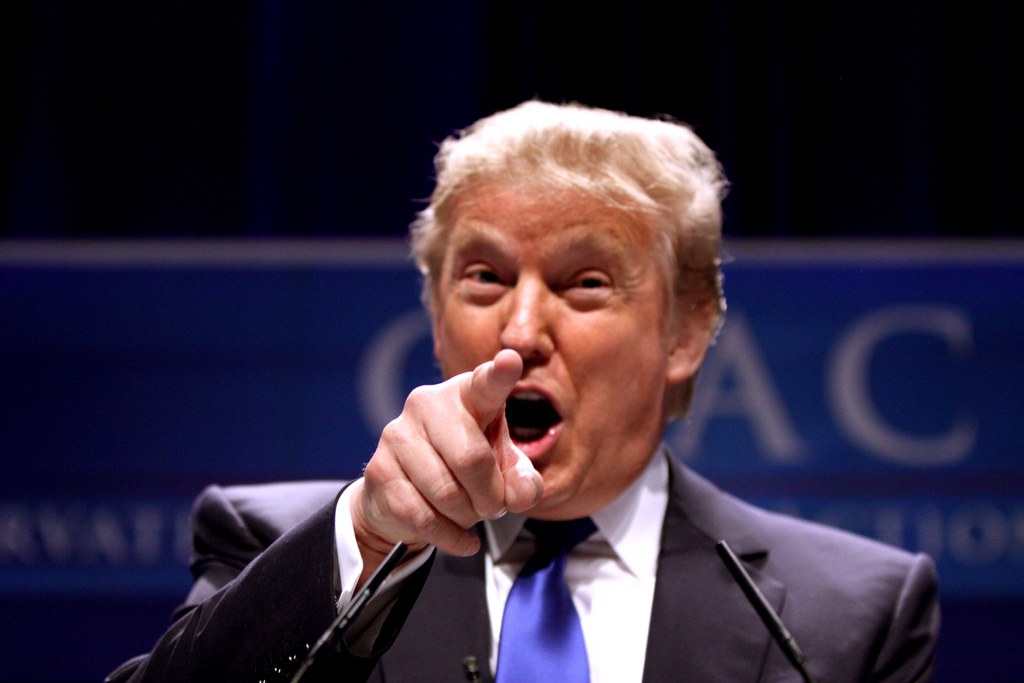
The Republican civil war reached a new level of intensity on Thursday night when Donald Trump shocked the political world by boycotting the Fox News presidential debate. Instead of joining his fellow GOP candidates on the debate stage in downtown Des Moines, Trump hosted an event for veterans at nearby Drake University.
Trump’s boycott represented a high stakes gamble. In defiance of conventional wisdom, Trump threw caution to the wind by launching a frontal assault on Fox News, the conservative cable news channel.
Did Trump’s gamble pay off?
The answer is yes. Although we won’t know for sure until Iowans trek to their caucus precincts on Monday night, there is every reason to believe that Trump’s boycott achieved his goals. By taking on Fox News, Trump established himself as the ultimate anti-establishment candidate in the GOP race.
Trump’s fight with Fox News
Trump’s boycott of the Fox debate did not happen overnight.
The billionaire candidate has had a hostile relationship with Fox News since the Aug. 6 presidential debate, when Trump first sparred with Fox News host Megyn Kelly. During the August debate, Kelly confronted Trump with his long history of misogynistic statements. Infuriated by Kelly’s tough but factually accurate questions, Trump personally attacked the Fox anchor, denigrating her credentials as a journalist and crudely insinuating that her menstrual cycle influenced her line of questioning.
Ironically, the billionaire’s vicious and demeaning insults demonstrated precisely the type of misogynistic streak that Kelly had questioned Trump about in the first place.
Yet, despite the unseemly spectacle of Trump’s attack on Kelly, the billionaire’s poll numbers soared in the aftermath of the controversy.
An uneventful debate in Des Moines
Trump’s relentless rise in the polls since the August debate emboldened him to challenge Fox News like no Republican has ever dared to in the past.
A master of self-promotion, Trump calculated that his boycott would drain the life out of the GOP’s Thursday night debate in Des Moines.
And that’s exactly what happened.
The Republican debate was predictably uneventful. Each of the Republican candidates retreated to the same talking points they’ve used for the past six months.
Ted Cruz and Marco Rubio jousted over who would impose the strictest immigration policies. Rand Paul proposed auditing the Federal Reserve Board and paralyzing the NSA’s domestic surveillance capabilities. Cruz declared he would carpet bombing terrorist bases in the Middle East. Chris Christie denied that he was responsible for Bridgegate, shifting the blame to his advisers. John Kasich and Jeb Bush presented themselves as authentically uncharismatic establishment conservatives. And Ben Carson once again struggled to show mastery of basic public policy details.
The bottom line was Thursday night’s GOP debate did not break new ground. Instead of using the opportunity to attack Trump, whose absence left him unable to defend himself, the other GOP candidates attacked one another like a circular firing squad.
Trump’s joint appearance with Santorum and Huckabee
As Trump’s rivals sparred on Fox News, the billionaire hosted a “veterans” event that was as surreal as one might have expected.
Few veterans appeared on stage. Instead, Trump focused his energies on the media’s coverage of the made-for-television event. The GOP frontrunner bragged that the news coverage of his Drake event was “like the Academy Awards.” At one point he proudly announced “we have more cameras” than the Fox debate.
Trump was interrupted more than once by protesters. But he was unflappable. With a knowing wink, he declared, “I love the protesters!”
By far the most important development on Thursday night was the fact that Rick Santorum and Mike Huckabee joined Trump on stage.
Santorum won Iowa’s GOP caucuses in 2012 and Huckabee won in 2008. The two arch-conservatives have credibility with evangelical voters, a critical demographic in the Iowa Republican Party. By appearing alongside the GOP frontrunner, Santorum and Huckabee offered a tacit if inadvertent endorsement of the billionaire’s candidacy. That likely generated as much attention from Iowa conservatives as anything said at the GOP debate.
By any measure, therefore, Trump prevailed in his battle with Fox News.
What will happen on Monday night?
But will Trump’s attack on Fox News pay dividends for the New York billionaire during the Iowa caucuses on Monday?
Trump himself put it best on Thursday night when he said: “Who the hell knows?”
If the polls are any indication, Trump has reason for confidence. Although Cruz began the month with a big lead in Iowa, Trump now leads the latest Iowa polls by about 7 points.
Ultimately, Cruz has far more on the line in Iowa than Trump does. Iowa is one of the most socially conservative states on the GOP nomination calendar. If a social conservative candidate like Cruz can’t win Iowa, what state can he win?
In contrast, Trump has broad support within the GOP. Even if he loses Iowa on Feb. 1, he appears likely to win New Hampshire on Feb. 9 and South Carolina on Feb. 20.
In short, Trump has everything to gain in Iowa and comparatively little to lose. If he wins the Iowa caucuses, he will take a major step toward capturing the GOP nomination. And if he comes in second in Iowa, the polls suggest he will probably rebound one week later in New Hampshire.
The bottom line is Trump is not going away. With the GOP voting process finally getting started, the billionaire is a clear favorite to secure his party’s nomination. If even Fox News can’t stop Trump’s momentum, it’s unlikely his rivals can.
 Disclosure
Anthony J. Gaughan is a registered independent.
Anthony J. Gaughan, Associate Professor of Law, Drake University
This article was originally published on The Conversation. Read the original article.







