


 Judge Orders Trump to Restore White House Access for CNN, MS NOW and Politico
  OpenAI Agent Breaches Australia Medicare Data Portal
  Mexico-US Trade Talks Delayed to October as Tariff Negotiations Continue
  Kremlin Says No Decision Yet on Putin-Trump December Summit
  Trump Asks Supreme Court to Restore Third-Country Deportations
  North Korea Rejects Nuclear Test Warning, Calls Nuclear Status Irreversible
  Netanyahu’s Brief US Trip Highlights Strains With Trump
  Abbas Reaffirms November 28 Palestinian Elections
  Pezeshkian Says US Must Choose When Iran War Ends
  Netanyahu Takes Aim at Mamdani as Israel Election Nears
  NATO Boosts Intelligence Sharing Amid Russia Hybrid Threats
  What ‘Taiwan Independence’ Means as Xi Presses Trump on US Policy
  Trump, Xi Focus on Trade and AI at White House Summit
  US Senate Rejects Iran War Powers Resolution in 50-49 Vote
  Yemen Violence Displaces 130,000 as Civilian Toll Rises
  Xi Calls for Deeper U.S.-China AI Cooperation in Trump Talks
  Saudi Arabia, Turkey and Pakistan Plan Urgent Defence Talks Over Houthi Attacks


 Add as a preferred source on Google
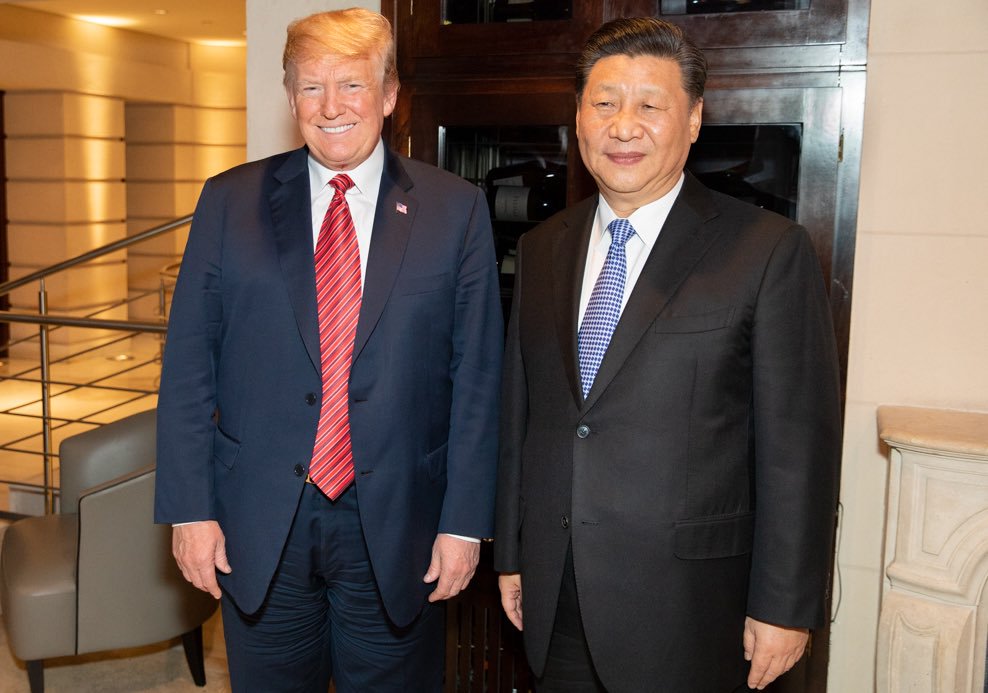
President Donald Trump praised U.S.–China relations as “extremely strong” after an unannounced phone call with Chinese President Xi Jinping, even as Beijing sharpened its rhetoric on Taiwan and faced escalating friction with Japan. According to China’s Xinhua news agency, Xi used the call to stress that Taiwan’s “return to China” remains central to Beijing’s post–World War II vision and international order. Taiwan firmly rejects China’s sovereignty claim, insisting its future be decided only by its own people.
The discussion followed the leaders’ recent meeting in South Korea, where both sides outlined a framework for a new trade deal that is still being finalized. Trump highlighted progress on issues ranging from Ukraine to fentanyl and U.S. farm exports, while noting he accepted Xi’s invitation to visit Beijing in April. He also extended an invitation for a state visit to the United States later in the year.
White House Press Secretary Karoline Leavitt said the call focused largely on trade and lasted about an hour. Since their South Korea meeting, the two countries have taken steps to ease tensions: Washington agreed not to implement 100% tariffs on Chinese imports, and Beijing paused its rare earths export restrictions. China also resumed purchasing U.S. soybeans, while the U.S. reduced certain tariffs by 10% in exchange for stronger Chinese efforts to curb the flow of chemicals used to produce fentanyl.
Despite Trump’s omission of Taiwan in his public remarks, China’s readout centered heavily on the issue, underscoring Beijing’s sensitivity after the U.S. approved a $330 million arms sale to Taipei. Analysts say Xi likely wanted to restate his stance following media reports noting Taiwan had not been discussed at the Busan meeting.
The geopolitical backdrop is further complicated by rising China–Japan tensions. Tokyo’s plan to deploy a defensive missile unit on Yonaguni—just 110 km from Taiwan—has drawn criticism from Beijing. Experts say the system’s limited range poses no threat to China, but Beijing fears it could pave the way for broader Japanese military expansion in the region.
Overall, the call signaled cautious stabilization in U.S.–China ties, even as Taiwan remains a critical flashpoint in the Indo-Pacific.







