


 Colombia Extradites FARC Dissident Leader ‘Spider’ to US
  Synthetic data could ease people’s concerns about privacy breaches. But who gets to create it?
  Pope Leo Backs Press Freedom After White House Media Ban
  Pentagon Restarts Testosterone Testing for US Troops
  Yemen Violence Displaces 130,000 as Civilian Toll Rises
  Trump Bans CNN, MS NOW and Politico From White House
  US Supreme Court Revives Trump Administration Voter Citizenship Database
  Who should own the knowledge that underpins AI technology?
  China Reviews Broadcom Switch Use in State Data Centres
  FDA Names Permanent Drug and Biologics Center Chiefs
  Appeals Court Rejects Trump Third-Country Deportation Policy
  US Immigration Arrests Surge as Deportations Lag Behind
  Judge Orders Trump to Restore White House Access for CNN, MS NOW and Politico
  Putin Says Ukraine Peace Proposals Remain on Table
  FCC Approves Foreign Investment in $110B Paramount-Warner Bros. Deal
  North Korea Rejects Nuclear Test Warning, Calls Nuclear Status Irreversible
  Saudi Arabia Shuts East-West Oil Pipeline After Drone Attack


 Add as a preferred source on Google
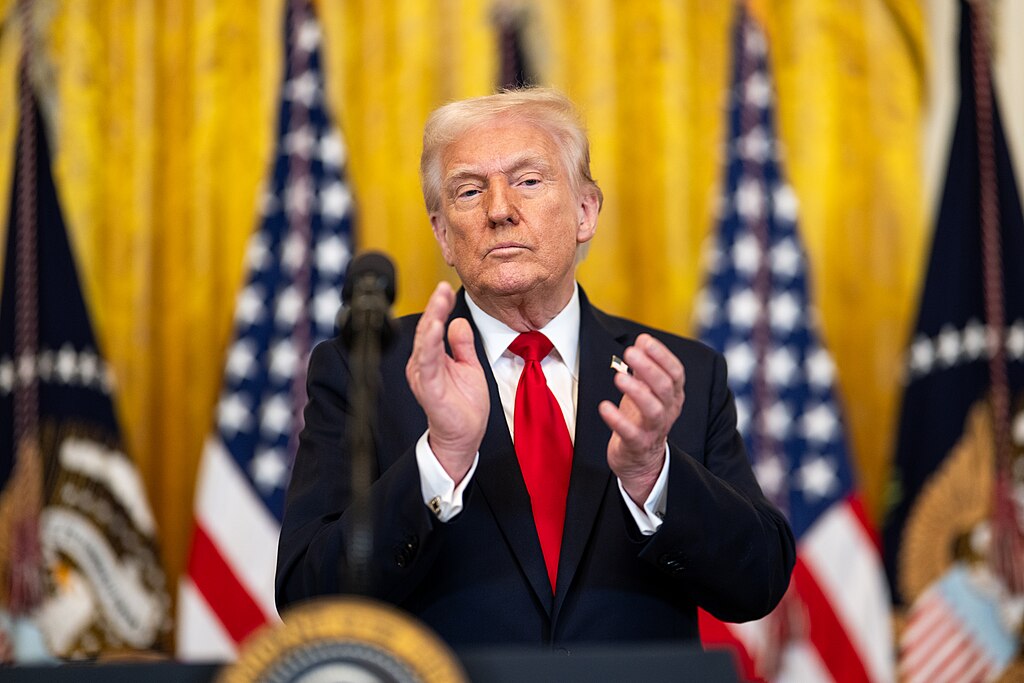
U.S. President Donald Trump said on Thursday that his administration is considering sending rebate checks to American taxpayers, funded directly by revenues from newly imposed tariffs. In an interview with OAN News, Trump described the potential payouts as a “dividend” for U.S. citizens, suggesting amounts between $1,000 and $2,000 per person.
Trump argued that tariff collections are beginning to grow significantly, projecting they could eventually generate as much as $1 trillion annually. While his estimate was optimistic, Treasury Secretary Scott Bessent provided a more cautious outlook, noting that tariff revenues could realistically exceed $500 billion. According to Trump, part of this income could be returned to taxpayers, while another portion might be used to reduce the national debt. However, any such rebate program would require congressional approval before moving forward.
The president’s remarks came as Washington faced heightened political tensions. The federal government entered its second day of a partial shutdown after lawmakers failed to agree on a stopgap funding measure. The White House has warned that the prolonged standoff could lead to layoffs and even permanent job cuts within federal agencies.
Trump framed the proposed rebates as a way to show Americans the tangible benefits of his trade policies, arguing that tariff revenues could directly offset costs for households. The idea aligns with his broader push to position tariffs not only as a negotiating tool with trading partners but also as a revenue stream that could benefit ordinary citizens.
As the shutdown continued, Trump emphasized that his administration was exploring “creative solutions” to both ease financial pressure on Americans and address long-term fiscal concerns. Whether Congress supports the plan remains uncertain, but the proposal underscores the White House’s attempt to reframe tariffs as a source of national profit rather than an economic burden.







