


 Vietnam Stocks Join FTSE Emerging Market Indexes, Unlocking Billions in Foreign Investment
  Paramount-Warner Bros $110 Billion Deal Draws Antitrust Backlash
  Oil Prices Rise as Houthi Strikes on Riyadh Fuel Middle East Tensions
  Trump Says ‘Freedom’ Is Coming to Cuba
  Big AI wants to slow down AI research. Is it a safety pause or a strategic retreat?
  US, Denmark and Greenland Set to Sign Arctic Security Deal
  Yen in Focus as BOJ, Fed Rate Hikes Reshape Currency Markets
  Gold Prices Hold Steady Ahead of Trump-Xi Summit, Middle East Risks
  China’s robots can run faster than Usain Bolt – now they are being prepared for war
  Carney Condemns Belleville Synagogue Shooting That Wounded Police Officer
  Gold Prices Rise as Oil Slide Eases Fed Rate Hike Fears
  Trump Open to Pezeshkian Meeting as Iran Tensions Escalate
  Oil Prices Extend Losses as U.S.-Iran Talks Ease Supply Fears
  Oil Prices Tumble on U.S.-Iran Diplomacy Hopes, Supply Relief
  South Korea to Brief Lawmakers on $350 Billion US Investment Package


 Add as a preferred source on Google
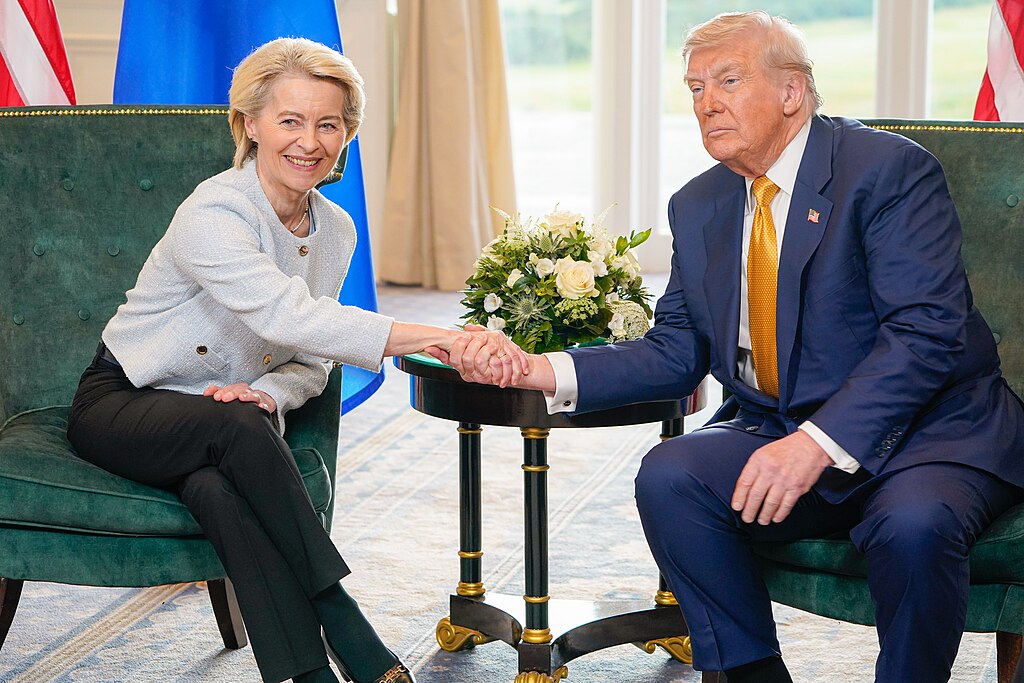
U.S. President Donald Trump announced a landmark trade agreement with the European Union, featuring a 15% tariff on EU goods entering the United States and significant commitments for EU purchases of American energy and military equipment. The deal also includes $600 billion in EU investments in the U.S., marking one of the largest commitments of its kind.
This agreement follows a similar deal with Japan earlier this month, which reduced tariffs on auto imports and secured $550 billion in U.S.-bound investments and loans. Financial markets have responded positively, with the euro trading near three-week highs at $1.1738 and the STOXX 600 index reaching its strongest level since early June amid optimism for transatlantic trade relations.
Economists offered mixed reactions. Holger Schmieding of Berenberg Bank noted that while uncertainty is eased, higher tariffs could dampen long-term U.S. growth. Brian Jacobsen of Annex Wealth Management highlighted that tariffs remain elevated compared to pre-trade war levels, calling it a gamble to attract domestic investment. Hasnain Malik of Tellimer and Michael Brown of Pepperstone pointed out that while a 15% tariff is significant, it is far less severe than earlier threats of 30–50%, reducing fears of a no-deal scenario.
Analysts suggest markets may see short-term boosts in equities and the euro but caution that higher tariffs could contribute to inflation depending on how costs are absorbed by manufacturers and consumers. The deal aligns with Trump’s strategy of using tariffs to address trade imbalances while encouraging foreign investment in U.S. industries.
The long-term impact will depend on the durability of this agreement and whether it fosters stronger economic ties or reignites trade tensions in the future.







