


 Taiwan Thanks US for Support Ahead of Trump-Xi Summit
  OpenAI Agent Breaches Australia Medicare Data Portal
  Pezeshkian Says US Must Choose When Iran War Ends
  Ghana Says Western Support Growing for Slave Trade Reparations
  Kremlin Says No Decision Yet on Putin-Trump December Summit
  Netanyahu Defends Israel at UN as Delegates Stage Walkout
  NATO Boosts Intelligence Sharing Amid Russia Hybrid Threats
  Saudi Arabia, Turkey and Pakistan Plan Urgent Defence Talks Over Houthi Attacks
  Sudan Rejects US Legitimacy Remarks, Defends Sovereignty
  Mexico-US Trade Talks Delayed to October as Tariff Negotiations Continue
  Trump, Xi Focus on Trade and AI at White House Summit
  France Defends Netanyahu Airspace Clearance Despite ICC Warrant
  South Korea, US Discuss Warship Building Cooperation
  Trump Asks Supreme Court to Restore Third-Country Deportations
  Russian Missile and Drone Attack on Kyiv Kills Two, Damages Maternity Hospital
  Netanyahu’s Brief US Trip Highlights Strains With Trump
  US Senate Rejects Iran War Powers Resolution in 50-49 Vote


 Add as a preferred source on Google
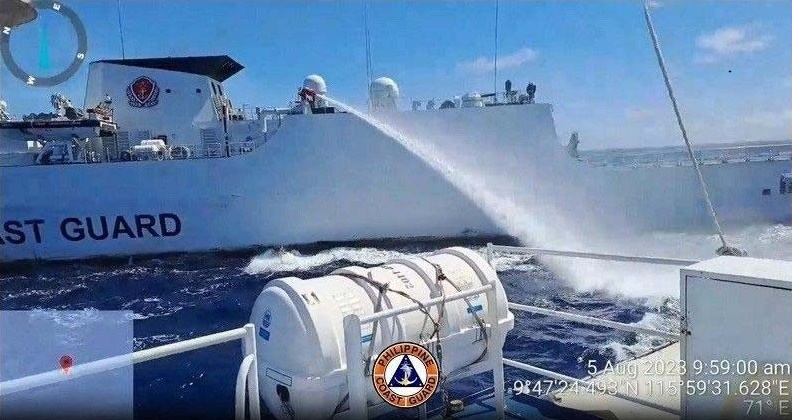
China’s navy conducted a patrol in the South China Sea on Tuesday, accusing the Philippines of provocations as Filipino and U.S. forces carried out joint aerial patrols over the disputed waters. The move comes amid rising tensions between Beijing and Manila over sovereignty claims in the resource-rich region, which China claims almost entirely under its controversial nine-dash line.
Over 14,000 U.S. and Filipino troops are participating in joint military exercises from April 21 to May 9, aimed at enhancing combat readiness and regional defense cooperation. Beijing has criticized the drills as destabilizing and a threat to regional peace.
China’s People’s Liberation Army Southern Theatre Command announced that its navy and air forces performed “routine” patrols in the South China Sea, without specifying the location. The PLA accused the Philippines of escalating maritime disputes and “inviting external forces” to conduct joint patrols, which it labeled as infringements on China's sovereignty.
In response, the Philippine military confirmed that three FA-50 fighter jets, along with two U.S. B-1B bombers, two F-16s, and an F-18, carried out joint patrols over the South China Sea on the same day, underscoring continued defense collaboration with the United States.
The Philippines firmly rejected China’s accusations, stating that joint operations with allies are part of legitimate efforts to safeguard territorial waters and uphold maritime domain awareness. “Preparedness is not provocation,” said the Philippine armed forces. “The Philippines is a sovereign nation—no foreign power can dictate our defense partnerships or strategies.”
The latest developments highlight deepening geopolitical friction in the Indo-Pacific as regional powers jostle for influence and control over vital sea lanes and exclusive economic zones.







