


 Fed Unveils Stablecoin Rules Under GENIUS Act
  North Korea Rejects Nuclear Test Warning, Calls Nuclear Status Irreversible
  OpenAI Agent Breaches Australia Medicare Data Portal
  Taiwan Thanks US for Support Ahead of Trump-Xi Summit
  China’s ‘Lipstick King’ Says AI Won’t Replace Livestream Hosts
  Abbas Reaffirms November 28 Palestinian Elections
  U.S. Treasury Yields Surge as 30-Year Hits 22-Year High
  Japan Private-Sector Growth Slows as Domestic Demand Weakens
  South Korea, US Discuss Warship Building Cooperation
  Gold Prices Fall as Treasury Yields Rise on Fed Rate Hike Bets
  US Senate Rejects Iran War Powers Resolution in 50-49 Vote
  France Defends Netanyahu Airspace Clearance Despite ICC Warrant
  Trump, Xi Visit US National Archives After White House Summit
  Australia Unemployment Hits Five-Year High Despite Strong Jobs Growth
  Trump, Xi Focus on Trade and AI at White House Summit
  North Korea Warns South Korea Over US-Led Defense Role
  Sudan Rejects US Legitimacy Remarks, Defends Sovereignty


 Add as a preferred source on Google
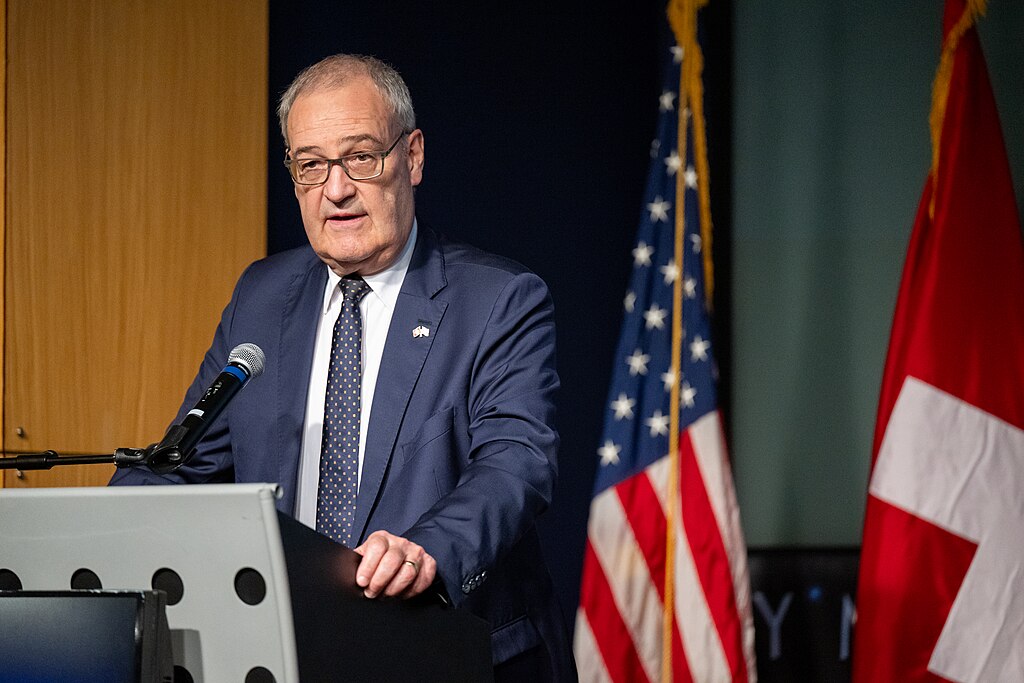
Switzerland is preparing for a significant reduction in U.S. import tariffs, with Swiss Economy Minister Guy Parmelin stating that the current 39% general tariff on Swiss goods could drop to 15% as soon as early December. In an interview with Swiss broadcaster SRF, Parmelin noted that Switzerland has already completed its part of the process, while the United States is still finalizing the necessary steps. He added that although the timeline depends on U.S. implementation, he remains hopeful the new tariff rate will be active within the next few weeks.
Earlier this week, Parmelin told the Aargauer Zeitung that Switzerland anticipates a 10–12 working day processing period for the updated tariffs to be integrated into the U.S. system. However, he emphasized that giving an exact date remains difficult due to procedural uncertainties on the American side.
The expected tariff reduction follows a preliminary agreement reached on November 14 between Switzerland and the United States. The deal comes more than three months after U.S. President Donald Trump imposed a steep 39% tariff—the highest rate applied to any European nation—on imports from Switzerland. The upcoming reduction is anticipated to ease tensions and restore more favorable trade conditions between the two countries.
Parmelin also indicated that negotiations are far from over. He revealed that Switzerland will soon engage in more detailed discussions with the U.S., aiming to secure additional exemptions from the proposed 15% tariff. According to him, Switzerland still sees room for improvement and will push for further concessions to protect its exporters and stabilize bilateral trade.
By continuing to advocate for reduced trade barriers and expanded exemptions, Switzerland hopes to strengthen its economic ties with the U.S. while safeguarding the competitiveness of Swiss-made products in the American market.







