


 SpaceX, Charter Communications Explore Mobile Partnership to Expand Starlink Wireless Service
  Trump and Merck KGaA Partner to Slash IVF Drug Costs and Expand Fertility Coverage
  Blue Origin’s New Glenn Achieves Breakthrough Success With First NASA Mission
  Lenovo Shares Slide as AI-Driven Memory Demand Signals Higher DRAM and NAND Prices
  Alibaba Shares Fall After Anthropic Alleges Massive AI Model Distillation Campaign
  NASA's Artemis II Mission: First Crewed Lunar Journey Since Apollo
  Super Micro Shares Slide After Taiwan Raids Over Alleged Nvidia AI Chip Smuggling Probe
  OpenAI IPO Delay Weighs on SoftBank Shares as AI Valuation Concerns Grow
  Is space worth the cost? Accounting experts say its value can’t be found in spreadsheets
  Samsung and SK Hynix Shares Jump After Micron Earnings Boost AI Chip Optimism
  Trump Administration Releases New UFO Files and Apollo Mission Records
  Micron Stock Surges on Strong AI Demand, Record Revenue, and Bullish Q4 Forecast
  SpaceX Pivots Toward Moon City as Musk Reframes Long-Term Space Vision
  FDA Pilot Program Eases Rules for Nicotine Pouch Makers
  Trump Signs Executive Order to Boost AI Research in Childhood Cancer


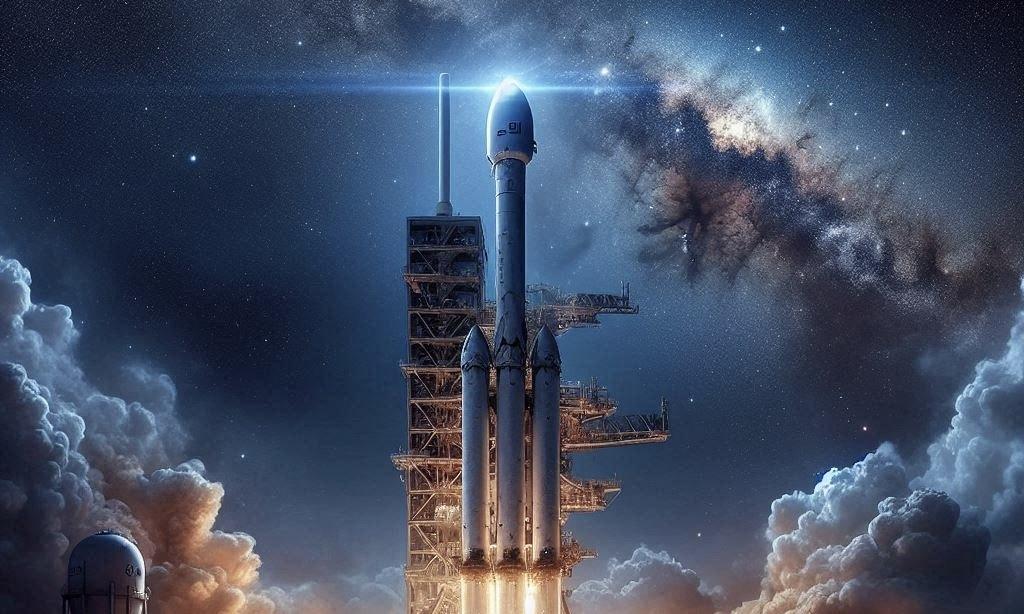
SpaceX has suspended all Falcon 9 launches after an anomaly occurred with the rocket's second stage during the Crew 9 mission for NASA. The second stage failed to land as planned, prompting an investigation and delaying future launches, including the upcoming Europa Clipper mission.
SpaceX Halts Launches After Crew 9 Anomaly, Potentially Impacting Upcoming Europa Clipper Mission
SpaceX disclosed via X that the rocket's second stage was intentionally discarded in the ocean due to an anomaly, which resulted in it failing to land in its designated location. Subsequently, the organization has suspended additional launches while investigating the matter, per Wccftech.
Crew 9 was a significant mission for SpaceX, as it was the first time a NASA crew was launched from Cape Canaveral Space Force Station following a minor weather-related delay in Florida. During a media briefing, Bill Gerstenmaier, a critical figure at SpaceX, emphasized that launching from this location enhances the company's capacity to sustain a rapid launch cadence. This cadence is essential for SpaceX, particularly as it prepares for significant missions such as the Europa Clipper, a satellite intended for Jupiter's frigid moon Europa.
Nevertheless, this forthcoming mission may be affected by the anomaly. SpaceX reported on X that the Falcon 9's second stage underwent an "off-nominal deorbit burn" during reentry. A rocket's apogee is reduced during a deorbit burn to guarantee its safe reentry into the Earth's atmosphere. The second stage successfully touched down in the ocean but landed outside the designated area, necessitating additional investigation.
SpaceX Faces Uncertainty Over Future Launches as Falcon 9 Anomalies Prompt Further Investigations
NASA's commercial crew program manager, Steve Stich, reported that the agency had been working with SpaceX to resolve previous rocket anomalies before the launch. One last incident involved a Falcon 9 second-stage engine misfire, while a Falcon 9 first-stage booster made a hard landing on SpaceX's drone ship, causing it to turn over.
After the previous second-stage issue, SpaceX promptly addressed the situation by ensuring that the affected systems were not utilized in subsequent launches. Nevertheless, it is still uncertain whether the most recent anomaly is associated with the same systems. SpaceX has declared that it will "resume launching once we have a more comprehensive understanding of the root cause."
The Europa Clipper mission, scheduled to launch on October 10 aboard a Falcon Heavy, is also ambiguous regarding its potential impact. SpaceX had intended to conduct an additional Falcon 9 launch on September 30; however, this suspension may impact the established timeline. The company has significantly increased the frequency of its launches in 2024 by signing numerous agreements for the Starlink internet constellation, which currently serves over four million customers worldwide.







