


 Trump Meets Venezuela’s Delcy Rodriguez at UN Assembly
  Canada Unveils Bill to Fast-Track Major Resource Projects
  Europe Warns Russia Is Escalating Hybrid Attacks Across NATO
  Ghana Says Western Support Growing for Slave Trade Reparations
  Russian Envoy Dmitriev Heads to US for Ukraine Talks
  Burnham Eyes UK Leadership Role in AI Ahead of Trump Meeting
  Sudan Rejects US Legitimacy Remarks, Defends Sovereignty
  Trump to Press Xi on Release of US Nuclear Expert Held in China
  Trump Board of Peace Unveils $2.45 Billion Gaza Recovery Plan
  China Tightens Fentanyl Rules Ahead of Trump-Xi Summit
  US Officials Split Over Response to Israeli West Bank Settlements
  Venezuela Promises Elections as Delcy Rodriguez Pledges Democratic Transition
  Marco Rubio to Meet Russia’s Lavrov in New York
  South Korea, US Discuss Warship Building Cooperation
  Trump Administration Plans Faster FDA Reviews for Smoke-Free Nicotine Products
  Lula and Flavio Bolsonaro Tied in Brazil Runoff Poll
  Macron, Trump Discuss Ukraine-Russia Energy Strike Moratorium


 Add as a preferred source on Google
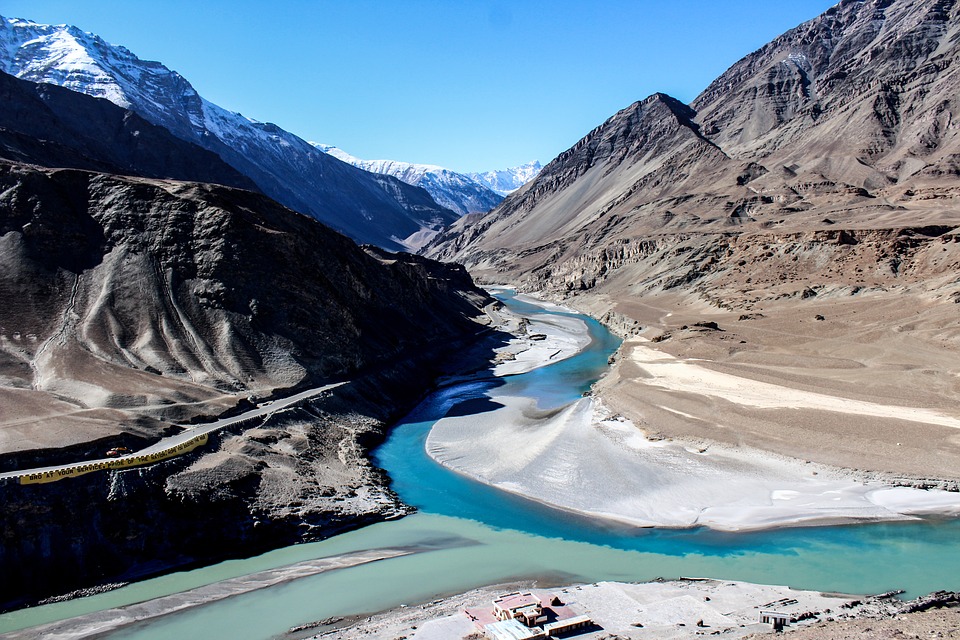
Much like the disputed South China Sea, China is also moving to expand its territorial claims in other directions, leading to tensions with surrounding countries. This time, China is looking to expand its territorial claims into the Himalayas, where Chinese forces are seen constructing roads and outposts in the region.
Satellite images have found that the Chinese military has been seen constructing roads in certain parts of the Himalayas, close to its disputed border with India. Some parts of the Himalayas include Tibet and Bhutan. The move to extend its territorial claims is believed to be part of its strategy in gaining an advantage against India, as the country battles the second wave of COVID-19.
Satellite images also found three Chinese villages built inside Bhutan, with the majority of the settlements occupied with CCP headquarters and military outposts, power stations, and warehouses. WION’s Palki Sharma warned that China is using its strategy from its South China Sea efforts into the Himalayas. Sharma said that China is “capitalizing on India’s crisis.”
“China is taking its South China Sea strategy to the Himalayas. It is building structures to claim disputed territory. In the South China Sea, it fortified and armed shoals claimed by Vietnam and the Philippines,” said Sharma. “Now it has built a highway near Arunachal Pradesh and villages in Bhutan. China wants to do more such construction work along the Tibetan border.”
Last week, China warned the US not to disrupt peace and stability in the disputed waters following the US’ guided-missile destroyer USS Curtis Wilbur was seen transiting close to the Paracel Islands, which China claims sovereignty over. The transit is part of its deployment of the US Navy’s 7th Fleet to the region. Tensions have since escalated between China and the US as of late when Chinese officials have accused a US warship of entering Chinese waters without permission.
China’s Ministry of Foreign Affairs issued a statement criticizing the US Navy’s presence in the disputed waters. They said that the US violated China’s “security and sovereignty, as well as undermined peace and stability in the South China Sea.”
China claims sovereignty over almost the entire body of water, a claim that was rejected by an international tribunal and its surrounding countries, including the US.







