


 Burnham Eyes UK Leadership Role in AI Ahead of Trump Meeting
  Scott Bessent Eyed as Trump’s New AI Czar
  Macron Challenges Trump’s Gaza Peace Claims at UN
  Lula and Flavio Bolsonaro Tied in Brazil Runoff Poll
  US Plans Two New Military Bases in Greenland Under Arctic Deal
  Trump Administration Plans Faster FDA Reviews for Smoke-Free Nicotine Products
  Canada Unveils Bill to Fast-Track Major Resource Projects
  Trump Says U.S.-Iran Peace Deal Near After UN Talks
  Trump to Press Xi on Release of US Nuclear Expert Held in China
  Lula Meets Mamdani in New York as Elections Approach
  China Tightens Fentanyl Rules Ahead of Trump-Xi Summit
  US, Denmark and Greenland Set to Sign Arctic Security Deal
  Zelenskiy Meets CIA Chief John Ratcliffe at Ireland’s Shannon Airport
  Trump Says ‘Freedom’ Is Coming to Cuba
  Iran Vows ‘Crushing’ Response as US Talks Continue
  US, Japan and South Korea Back Taiwan Ahead of Trump-Xi Summit
  Venezuela Promises Elections as Delcy Rodriguez Pledges Democratic Transition


 Add as a preferred source on Google
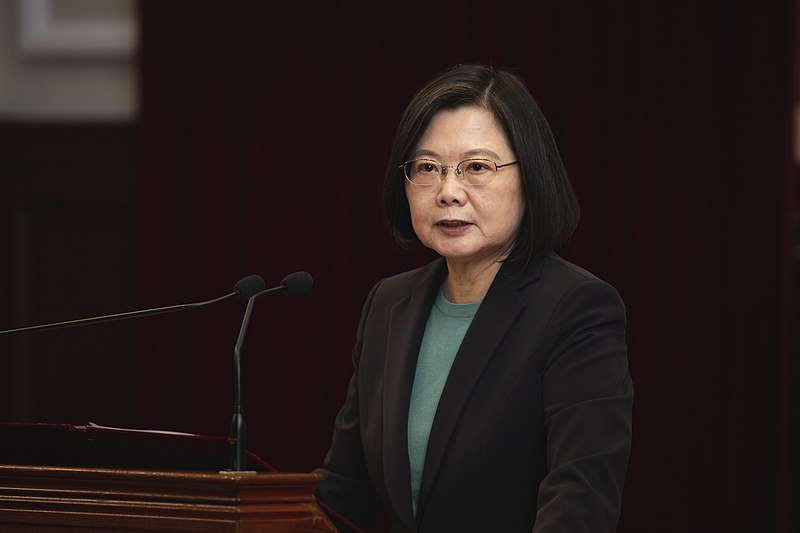
This week, Taiwan has expressed its desire to join the Indo-Pacific Economic Framework in a senior minister’s exchange with US Trade Representative Katherine Tai. The island nation reiterated its aspiration to be part of the framework as it continues to face possible threats from China.
Reuters reports that Taiwan’s chief trade negotiator John Deng spoke with Tai in a one-hour virtual call Monday. Deng said that the island nation supports the US’ Indo-Pacific Economic Framework and wants to join, according to Deng’s spokesperson Hsiao Chen-Jung. The island nation has supported the IPEF as its democratic government seeks to counter the economic and military coercion by Beijing in the region.
“Regional trade issues are of concern to both sides,” Hsiao told reporters following the virtual meeting between Deng and Tai.
A statement from Tai’s office did not mention Taiwan’s intention to join the IPEF but said that both parties discussed the progress on trade matters and the mutual interest in working together on key issues both regionally and in organizations such as the World Trade Organization. Last month, Tai declined to say whether the island nation would be invited to join the IPEF, which the US Senate criticized as a missed opportunity.
China, which claims Taiwan as its breakaway province, condemned the US-Indo-Pacific plan, accusing Washington of creating “exclusive clubs.” The US is obligated by treaty to provide arms to Taiwan and has increasingly shown support for the island nation in recent years. Taiwan’s possible participation in the economic framework will draw the ire of China, as it has often condemned any meeting between officials of the island nation and other governments.
Taiwan’s foreign ministry said in a statement last week in light of the sudden military drills Beijing ordered around the area in the midst of the visit by a group of US lawmakers to the island. The foreign ministry said that China’s military threats against Taiwan will only lead to more support for the island nation by Washington and other democratic countries.
“The threat of force by the Chinese Communist Party’s totalitarian government against Taiwan will only strengthen the Taiwanese people’s will to defend freedom and democracy, and will also attract support for democratic Taiwan from the United States and even more democratic partners,” said the statement.







