


 European Stocks Slip as Iran Tensions Offset Strong Eurozone Data
  Paramount-Warner Bros $110 Billion Deal Draws Antitrust Backlash
  Nike Earnings at Risk as UBS Cuts Price Target to $42
  Asian Stocks Mixed Ahead of Trump-Xi Meeting
  Gold Prices Hold Steady Ahead of Trump-Xi Summit, Middle East Risks
  US Northeast Airports Resume Operations After Telecom Outage Disrupts Thousands of Flights
  OpenAI Urges US-Led Global Standards for Frontier AI
  Yen Weakens as Dollar Gains on Widening US-Japan Rate Gap
  Novo Nordisk Weighs Direct NYSE Listing to Boost U.S. Profile
  Trump Bans CNN, MS NOW and Politico From White House
  U.S. Dollar Hits Eight-Week High After Fed Rate Hike
  Petrobras Joins Brazil’s New Diesel Subsidy Program
  South Korea to Brief Lawmakers on $350 Billion US Investment Package
  White House Bars CNN, MS NOW and Politico Reporters
  Gold Prices Rise as Oil Slide Eases Fed Rate Hike Fears
  Gold Prices Rise as Oil Slump Eases Fed Rate Hike Fears


 Add as a preferred source on Google
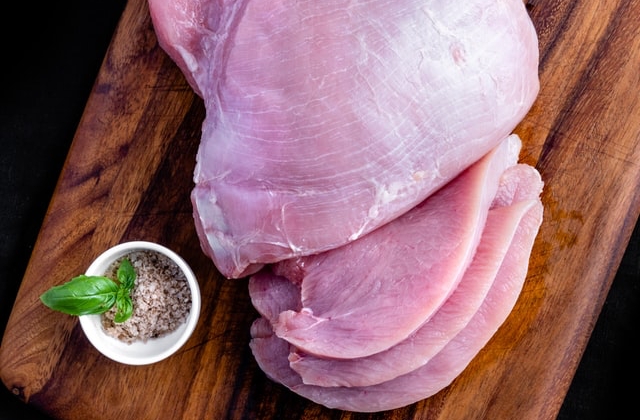
Serenade Foods issued a recall on almost 60,000 pounds of raw chicken meat. The products are frozen, pre-bowned stuffed chicken, and breaded.
According to CNN Business, the frozen products are sold at Aldi supermarkets and other stores. The reason for the recall is the possible contamination of Salmonella Enteritidis. The USDA Food Safety and Inspection Service confirmed the recall through an announcement that was released earlier this week.
The chicken products were processed and packed by Serenade Foods. As posted in the recall notice, the items were produced on Feb. 24 and Feb. 25, 2021, and these were delivered to various local distributors.
The affected Serenade Foods chicken products are the Dutch Farms Chicken with Broccoli & Cheese; Milford Valley Chicken Cordon Bleu, Milford Valley Chicken with Broccoli & Cheese, Kirkwood Raw Stuffed Chicken Cordon Bleu, and Kirkwood Raw Stuffed Chicken, Broccoli & Cheese.
After the discovery of possible Salmonella contamination, the consumers were advised to throw out the chicken items and to not eat them. These can also be returned to where they were purchased as per the US FSIS.
Moreover, the food safety agency is currently working with the US Centers for Disease Control and Prevention and other health agencies due to an outbreak of Salmonella Enteritidis illnesses in eight states, including Arizona, Illinois, Indiana, Michigan, Minnesota, and New York. So far, 28 cases have been reported from Feb. 21 to June 28, as per Fox Business.
"Unopened intact packages of raw, frozen, breaded chicken stuffed with broccoli and cheese were collected from an ill person's home and tested positive for the outbreak strain of Salmonella Enteritidis," the food safety agency stated. "FSIS continues to work with the CDC and state and local public health partners on this investigation."
Meanwhile, people who consume food contaminated with Salmonella may suffer from a bacterial food-borne illness called salmonellosis. This can cause discomforts, diarrhea, fever, and abdominal cramps within the first 12 to 72 hours after the food consumption of the product.
"Most people recover without treatment. In some persons, however, diarrhea may be so severe that the patient needs to be hospitalized,” the CDC stated. “Older adults, infants, and persons with weakened immune systems are more likely to develop a severe illness. Individuals concerned about an illness should contact their health care provider."







