


 South Korea, US Discuss Warship Building Cooperation
  Netanyahu Takes Aim at Mamdani as Israel Election Nears
  What ‘Taiwan Independence’ Means as Xi Presses Trump on US Policy
  EU Defence Build-Up Too Slow for 2030 Russia Readiness Goal
  Netanyahu Defends Israel at UN as Delegates Stage Walkout
  Judge Orders Trump to Restore White House Access for CNN, MS NOW and Politico
  Netanyahu’s Brief US Trip Highlights Strains With Trump
  Pezeshkian Says US Must Choose When Iran War Ends
  Kremlin Says No Decision Yet on Putin-Trump December Summit
  US Senate Rejects Iran War Powers Resolution in 50-49 Vote
  OpenAI Agent Breaches Australia Medicare Data Portal
  Yemen Violence Displaces 130,000 as Civilian Toll Rises
  Taiwan Thanks US for Support Ahead of Trump-Xi Summit
  Ghana Says Western Support Growing for Slave Trade Reparations
  NATO Boosts Intelligence Sharing Amid Russia Hybrid Threats
  North Korea Warns South Korea Over US-Led Defense Role
  Abbas Reaffirms November 28 Palestinian Elections


 Add as a preferred source on Google
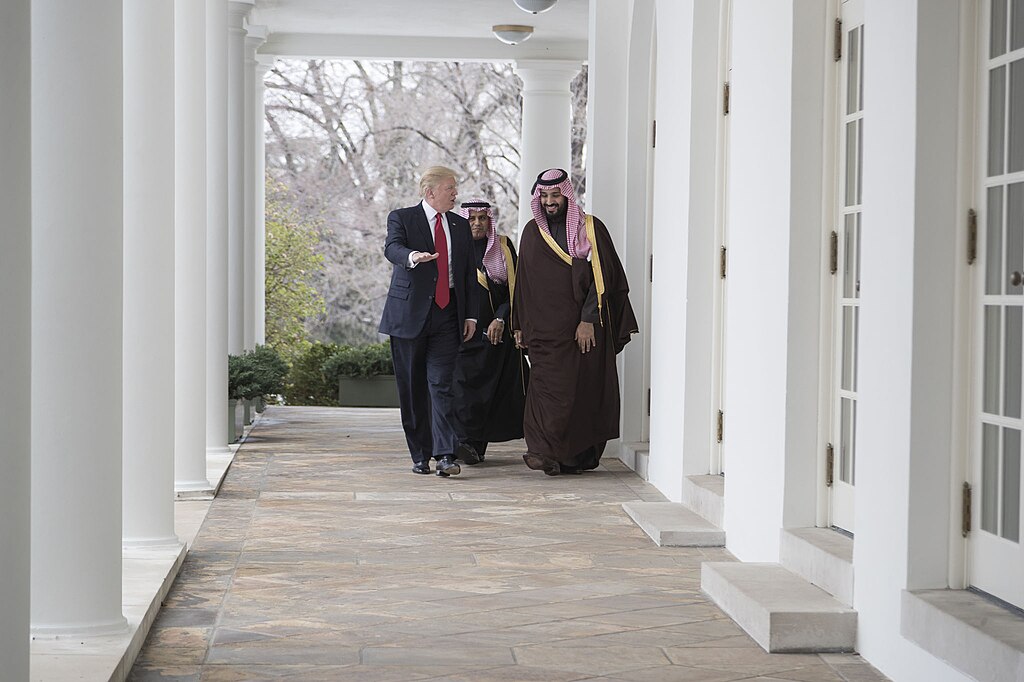
Saudi Arabia’s Crown Prince Mohammed bin Salman is set to meet U.S. President Donald Trump at the White House on Tuesday, marking a significant moment in the countries’ decades-long partnership. The visit aims to strengthen cooperation on energy and security while expanding collaboration in technology, commerce, artificial intelligence, and potentially nuclear energy. It is also MBS’s first trip to Washington since the 2018 killing of journalist Jamal Khashoggi, an event that drew international outrage. While U.S. intelligence concluded the crown prince approved the operation, he has denied ordering it, though he acknowledged responsibility as the kingdom’s de facto leader.
Despite the controversy, both nations appear ready to move forward. Trump hopes to advance the $600 billion Saudi investment commitments made during his earlier trip to Riyadh, steering clear of human rights discussions as before. Meanwhile, Saudi Arabia seeks security guarantees amid escalating tensions in the Middle East, as well as access to advanced AI technologies and progress on a civilian nuclear program.
The long-standing U.S.–Saudi defense partnership has faced pressure since Washington’s limited response to Iran’s 2019 attack on Saudi oil facilities. Concerns grew again after Israel’s strike on Doha, prompting Trump to sign a defense pact with Qatar. Analysts expect Riyadh may receive a similar executive order—short of the full, Congress-ratified agreement Saudi Arabia ultimately wants. Any broader pact remains tied to potential Saudi-Israeli normalization, which Israel says hinges on Palestinian statehood—something Prime Minister Benjamin Netanyahu continues to oppose.
Alongside defense talks, Saudi Arabia is pushing for nuclear energy cooperation and access to high-end AI chips to compete with regional rivals such as the UAE, which recently secured a major U.S. tech deal. While Washington has been hesitant due to concerns over uranium enrichment, experts expect at least a statement of progress toward a nuclear framework.
The visit underscores both nations’ desire to reset relations while navigating complex regional dynamics and strategic ambitions.







