


 NASA Resumes Cygnus XL Cargo Docking with Space Station After Software Fix
  RBNZ Holds Rates at 2.25% as Middle East Conflict Fuels Inflation Concerns
  FDA Pilot Program Eases Rules for Nicotine Pouch Makers
  European Stocks Hold Steady as Iran Ceasefire Deadline Looms
  Energy Prices and Dollar Climb as U.S.-Iran Conflict Grips Global Markets
  U.S.-Iran Ceasefire: Fragile Truce Raises Hopes for Strait of Hormuz Peace Deal
  Neuralink Plans High-Volume Brain Implant Production and Fully Automated Surgery by 2026
  Xi Jinping Pushes Demand-Driven Strategy to Modernize China's Service Sector
  Trump Suspends Iran Strikes for Two Weeks as Ceasefire Talks Begin
  Global LNG Exports Drop 4% in Q1 2026 as Qatar Shutdown Reshapes Energy Markets
  Oil Prices Crash 15% as Trump and Iran Agree to Two-Week Ceasefire
  Sterling Slides as Dollar Holds Firm Amid U.S.-Iran Tensions
  SpaceX Pivots Toward Moon City as Musk Reframes Long-Term Space Vision


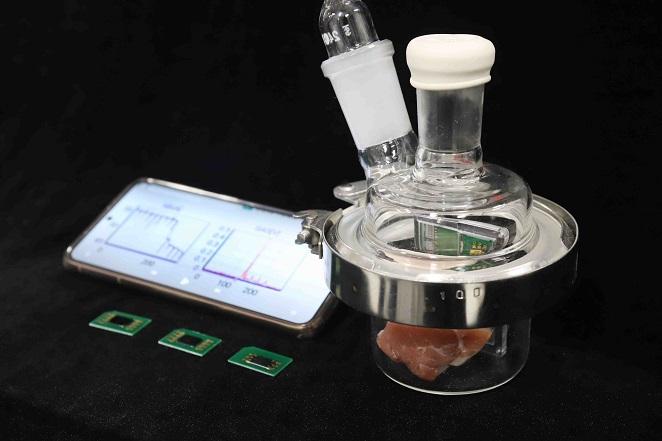
The Korea Research Institute of Bioscience and Biotechnology developed a portable ‘electronic nose’ that can check in real-time whether meat has spoiled.
The research team developed the electronic nose by creating two types of new compounds that can react to foul-smelling compounds and putrescine and applying them to a bionano sensor.
Cadaverine and putrescine generate bad odors caused by meat decay.
The portable electronic nose uses a small battery and features an easy-to-replace sensor.
Kwon Oh-seok, a researcher at the Korea Research Institute of Bioscience and Biotechnology, noted that the electronic nose not only measures meat freshness but also provides data on the correlation of various factors affecting meat decay, including temperature and humidity.







