


 Trump Open to Chinese Automakers Building Cars in US
  Houthi Red Sea Gains Strengthen Iran’s Leverage Over Gulf States
  UK PM Andy Burnham Set for First Trump Meeting in New York
  Vietnam, U.S. Firms Plan 29 Deals Across Energy, Tech and Aviation
  What is Zionism? The different meanings of a contested term
  Global Poll Shows Rising Trust in Institutions as US-China Leadership Support Falls
  Saudi Arabia Raises Security Alerts as Houthi Attacks Threaten Oil Routes
  Judge Blocks Trump Rule Limiting Foreign Student Visas
  Europe can’t achieve space sovereignty alone. Here’s why
  U.S. Imposes New Visa Restrictions Over South Africa Policies
  Houthis Escalate Saudi Attacks as Red Sea Oil Risks Grow
  Mahmoud Khalil Sues Columbia Over Alleged Pro-Palestinian Harassment
  China to Push Global Security Vision at Xiangshan Forum
  Ovechkin Faces Scrutiny Over United Russia Campaign Video
  Banking scandal rocks Brazil’s politics and the country’s presidential election in October
  Ukraine Races to Counter Russia’s Faster Jet-Powered Drones


 Add as a preferred source on Google
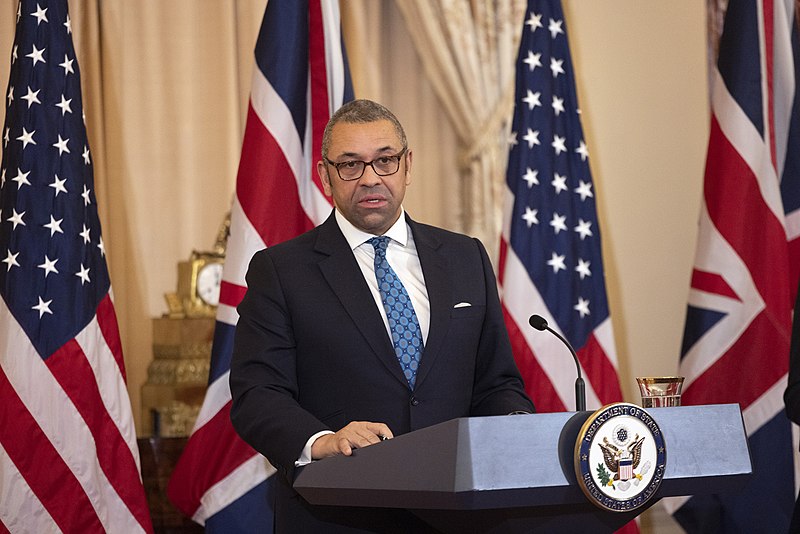
The British government has imposed a new round of sanctions this week as Russia’s aggression on Ukraine is reaching one year. London has now targeted entities and individuals involved in the supply of military equipment for Russian forces.
The UK imposed new sanctions on Wednesday, targeting the “Russian military and Kremlin elites.” Six entities were targeted in the latest round of sanctions over allegedly providing military equipment to Russia’s military, including drones for use in Ukraine. One entity connected to financial networks that help “maintain wealth and power amongst Kremlin elites” was also sanctioned, along with eight other individuals, the government said in a statement as Ukrainian President Volodymyr Zelenskyy visited the UK.
“Ukraine has shown Putin that it will not break under his tyrannical invasion. He has responded by indiscriminately striking civilian areas and critical national infrastructure across the country,” said foreign secretary James Cleverly in a statement. “We cannot let him succeed. We must increase our support.”
The UK has sanctioned over 1,300 Russian entities and individuals since the war in February last year. London has also sanctioned IT service firm Moscoms for acting as a “nexus for the Russian elite” by providing host domains to those involved in assaulting Ukraine.
The individuals sanctioned include Russia’s Presidential Commissioner for Human Rights Boris Titov, former deputy firm of Russia’s largest privately-owned oil refinery Nikolay Egorov, pro-Kremlin news outlet Regum owner Sergey Rudnov, Bank Rossiya and National Media Group shareholder Svetlana Krivonogikh, Russian aircraft repair firm Aerostart owner Viktor Myachin, Russian pharmaceutical firm R-Pharm chairman Alexey Repik, former presidential aide Evgeny Shkolov, and Titov’s son and Delovaya Rossiya president Pavel Titov.
On Thursday, the British defense ministry said in its intelligence bulletin that cross-country mobility conditions in western Ukraine remain the same, saying that the weather remains a big factor in the war. The ministry added that the CCM would likely be at its worst by mid to late March.
“Commanders on both sides will highly likely seek to avoid scheduling major offensives at such times. However, perceived political or operational opportunities can override such concerns as demonstrated by Russia launching its invasion in late February 2022,” said the ministry.







