


 Global Poll Shows Rising Trust in Institutions as US-China Leadership Support Falls
  U.S. Imposes New Visa Restrictions Over South Africa Policies
  Lula, Flavio Bolsonaro Deadlocked in Brazil Election Polls
  UK PM Andy Burnham Set for First Trump Meeting in New York
  Banking scandal rocks Brazil’s politics and the country’s presidential election in October
  South Korea’s Cho Hyun to Meet Rubio in Washington
  Ukraine Races to Counter Russia’s Faster Jet-Powered Drones
  Judge Blocks Trump Rule Limiting Foreign Student Visas
  Nvidia CEO Jensen Huang Expected at Trump-Xi State Dinner
  Europe can’t achieve space sovereignty alone. Here’s why
  Bill Gates Warns Governments Are Unprepared for AI Disruption
  Houthi Red Sea Gains Strengthen Iran’s Leverage Over Gulf States
  China to Push Global Security Vision at Xiangshan Forum
  Kim Jong Un Pledges Deeper Russia Cooperation
  What is Zionism? The different meanings of a contested term
  Takaichi-Backed Koja Wins Okinawa Governor Race


 Add as a preferred source on Google
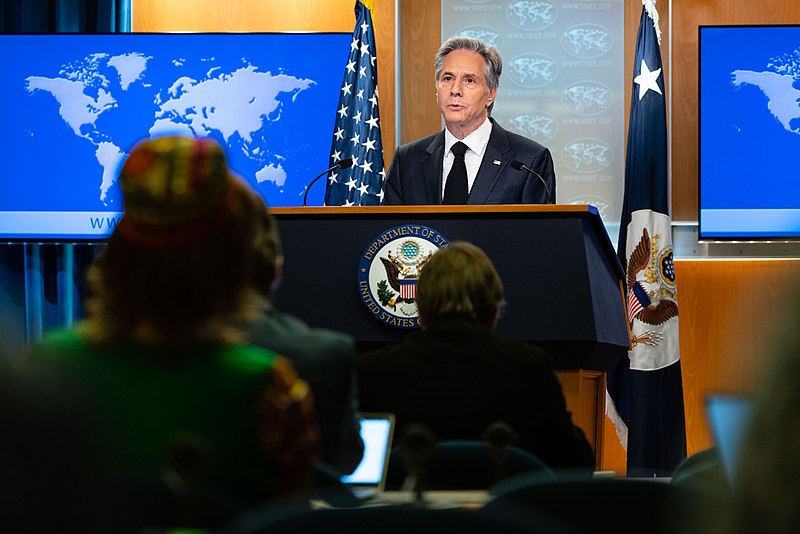
United States Secretary of State Antony Blinken called on countries that are members of the International Criminal Court to comply with the court’s arrest warrant for Russian leader Vladimir Putin. This follows the court’s issuance of the warrant for Putin on suspicion of forced deportations.
During a hearing of the Senate Appropriations Committee on Wednesday, Blinken was pressed by Republican Senator Lindsey Graham on whether he would encourage allies in Europe to “turn over” the Russian leader. The ICC last week issued an arrest warrant for Putin for war crimes of illegal deportation of hundreds of Ukrainian children. The warrant will mandate the 123 member countries of the court to arrest Putin and transfer him to The Hague for trial should he set foot on their territory.
“I think anyone who’s a party to the court and has obligations should fulfill their obligations,” said Blinken.
While the US is not a member of the ICC, President Joe Biden said that Putin has clearly committed war crimes and that the warrant for the Russian leader’s arrest was justified. Moscow has denied accusations that its forces committed war crimes throughout its invasion of Ukraine. Russia also said the warrant was unacceptable and that it was not enforceable in the country.
Ukraine is also not a member of the ICC but has granted the court jurisdiction to prosecute crimes that were committed on its territory. The ICC has no police force of its own, with member states being tasked to make the arrests.
On the same day, Moscow said a division of its Bastion coastal defense missile systems was deployed to Paramushir, one of the Kuril islands in the north Pacific region. Some of the islands are claimed by Japan as its territory. The deployment is part of a wider effort to strengthen Russian defenses in its far eastern regions, according to Russian defense minister Sergei Shoigu. The effort is also partially in response to what Shoigu described as US efforts to “contain” both Russia and China.
Shoigu’s remarks follow the meeting between Putin and Chinese President Xi Jinping the day before, where both leaders cemented their “no limits” partnership.







