


 US Comfortable With Canada Trade Standoff as Import Bans Loom
  Abbas Reaffirms November 28 Palestinian Elections
  Yemen Violence Displaces 130,000 as Civilian Toll Rises
  France Defends Netanyahu Airspace Clearance Despite ICC Warrant
  Ukrainian Drone Attacks Hit Russian Regions, Injuring at Least 12
  EU Defence Build-Up Too Slow for 2030 Russia Readiness Goal
  Evan Gershkovich Says FSB Set Trap for 2023 Russia Arrest
  Netanyahu Defends Israel at UN as Delegates Stage Walkout
  NATO Boosts Intelligence Sharing Amid Russia Hybrid Threats
  Saudi Arabia Seeks Military Support as Houthi Attacks Escalate
  North Korea Rejects Nuclear Test Warning, Calls Nuclear Status Irreversible
  Xi Calls for Deeper U.S.-China AI Cooperation in Trump Talks
  Pope Leo Backs Press Freedom After White House Media Ban
  Trump, Xi Visit US National Archives After White House Summit
  Trump, Xi Focus on Trade and AI at White House Summit
  Saudi Arabia, Turkey and Pakistan Plan Urgent Defence Talks Over Houthi Attacks
  Trump Asks Supreme Court to Restore Third-Country Deportations


 Add as a preferred source on Google
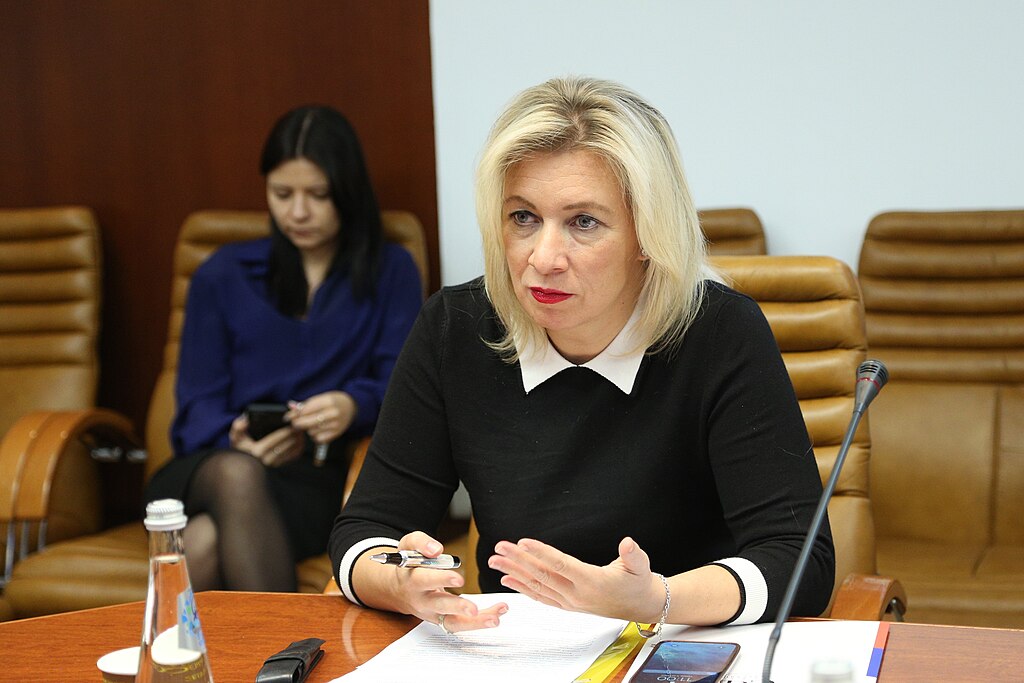
Russia’s Foreign Ministry has strongly criticized what it calls the United States’ “excessive military force” in the Caribbean Sea, where Washington has expanded operations targeting drug trafficking. The condemnation, issued Saturday by ministry spokesperson Maria Zakharova, accuses the U.S. of breaching both domestic and international laws through its militarized anti-narcotics campaign.
Zakharova stated that the use of heavy weaponry and large-scale deployments “violates the norms of international law” and raises concerns over Washington’s intentions in the region. The U.S. initiative, aimed at curbing illegal drug trade routes in the Caribbean and eastern Pacific, has reportedly resulted in the targeting of at least 14 vessels and the deaths of 61 people. In recent months, the United States has increased its military presence in the Caribbean, deploying warships, fighter jets, and thousands of troops in what officials describe as a regional security effort.
Moscow, however, views the move as an aggressive geopolitical maneuver. Zakharova reaffirmed Russia’s “firm support for the Venezuelan leadership in defending its national sovereignty,” underscoring Russia’s alignment with President Nicolás Maduro’s government. The statement follows a May meeting between Russian President Vladimir Putin and Maduro in Moscow, where the two leaders signed a strategic partnership agreement to deepen bilateral cooperation.
Venezuelan President Maduro has long accused Washington of attempting to destabilize his government and orchestrate regime change through political and economic pressure. Russia’s remarks echo these claims, positioning Moscow as a key ally of Caracas amid escalating regional tensions.
The latest Russian statement highlights growing friction between Washington and Moscow beyond the Ukraine conflict, extending their rivalry into Latin America’s geopolitically sensitive zones.







