


 US Supreme Court Revives Trump Administration Voter Citizenship Database
  EU Agrees €6.6 Billion Military Aid Funding for Ukraine
  Pope Leo Warns UN, Multilateral Groups Face Crisis
  Trump, Xi Visit US National Archives After White House Summit
  Netanyahu’s Brief US Trip Highlights Strains With Trump
  NATO Boosts Intelligence Sharing Amid Russia Hybrid Threats
  Trump Asks Supreme Court to Restore Third-Country Deportations
  US Comfortable With Canada Trade Standoff as Import Bans Loom
  Ukrainian Drone Attacks Hit Russian Regions, Injuring at Least 12
  Abbas Reaffirms November 28 Palestinian Elections
  Colombia Extradites FARC Dissident Leader ‘Spider’ to US
  What ‘Taiwan Independence’ Means as Xi Presses Trump on US Policy
  Evan Gershkovich Says FSB Set Trap for 2023 Russia Arrest
  North Korea Rejects Nuclear Test Warning, Calls Nuclear Status Irreversible
  France Defends Netanyahu Airspace Clearance Despite ICC Warrant
  Pope Leo Backs Press Freedom After White House Media Ban


 Add as a preferred source on Google
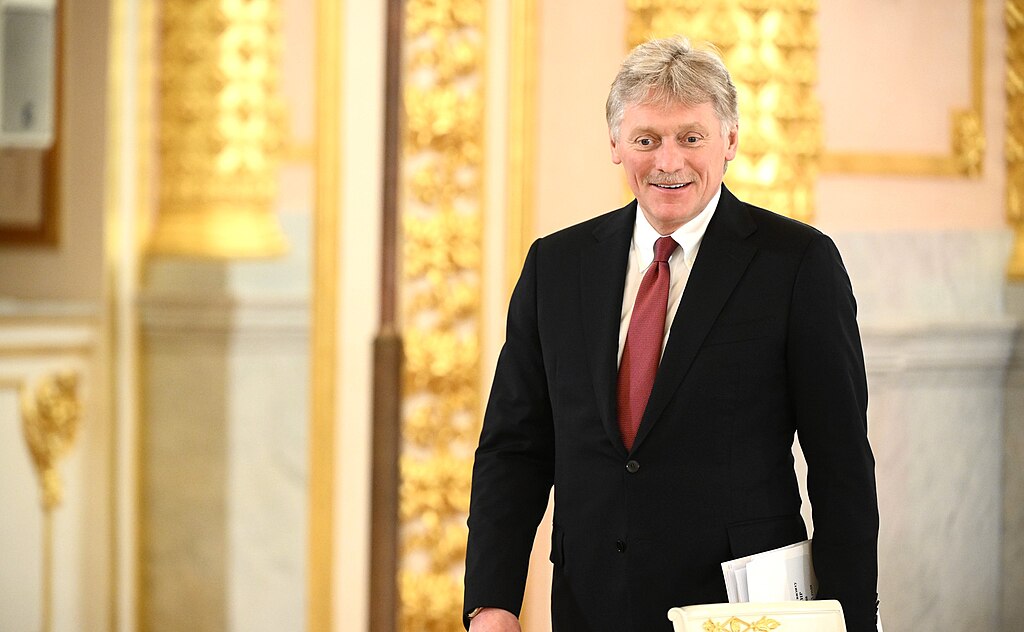
Russia has emphasized that any negotiations on reducing strategic nuclear weapons must begin with direct talks between Moscow and Washington, but that Britain and France will eventually need to be part of the process. Kremlin spokesman Dmitry Peskov said on Sunday that while the New START treaty is a bilateral agreement between Russia and the United States, the long-term stability of European and global security requires addressing the nuclear arsenals of all major powers.
The remarks follow a proposal from President Vladimir Putin earlier this month, suggesting that Russia and the U.S. voluntarily maintain for one year the warhead and missile limits set under New START, even after its expiration in 2026, provided Washington agrees to do the same. White House press secretary Karoline Leavitt described the proposal as “pretty good,” though stressed that the decision rests with President Donald Trump. Trump has previously expressed interest in expanding arms control talks to include China as well.
New START, signed in 2010 by then-U.S. President Barack Obama and Russian President Dmitry Medvedev, restricts each side to 1,550 deployed strategic nuclear warheads and 700 delivery vehicles, including missiles, submarines, and bombers. The treaty was extended in 2021 under President Joe Biden but suspended by Russia in 2023 amid escalating tensions over the war in Ukraine. Despite suspending participation, Moscow has said it continues to observe the treaty’s limits.
Russia and the United States hold the world’s largest nuclear stockpiles, while Britain and France—never parties to New START—maintain significantly smaller arsenals of roughly 250–300 warheads each. Peskov underscored that ignoring these European arsenals in future negotiations would undermine long-term security, particularly as global strategic stability grows increasingly fragile.
The future of arms control remains uncertain as Ukraine pushes for harsher sanctions on Moscow, while Washington weighs whether to pursue bilateral or expanded talks on nuclear reductions.







