


 China Holds Loan Prime Rates Steady in January as Market Expectations Align
  ECB’s Cipollone Backs Digital Euro as Europe Pushes for Payment System Independence
  Jerome Powell Attends Supreme Court Hearing on Trump Effort to Fire Fed Governor, Calling It Historic
  Why Trump’s new pick for Fed chair hit gold and silver markets – for good reasons
  China Extends Gold Buying Streak as Reserves Surge Despite Volatile Prices
  MAS Holds Monetary Policy Steady as Strong Growth Raises Inflation Risks
  BOJ Policymakers Warn Weak Yen Could Fuel Inflation Risks and Delay Rate Action
  Bank of Canada Holds Interest Rate at 2.25% Amid Trade and Global Uncertainty
  RBI Holds Repo Rate at 5.25% as India’s Growth Outlook Strengthens After U.S. Trade Deal
  BOJ Rate Decision in Focus as Yen Weakness and Inflation Shape Market Outlook


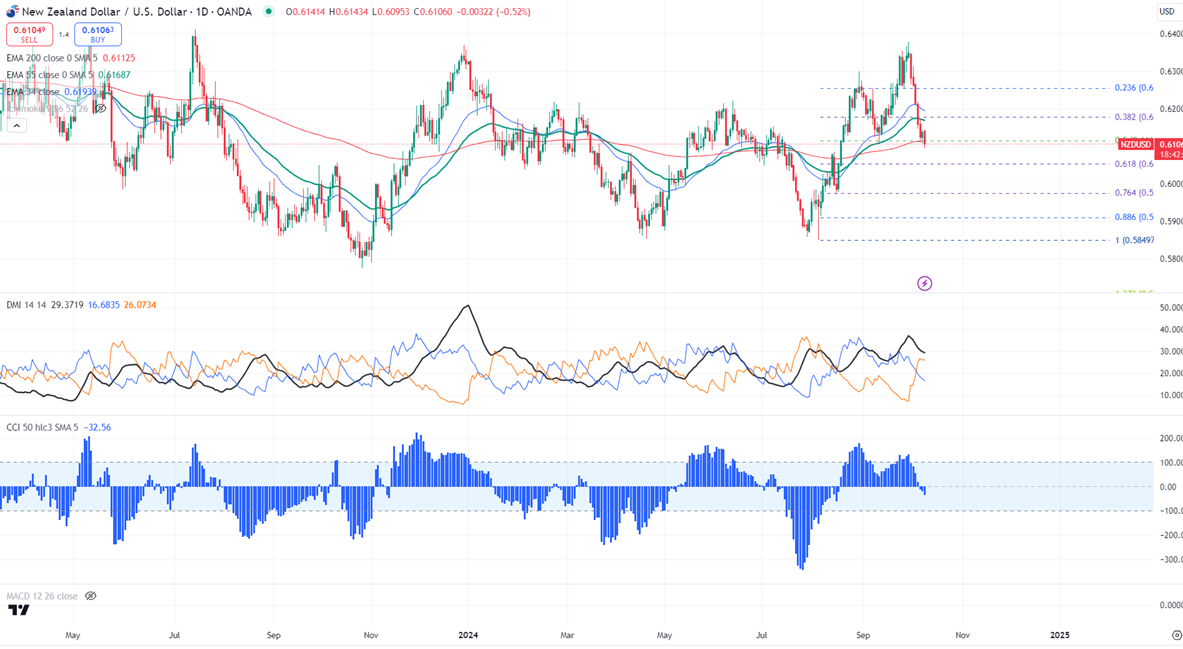
As expected, the Reserve Bank of New Zealand (RBNZ) lowered interest rates by 50 bpbs to 4.75%. The RBNZ said that it is appropriate to cut the rate by 50 bpbs to achieve and maintain low and stable inflation. The inflation is maintained with its target range 1-3% and converging on the 2 percent midpoint.
Business investment and consumer spending have been weak, and employment conditions continue to soften
Global economic growth remains below its long-run trend and is expected to remain so for the year ahead. Economic growth in the United States and China is expected to slow.
Members agreed that increasing excess capacity leads to lower inflationary pressure in the New Zealand economy. Economic growth is partly weak because of low productivity growth, but mostly due to weak consumer spending and business investment.
Major resistance- 0.6205
Near-term resistance - 0.6150
Minor support- 0.6050,0.6000
Trend reversal level- 0.6620













