


 Taiwan Central Bank Expected to Hold Interest Rates Steady Through 2027
  Asian Stocks Gain Amid Iran Conflict Uncertainty
  Australia-EU Free Trade Deal Signed After Years of Negotiations
  U.S. Oil Prices Slide as Middle East Ceasefire Talks Spark Market Optimism
  Japan's Private Sector Growth Slows in March Amid Rising Costs and Middle East Uncertainty
  U.S. Futures Slide as Iran Denies Nuclear Talks with Washington
  Suspicious Oil Market Trades Precede Trump's Iran Peace Post by 15 Minutes
  Bank of Japan Officials Signal Continued Interest Rate Hikes Amid Inflation Concerns
  Wall Street Slides as Iran War Uncertainty, Oil Surge, and AI Fears Rattle Markets
  Currency Markets Show Caution Amid U.S.-Iran Negotiations
  U.S. Stock Futures Steady as Iran Reviews U.S. Ceasefire Proposal
  Bank of Japan Holds Rates Steady Amid Iran War Inflation Fears
  Oil Prices Rebound as Iran Denies U.S. Talks Amid Gulf War Supply Fears
  Federal Reserve Balance Sheet Reduction: Brookings Research Outlines Possible Path Forward


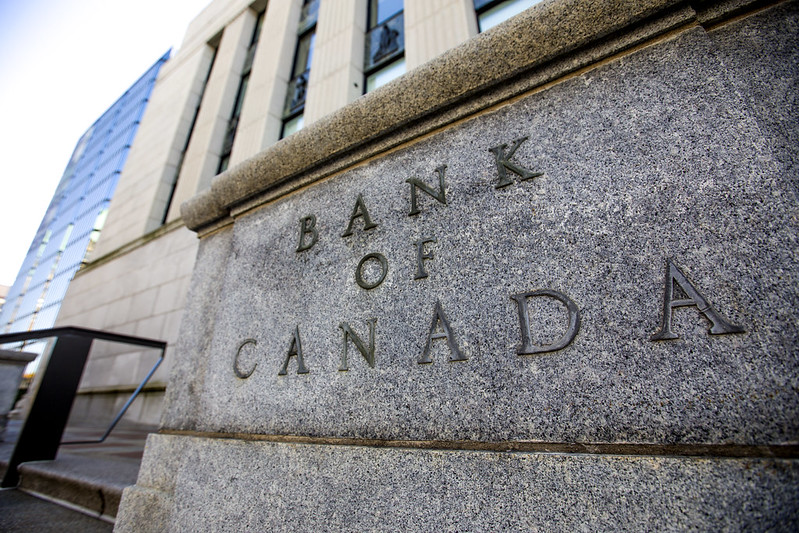
The Bank of Canada (BoC) on Wednesday kept its benchmark policy interest rate unchanged at 2.25%, a move that was widely anticipated by economists and financial markets. Governor Tiff Macklem emphasized that heightened trade uncertainty, particularly stemming from U.S. policies, makes it difficult to determine when or how interest rates might change next. This marks the second consecutive rate hold as the central bank navigates a complex global economic environment.
Macklem pointed to geopolitical risks and concerns over the independence of the U.S. Federal Reserve as key contributors to uncertainty. He cited the U.S. administration’s actions toward Federal Reserve Chair Jerome Powell, including political pressure to cut rates, as factors unsettling global markets. Macklem recently joined other global central bank leaders in publicly supporting the Fed’s independence.
In its latest quarterly Monetary Policy Report, the Bank of Canada maintained its outlook for modest economic growth through 2026 and 2027, while reaffirming that inflation is expected to remain close to the 2% target. The central bank noted that Canadian businesses are still adjusting to the impact of U.S. tariffs, with hiring intentions remaining weak and investment recovery expected to be gradual.
Canada’s economy has shown resilience despite tariffs on key sectors such as steel, aluminum, and automobiles. The BoC upgraded its 2025 growth forecast to 1.7% from an earlier estimate of 1.2%. Growth projections for 2026 remain at 1.1%, while the 2027 outlook was slightly revised down to 1.5%. Macklem reiterated that inflationary pressures from tariffs are likely to be offset by weaker demand and excess supply.
Financial markets remain divided on the future path of Canadian monetary policy. While many economists anticipate a potential rate cut to support economic growth, money markets are currently pricing in no cuts through 2026, with some expectations leaning toward a rate hike late next year. Following the announcement, the Canadian dollar strengthened modestly, reflecting investor confidence in the BoC’s cautious stance.
Household spending is expected to grow steadily, supported by previous rate cuts and rising disposable incomes, while business investment may see modest improvement over time. The Bank of Canada expressed cautious optimism that economic restructuring driven by trade pressures could eventually boost productive capacity, though the process is expected to take time.













