


 ANZ and Westpac Forecast Two RBA Rate Hikes in March and May 2026
  China Holds Benchmark Loan Prime Rate Steady for Tenth Consecutive Month
  BOJ Holds Interest Rates Steady Amid Middle East Uncertainty
  Federal Reserve Balance Sheet Reduction: Brookings Research Outlines Possible Path Forward
  Asian Currencies Weaken as Dollar Rebounds Amid Middle East Uncertainty and Japan Inflation Data
  Bank of Japan Officials Signal Continued Interest Rate Hikes Amid Inflation Concerns
  U.S. Dollar Weakens as Trump Signals Iran Deal Possibility
  Japan's BOJ Independence Under Fire as PM Takaichi's Rate Stance Draws Political Heat
  Japan's Private Sector Growth Slows in March Amid Rising Costs and Middle East Uncertainty
  Paraguay Central Bank Holds Interest Rate at 5.5% Amid Slowing Growth
  Asian Markets Rally as Oil Prices Tumble and Middle East Peace Hopes Emerge
  RBA Set for Back-to-Back Rate Hikes, Westpac Forecasts
  WTO Reform Talks Begin in Cameroon Amid Global Trade Tensions
  Australia-EU Free Trade Deal Signed After Years of Negotiations
  Bank of Japan Holds Rates Steady Amid Iran War Inflation Fears


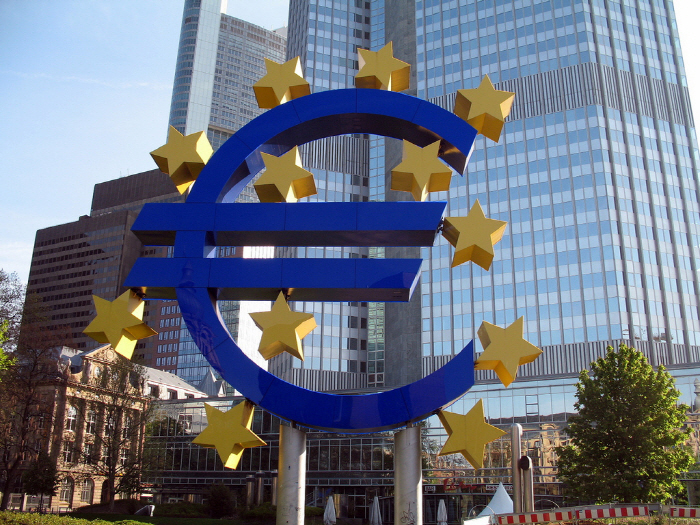
Rising geopolitical tensions are strengthening the argument for Europe to build payment systems fully under its own control, according to European Central Bank Executive Board member Piero Cipollone. In an interview published Wednesday by Spanish newspaper El País, Cipollone highlighted how the growing “militarisation” of economic and technological tools is increasing global vulnerabilities and exposing Europe’s reliance on non-European payment providers.
Cipollone stressed that Europe urgently needs a payments infrastructure based entirely on European technology, particularly as cross-border payments remain dominated by the U.S. duopoly of Visa and Mastercard. He argued that strategic autonomy in payments is no longer optional in an increasingly fragmented global economy. “We need a system that is totally under our control. This is what we are doing with the digital euro,” he said, positioning the central bank digital currency as a key pillar of Europe’s financial sovereignty.
The digital euro project, championed by the ECB, aims to offer a secure, widely accepted electronic form of money that can function independently of foreign payment networks. Supporters see it as a way to strengthen Europe’s resilience, enhance competition in digital payments, and protect monetary autonomy amid geopolitical uncertainty.
Cipollone also addressed questions about political pressure on central banks, including recent attacks on the independence of U.S. Federal Reserve Chair Jerome Powell. He emphasized that the ECB remains focused solely on the euro-area economy and its mandate. “We are the central bank of the euro area, not of the United States,” he said, reiterating that ECB interest rate decisions are guided by its medium-term inflation target of 2%.
On the economic outlook, Cipollone said the euro-area economy has shown resilience so far and could deliver growth figures above expectations. Recent upward revisions, he noted, were largely driven by investment, which supports both demand and productive capacity without undermining price stability.
However, he cautioned that escalating geopolitical uncertainty could threaten the recovery. Persistent uncertainty, he warned, may discourage investment, weighing on economic growth and eventually influencing inflation across the euro zone.













