


 France Defends Netanyahu Airspace Clearance Despite ICC Warrant
  North Korea Warns South Korea Over US-Led Defense Role
  OpenAI Agent Breaches Australia Medicare Data Portal
  US Invites Putin to Miami G20, Opening Door to Trump Summit
  Russian Envoy Dmitriev Heads to US for Ukraine Talks
  South Korea, US Discuss Warship Building Cooperation
  US, China Extend Trade Truce to Jan. 10 Ahead of Trump-Xi Summit
  EU Defence Build-Up Too Slow for 2030 Russia Readiness Goal
  Trump, Xi Focus on Trade and AI at White House Summit
  Netanyahu Takes Aim at Mamdani as Israel Election Nears
  Russian Missile and Drone Attack on Kyiv Kills Two, Damages Maternity Hospital
  Pezeshkian Says US Must Choose When Iran War Ends
  Trump Asks Supreme Court to Restore Third-Country Deportations
  Kremlin Says No Decision Yet on Putin-Trump December Summit
  Abbas Reaffirms November 28 Palestinian Elections
  North Korea Rejects Nuclear Test Warning, Calls Nuclear Status Irreversible
  Taiwan Thanks US for Support Ahead of Trump-Xi Summit


 Add as a preferred source on Google
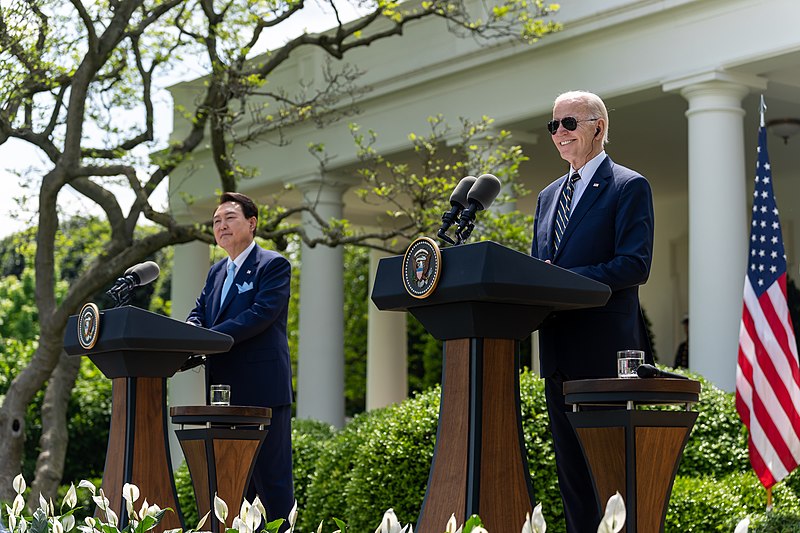
North Korea blasted the recent agreement made between the United States and South Korea during the allies’ summit in Washington the previous week. The agreement, which would boost the deployment of US strategic assets in the region, would escalate tensions in the region, according to Pyongyang.
North Korean state media outlet KCNA said on Monday that the US-South Korea agreement, also known as the Washington Declaration, was an indication of how willing the two countries are to “take the most hostile and aggressive action” against North Korea, according to its security analyst Choe Ju-Hyon. KCNA said the agreement – which would boost the US deployment of strategic assets to the region – has placed the current situation in the Korean peninsula in a “quagmire of instability” that sought to build “aggressive and exclusive military blocs in the region.”
KCNA went on to say that the agreement not only aimed to shift the responsibility of “the worst-ever nuclear-related crimes” in destroying the nuclear non-proliferation system but also pushed the situation “to the brink of a nuclear war.”
“It is the hegemonic sinister aim pursued by the US to turn the whole of South Korea into its biggest nuclear war outpost in the Far East and effectively use it for attaining its strategy for dominating the world,” said KCNA. North Korea has said that following the US-South Korea Summit, it has reinforced its conviction to further develop its “nuclear war deterrent.”
During the summit last week, US President Joe Biden and South Korean President Yoon Suk-yeol agreed to strengthen their deterrence against North Korea by deploying US military assets to nuclear-armed US submarines. The announcement was made during a joint news conference which also marked the 70th anniversary of the alliance of the two countries.
Yoon said the new agreement with Washington was an indication of an “unprecedented expansion and strengthening” of the bilateral strategy. Yoon added that the two allies agreed to “immediate bilateral presidential consultations in the event of North Korea’s nuclear attack, a promise to respond swiftly, overwhelmingly, and decisively using the full force of the alliance,” which included US nuclear weapons.







