


 Kremlin Says No Decision Yet on Putin-Trump December Summit
  Saudi Arabia, Turkey and Pakistan Plan Urgent Defence Talks Over Houthi Attacks
  Ukrainian Drone Attacks Hit Russian Regions, Injuring at Least 12
  North Korea Warns South Korea Over US-Led Defense Role
  Taiwan Thanks US for Support Ahead of Trump-Xi Summit
  Russian Missile and Drone Attack on Kyiv Kills Two, Damages Maternity Hospital
  Abbas Reaffirms November 28 Palestinian Elections
  Najib Razak Seeks Stay of 15-Year 1MDB Prison Sentence
  Trump, Xi Focus on Trade and AI at White House Summit
  Judge Orders Trump to Restore White House Access for CNN, MS NOW and Politico
  Netanyahu Defends Israel at UN as Delegates Stage Walkout
  Trump Asks Supreme Court to Restore Third-Country Deportations
  Mexico-US Trade Talks Delayed to October as Tariff Negotiations Continue
  Ghana Says Western Support Growing for Slave Trade Reparations
  US Senate Rejects Iran War Powers Resolution in 50-49 Vote
  NATO Boosts Intelligence Sharing Amid Russia Hybrid Threats
  Xi Calls for Deeper U.S.-China AI Cooperation in Trump Talks


 Add as a preferred source on Google
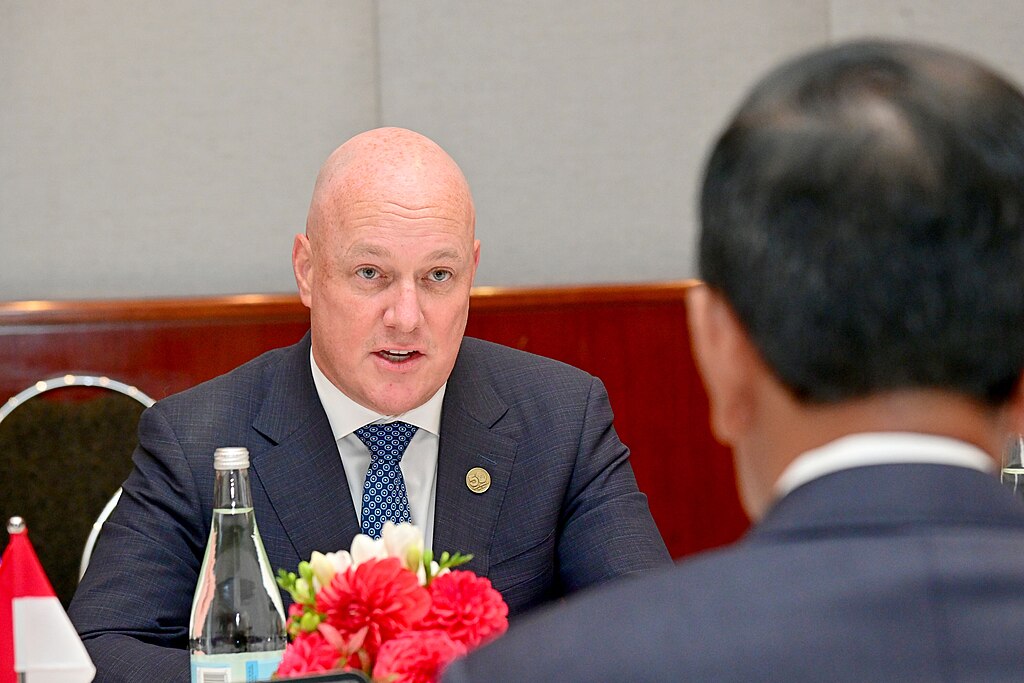
New Zealand has decided not to accept an invitation from U.S. President Donald Trump to join his newly launched Board of Peace, Prime Minister Christopher Luxon confirmed in a statement issued on Friday. The decision highlights New Zealand’s cautious approach toward emerging international initiatives that operate outside established global frameworks such as the United Nations.
President Trump introduced the Board of Peace last week, initially positioning it as a mechanism to help stabilize the fragile ceasefire in Gaza. However, Trump has since suggested that the body could expand its mandate and take on a broader role in addressing global security and diplomatic challenges involving major powers. Dozens of world leaders were invited to participate, and several countries have already agreed to join.
Among those accepting the invitation are key Middle Eastern nations, including Turkey, Egypt, Saudi Arabia, and Qatar, as well as major emerging economies such as Indonesia. In contrast, traditional Western allies of the United States and other global powers have responded more cautiously, with New Zealand now formally opting out.
Prime Minister Luxon explained that New Zealand chose not to join the Board of Peace “in its current form,” signaling that concerns remain about the structure, purpose, and long-term direction of the initiative. Foreign Minister Winston Peters reinforced this position in a post on X, stating that many regional states are already contributing directly to the board’s efforts related to Gaza, and that New Zealand’s involvement would not provide significant additional value.
Peters also emphasized New Zealand’s longstanding commitment to the United Nations, noting that the country is a founding member and a consistent supporter of the UN Charter. He stressed that any new international body must be complementary to, and consistent with, existing UN principles and processes. According to Peters, there is still a lack of clarity around the board’s scope, authority, and future role, making it premature for New Zealand to participate.
New Zealand’s decision reflects a broader hesitation among some U.S. allies regarding new diplomatic structures proposed by the Trump administration, particularly those that may overlap with or challenge established multilateral institutions. While the Board of Peace continues to gain support in certain regions, questions around legitimacy, coordination, and long-term effectiveness remain central to the global response.







