


 OpenAI Rejects Apple Trade Secret Theft Claims
  EU Defence Build-Up Too Slow for 2030 Russia Readiness Goal
  What ‘Taiwan Independence’ Means as Xi Presses Trump on US Policy
  Honduras Court Drops Charges Against Ex-President Juan Orlando Hernandez
  Najib Razak Seeks Stay of 15-Year 1MDB Prison Sentence
  Rodrigo Duterte Makes First Public Appearance at ICC in 18 Months
  Sara Duterte Posts Bail Over Grave Threats Case
  South Korea, US Discuss Warship Building Cooperation
  ICE Agent Arrested in Minneapolis Over Venezuelan Man Shooting
  Mexico-US Trade Talks Delayed to October as Tariff Negotiations Continue
  Yemen Violence Displaces 130,000 as Civilian Toll Rises
  Sudan Rejects US Legitimacy Remarks, Defends Sovereignty
  France Defends Netanyahu Airspace Clearance Despite ICC Warrant
  Ghana Says Western Support Growing for Slave Trade Reparations
  US Judge Dismisses Imran Ahmed Deportation Lawsuit
  Judge Blocks Trump Rule Limiting Foreign Student Visas
  Netanyahu’s Brief US Trip Highlights Strains With Trump


 Add as a preferred source on Google
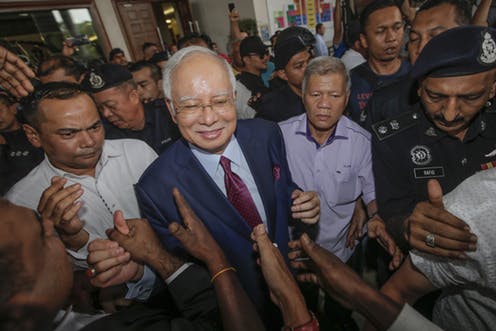
Malaysia’s former prime minister Najib Razak is set to learn on Monday whether he can serve the remainder of his jail sentence under house arrest, a decision that could have major political and legal implications for the country. The ruling comes as part of two closely watched court decisions this week that will test Prime Minister Anwar Ibrahim’s commitment to fighting corruption amid lingering controversies surrounding the 1MDB scandal.
Najib has been incarcerated since 2022 after being convicted of corruption and money laundering linked to 1Malaysia Development Berhad (1MDB), the state investment fund he co-founded in 2009. Originally sentenced to 12 years in prison, his term was reduced by half last year following a decision by a pardons board chaired by Malaysia’s former king. However, Najib claims that the monarch also issued an “addendum order” allowing him to serve his remaining sentence at home.
For months, government officials denied the existence of such a document. More recently, the former king’s office and a federal lawyer confirmed that the addendum order had indeed been issued, prompting Najib to seek a court order compelling the government to acknowledge and enforce it. The Kuala Lumpur High Court is expected to rule on this request on Monday.
Just days later, on December 26, the same court will deliver its verdict in the largest remaining 1MDB trial involving Najib. He faces four additional corruption charges and 21 counts of money laundering related to the alleged illegal transfer of about 2.2 billion ringgit from 1MDB. If convicted, Najib could face up to 20 years in prison for each charge, along with hefty financial penalties.
Analysts warn that any ruling favorable to Najib could provoke public backlash, especially among supporters of Anwar, who rose to power in 2022 on an anti-corruption platform. Critics have already questioned Anwar’s reform agenda after prosecutors dropped several cases involving Najib and recently abandoned an appeal in a graft case against Najib’s wife, Rosmah Mansor.
Najib maintains his innocence, arguing he was misled by fugitive financier Jho Low and other officials. As the court decisions approach, the outcome is widely seen as a critical test of Malaysia’s judiciary, prosecution, and political will to uphold accountability in one of the country’s biggest corruption scandals.







