


 NASA Cuts Boeing Starliner Missions as SpaceX Pulls Ahead
  CDC Vaccine Review Sparks Controversy Over Thimerosal Study Citation
  SpaceX Pivots Toward Moon City as Musk Reframes Long-Term Space Vision
  Astronomers have discovered another puzzling interstellar object − this third one is big, bright and fast
  Eli Lilly’s Inluriyo Gains FDA Approval for Advanced Breast Cancer Treatment
  FDA Lifts REMS Requirement for CAR-T Cell Cancer Therapies
  Trump Signs Executive Order to Boost AI Research in Childhood Cancer
  Is space worth the cost? Accounting experts say its value can’t be found in spreadsheets
  Trump and Merck KGaA Partner to Slash IVF Drug Costs and Expand Fertility Coverage
  Cogent Biosciences Soars 120% on Breakthrough Phase 3 Results for Bezuclastinib in GIST Treatment


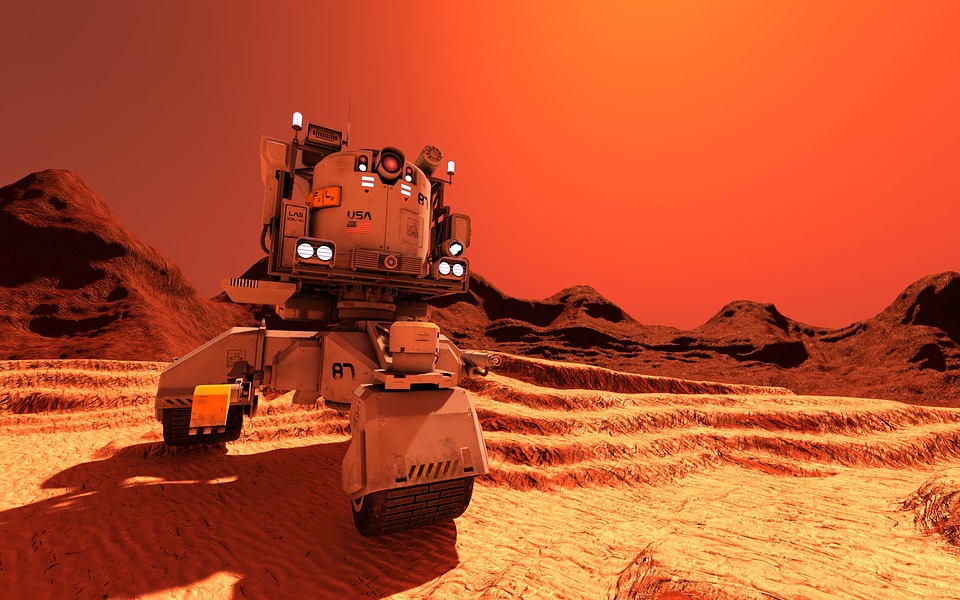
NASA and other space agencies all over the world are also preparing for the upcoming missions to Mars. However, following the US’ successful ending of the Space Race against the Soviet Union, it was revealed that they made an unsuccessful proposal to colonize the red planet decades ago.
YouTube Channel DarkDocs revealed that the Soviet Union once had plans to get to Mars following the historic Apollo 11 mission that brought the first men on the Moon. In the channel’s series “Secret Failed Soviet Moon Landing,” the Kremlin was still determined to outdo Washington in terms of space exploration even after the success of Apollo 11. Aerospace engineer Mikhail Tikhonravov proposed the Soviet’s human mission to Mars called the Martian Piloted Complex or MPK.
Tikhonravov’s plan involved an N-1 launcher that had yet to be tested in order to put together a nuclear-powered spacecraft into the Earth’s orbit. The spacecraft would then propel itself with the use of electric-reactive engines powered by a nuclear generator. However, despite the ambitious plans presented, it was ultimately unsuccessful. All four attempts to launch the N-1 failed, the second of which resulted in the vehicle crashing to its launch pad shortly after liftoff. The crash caused one of the largest artificial non-nuclear explosions.
“Some of their plans were fantastically ambitious,” said the narration. “One or more of the outrageous proposals was a plan to get a six-man team to land on Mars and live there for a year. These cosmonauts could then assemble a nuclear-powered train in which to traverse and explore the Red Planet. 11 men and 14 dogs died in Russian tests for the Mars mission.”
One of the goals that space agencies have in their upcoming Mars missions is to search for signs of life. It is long believed that bodies of water once existed on what is now a dry neighboring planet. A study suggests that life on Mars may still be existing under the surface or at least proof of life.
Previous studies of the Red Planet found that these bodies of water and glaciers existed between 4.1 and 3.7 billion years ago. This was known as the Noachian period. Over time and as temperatures changed causing the ice on Martian glaciers to melt, the remnants of ice may have melted into the surface.







