


 US Federal Register Drops Alibaba Qwen AI Search Tool
  Trump Bans CNN, MS NOW and Politico From White House
  US Northeast Airports Resume Operations After Telecom Outage Disrupts Thousands of Flights
  China Reviews Broadcom Switch Use in State Data Centres
  SpaceX Nasdaq 100 Weight to More Than Double in Rebalance
  OpenAI Urges US-Led Global Standards for Frontier AI
  Apple Pay Set for India Launch With Axis Bank
  Trump Plans Federal AI Force and AI Czar
  White House Bars CNN, MS NOW and Politico Reporters
  Prysmian, Rio Tinto Supply Low-Carbon Cables for Amazon Ohio Data Center
  Goldman Sachs Names Simon Lyons UK Investment Banking Co-Head
  Novo Nordisk Weighs Direct NYSE Listing to Boost U.S. Profile
  Westinghouse Targets $50 Billion Valuation in U.S. IPO
  Supertanker Orders Surge as US-Iran War Reshapes Oil Trade
  Paramount Skydance Faces $30 Million Film Penalty in Warner Bros. Deal
  Paramount-Warner Bros $110 Billion Deal Draws Antitrust Backlash
  Nike Earnings at Risk as UBS Cuts Price Target to $42


 Add as a preferred source on Google
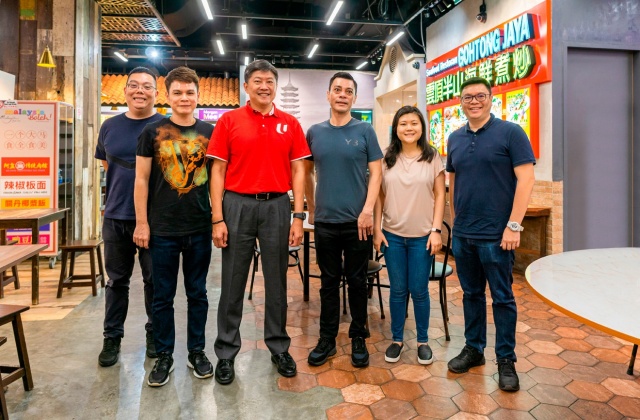
Kim Tan Siong is the eldest in his family, and at an early age, he started to work to support his siblings. His father was a container driver at the Port of Singapore Authority, while his mother was a factory worker.
Tan Siong’s inspiring story - How he started his multimillion food empire
While both of his parents had jobs, they still could not make ends meet. They barely had money, and they really need to earn more because they were hungry. So at 15, he dropped out of school and started working.
Prior to this, when he was 13, he has been helping his grandfather with running his Teochew fishball noodle stall at the Redhill Hawker Market in Singapore. The humble businessman said that he learned a lot from his grandfather, and he was also earning some pocket money.
At that point, he decided to stop going to school while his siblings continue with their studies. He helped his grandfather in the morning and worked in other neighboring stalls in the evening as a part-time worker to earn extra.
Kim Tan Siong shared in his interview with The Straits Times that he realized he wanted to start his own business, and his uncle also saw his interest in the trade. His uncle then found him a stall and set up his own fishball noodle store in Boon Lay.
In 1995, he set up a stall just outside of the National Library and named his store Fei Siong fishball noodle. His business started to grow from there, and since he needed help in the store now, he brought his mother and brother Kim Beng to the store.
From his original outlet, his business continues to grow, and he knew he succeeded. He expanded his brand and opened a few more stores around Singapore. In 1998, his youngest brother Kim Leng dropped out of school to help Kim Tan Siong, and they started to work together. Leng’s classmate Mun Kit joined their business as a partner in 2001.
Expanding the business in shopping malls
The Fei Siong group decided to open stores in shopping malls, and they proceeded with the plan in 2006. They opened “Eat,” a fishball noodle shop. They built another store called Encik Tan, and another outlet, the Malaysia Boleh!, followed.
Since Malaysia Boleh! Is a street-style food stall concept store, Kim Tan Siong persuaded other hawkers to join. In this way, they could also preserve the authenticity of the food they serve, and many have signed up and agreed to sell their recipes and brand.
Today, Kim Tan Siong said that more varieties are set to come to their outlets as more heritage food are coming. The Fei Siong Group is planning to expand to South Korea and Europe, but the COVID-19 pandemic pushed back their plans.
He said they could try again in two years once the pandemic calms down. The company has 15 signature brands and 150 stalls that give them a profit of $150 million a year.
Finally, for Kim Tan Siong, “a school diploma is useful but at the end of the day, it is how we treat people from different walks of life that is more important.”







