


 Zelenskiy Warns Russia Preparing Major Attack on Ukraine
  Judge Orders Trump to Restore White House Access for CNN, MS NOW and Politico
  Mexico-US Trade Talks Delayed to October as Tariff Negotiations Continue
  Netanyahu Takes Aim at Mamdani as Israel Election Nears
  Russian Strikes Kill Eight Across Ukraine as Energy Sites Hit
  Gaza Faces Evacuation Crisis as War-Damaged Buildings Risk Collapse
  Macron Challenges Trump’s Gaza Peace Claims at UN
  Taiwan Vows to Advance US Arms Sales Ahead of Trump-Xi Meeting
  US Invites Putin to Miami G20, Opening Door to Trump Summit
  Marco Rubio to Meet Russia’s Lavrov in New York
  South Korea, US Discuss Warship Building Cooperation
  Trump Board of Peace Unveils $2.45 Billion Gaza Recovery Plan
  Taiwan Thanks US for Support Ahead of Trump-Xi Summit
  Iran Vows ‘Crushing’ Response as US Talks Continue
  Lula and Flavio Bolsonaro Tied in Brazil Runoff Poll
  Russian Missile and Drone Attack on Kyiv Kills Two, Damages Maternity Hospital
  US, China Extend Trade Truce to Jan. 10 Ahead of Trump-Xi Summit


 Add as a preferred source on Google
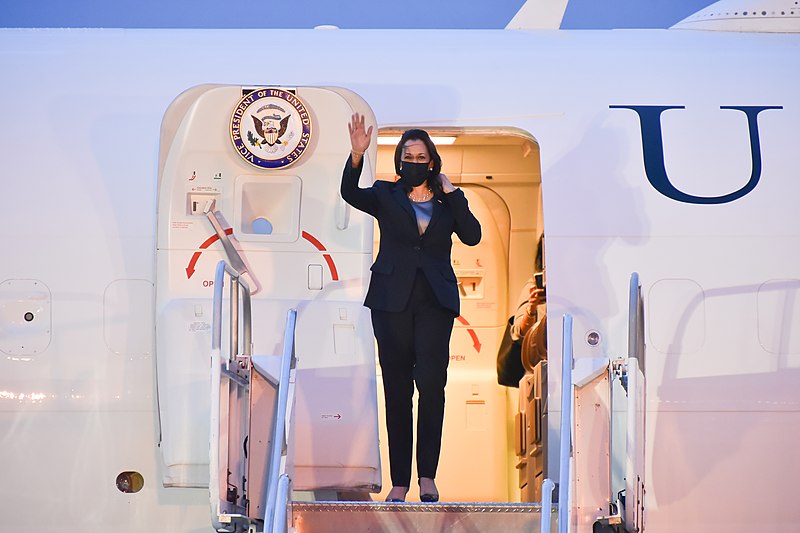
Vice President Kamala Harris wraps up her visit to Southeast Asia this week in her visits to Singapore and Vietnam. Prior to visiting Hanoi, Harris’s trip to the country was delayed out of concerns of a possible incident of the so-called Havana syndrome.
After Harris’s visit to Singapore, her trip to Vietnam was delayed by a few hours, following concerns relayed to her office by the US Embassy in Vietnam of a possible mysterious health incident. The “anomalous” health incident is a term used by the government that refers to the Havana syndrome that has affected US diplomats over the years.
“Earlier this evening, the Vice President’s traveling delegation was delayed from departing Singapore because the Vice President’s office was made aware of a report of a recent possible anomalous health incident in Hanoi, Vietnam. After careful assessment, the decision was made to continue with the Vice President’s trip,” said US Embassy Hanoi spokesperson Rachel Chen.
White House Press Secretary Jen Psaki also assured reporters during the press briefing at the time of Harris’s safety. Psaki was also pressed on whether Harris or her staff were possibly being targeted, and she said that no additional assessments were made during the time. However, Psaki confirmed that the officials that were affected by the mysterious health issue were not traveling with Harris but did not say how many officials suffered from the mysterious condition.
During Harris’s visit to Vietnam, making her the first US Vice President to visit the country, she gave the assurance that the US government will continue to work with its allies to protect the women and children that may get left behind in Afghanistan in light of the recent evacuation efforts being made.
“There’s no question that any of us who are paying attention are concerned about that issue in Afghanistan,” said the vice president regarding the protection of women and children in the war-torn country that has now surrendered to the Taliban.
Harris’s visit also comes as the Biden administration looks to restore ties with Asian countries, especially as tensions remain with China and its rising influence over the region.







