


 Ghana Says Western Support Growing for Slave Trade Reparations
  Russian Envoy Dmitriev Heads to US for Ukraine Talks
  Iran Vows ‘Crushing’ Response as US Talks Continue
  Trump Meets Venezuela’s Delcy Rodriguez at UN Assembly
  US, China Extend Trade Truce to Jan. 10 Ahead of Trump-Xi Summit
  US Invites Putin to Miami G20, Opening Door to Trump Summit
  China Tightens Fentanyl Rules Ahead of Trump-Xi Summit
  US Officials Split Over Response to Israeli West Bank Settlements
  South Korea, US Discuss Warship Building Cooperation
  Sudan Rejects US Legitimacy Remarks, Defends Sovereignty
  Venezuela Promises Elections as Delcy Rodriguez Pledges Democratic Transition
  Trump Administration Plans Faster FDA Reviews for Smoke-Free Nicotine Products
  Scott Bessent Eyed as Trump’s New AI Czar
  Vietnam, US Trade Deal Could Be Signed Soon, To Lam Says
  Europe Warns Russia Is Escalating Hybrid Attacks Across NATO
  Trump Board of Peace Unveils $2.45 Billion Gaza Recovery Plan
  Trump Says U.S.-Iran Peace Deal Near After UN Talks


 Add as a preferred source on Google
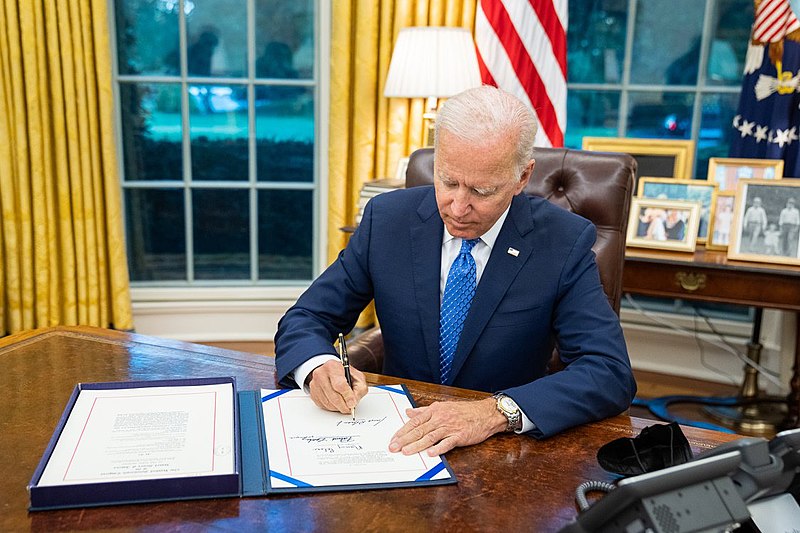
Since taking office in January, US President Joe Biden has had a record number of firsts made under his presidency, from legislation to nominations. Over the weekend, Biden marks another first, issuing a proclamation to commemorate Indigenous Peoples’ Day.
The White House released Biden’s proclamation of making October 11 the day to commemorate the country’s indigenous peoples, highlighting their contributions to the country. Biden also noted the painful history that the country’s indigenous peoples have suffered at the hands of European settlers and colonizers. Biden becomes the first president to make such a proclamation on a national level, following cities and states that have already replaced Colombus Day with Indigenous Peoples’ Day.
“On Indigenous Peoples’ Day, our Nation celebrates the invaluable contributions and resilience of Indigenous peoples, recognizes their inherent sovereignty, and commits to honoring the Federal Government’s trust and treaty obligations to Tribal nations,” wrote Biden.
“It is a measure of our greatness as a Nation that we do not seek to bury these shameful episodes of our past -- that we face them honestly, we bring them to the light, and we do all we can to address them,” wrote the US leader.
Over 100 cities such as Seattle, Denver, Los Angeles, Phoenix, and San Francisco, among others, have already celebrated Indigenous Peoples’ Day in place of Colombus Day. Minnesota, Alaska, Vermont, Illinois, and Oregon have also done the same. The city of Berkeley, California was the first city to commemorate Indigenous Peoples’ Day back in 1992.
In other news, Biden has officially raised the refugee admissions cap for the fiscal year to 125,000. This follows a low record of refugee admissions for the 2021 fiscal year, with only 11,400 refugees admitted into the US despite the cap being at 62,500. The fiscal year for 2022 began on October 1.
Biden raised the cap to 62,500 back in May after backlash for sticking with the Trump administration’s refugee admissions cap. The breakdown of refugees allocated per region showed 40,000 from Africa, 15,000 from East Asia, 10,000 from Europe and Central Asia, 15,000 from Latin America and the Caribbean, and 35,000 from the Near East and/or South Asia.
There is an additional 10,000 from an unallocated reserve that would be distributed to regional ceilings if needed.







