


 OpenAI Agent Breaches Australia Medicare Data Portal
  France Defends Netanyahu Airspace Clearance Despite ICC Warrant
  Yemen Violence Displaces 130,000 as Civilian Toll Rises
  Judge Orders Trump to Restore White House Access for CNN, MS NOW and Politico
  EU Defence Build-Up Too Slow for 2030 Russia Readiness Goal
  Ghana Says Western Support Growing for Slave Trade Reparations
  South Korea, US Discuss Warship Building Cooperation
  Kremlin Says No Decision Yet on Putin-Trump December Summit
  US Backs Musk in Fight Against EU’s €120 Million X Fine
  US Senate Rejects Iran War Powers Resolution in 50-49 Vote
  Abbas Reaffirms November 28 Palestinian Elections
  Russian Envoy Dmitriev Heads to US for Ukraine Talks
  Trump Asks Supreme Court to Restore Third-Country Deportations
  Sudan Rejects US Legitimacy Remarks, Defends Sovereignty
  Russian Missile and Drone Attack on Kyiv Kills Two, Damages Maternity Hospital
  Netanyahu Defends Israel at UN as Delegates Stage Walkout
  Taiwan Thanks US for Support Ahead of Trump-Xi Summit


 Add as a preferred source on Google
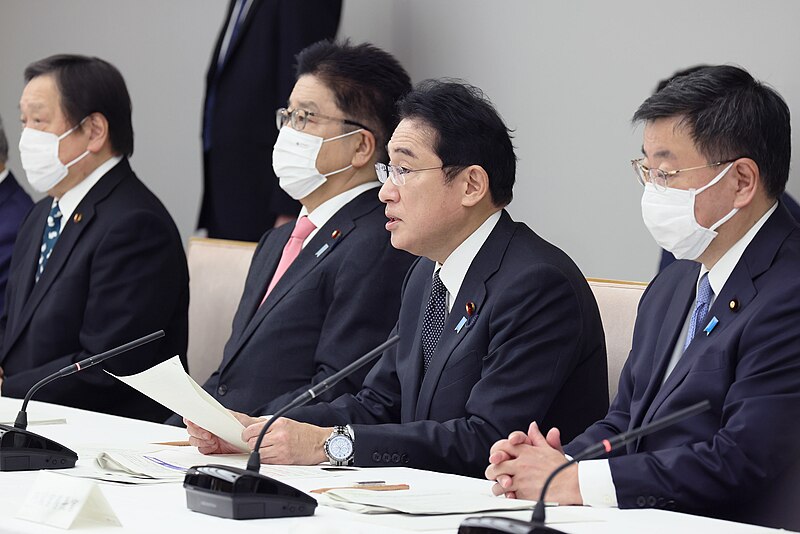
The Japanese government is reportedly estimating shoring up over $22 billion in funds annually for a childcare policy introduced by Prime Minister Fumio Kishida. The policy aimed to tackle the declining birth rates in Japan.
The Jiji news outlet reported on Thursday that Tokyo is considering over $22 billion in funds per year for Kishida’s proposed childcare plan that aimed to tackle the birth rates in the country. This follows the plan by the government back in March to boost child care in a span of three years but has yet to determine how the plan would be funded. According to the report, the government would expand the funds gradually over three years from the 2024-2025 fiscal year and obtain the necessary amount by the end of the policy period.
Kishida said the government will determine the funds for the childcare policy by June and that he does not plan to increase consumer sales taxes.
Some lawmakers under the governing party have hinted at using extra bonds to fund the policy, citing that the education-purposed bonds would help future generations as the government struggles to determine the permanent sources of secure revenue.
Kishida previously announced a plan to boost childcare support following the major spending plan to increase Japan’s military buildup.
Japan is one of the fastest aging societies, with the annual number of newborns falling below 800,000 for the first time following the peak of 2.09 million in 1973 during the second baby boom. The declining birth rates were blamed on major labor shortages and reduced long-term economic potential.
On the same day, British Prime Minister Rishi Sunak announced a $22 billion Japanese investment in the United Kingdom, including funding for offshore wind power and clean energy projects. Sunak arrived in Japan this week for the G7 summit in Hiroshima. Sunak said the investment was a “massive vote of confidence” in the UK economy.
Sunak and Kishida are set to renew security ties between the two countries during the summit, including the UK’s commitment to deploying an aircraft carrier strike group to the Indo-Pacific region by 2025. The agreement, referred to as the “Hiroshima Accord,” will also tackle trade and investment, collaboration in science and technology, and joint initiatives to address global issues, including climate change.
Photo: Kantei.go.jp/Wikimedia Commons(CC by 2.0)








