


 Trump Buys Up to $25M in Meta Stock, Invests in SpaceX Debt
  Italy Approves Electoral Reform Ahead of 2027 Election
  US Suspends Microsoft, Adobe From Green Card Program
  Trump Rallies in Texas as Republicans Face Tight Midterm Races
  Saudi Arabia Probes Flydubai Cockpit Attack
  Iran Refuses to Halt Uranium Enrichment Amid US Nuclear Demands
  US Charges Maduro and Wife With Torture Conspiracy
  Hegseth Praises USS Abraham Lincoln Crew After Record Iran War Deployment
  US, EU Push for Action Against Asia’s Excess Factory Capacity
  EU Rejects Italy, Greece Calls for Fiscal Rule Flexibility
  US-Led Coalition Targets Global Factory Overcapacity
  Zelenskiy Criticizes US as Russian Strikes Kill 78 in Ukraine
  Maduro, Wife May Face New US Torture Charges
  Ripple Chairman Chris Larsen Donates $22.5 Million Ahead of US Midterms
  US-Taiwan Ties Remain Strong as Taipei Urges Timely Arms Deliveries
  Trump Says He Deserves 2026 Nobel Peace Prize Despite Uncertain Chances
  Venezuela’s Machado Calls for Elections by July 2027


 Add as a preferred source on Google
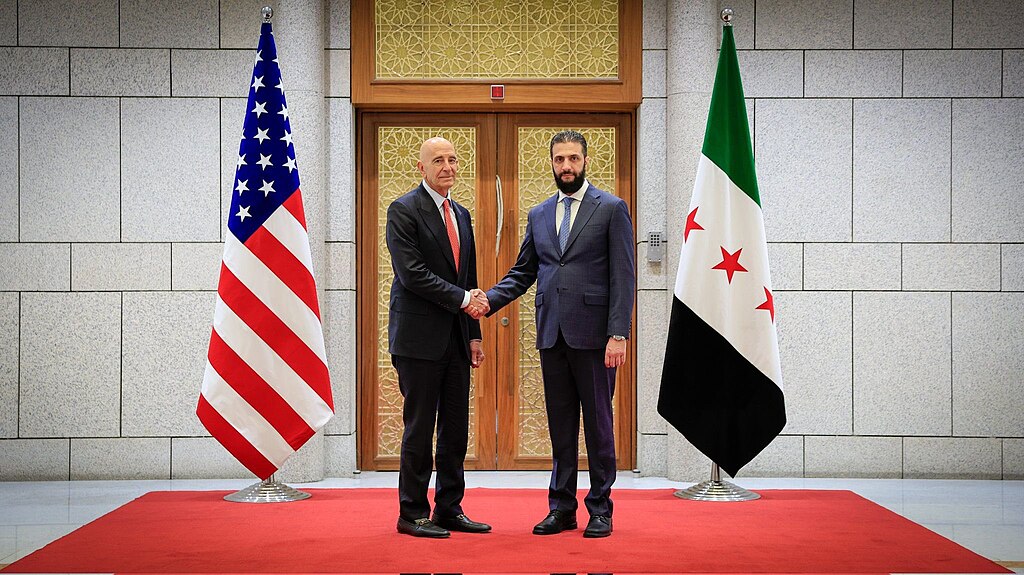
Israel and Syria are moving closer to a potential de-escalation agreement that could ease years of conflict, according to U.S. Special Envoy for Syria Tom Barrack. Speaking during the U.N. General Assembly in New York, Barrack revealed that the proposed deal would halt Israeli attacks in exchange for Syria agreeing not to move heavy machinery or equipment near the Israeli border. This arrangement is seen as the first step toward a broader security deal currently under negotiation.
The talks, encouraged by U.S. President Donald Trump, aim to create a framework for stability in the region. However, Barrack noted that progress has been slower than anticipated due to the Jewish New Year holiday, Rosh Hashanah, and unresolved sticking points between the two sides. “I think everybody is approaching it in good faith,” Barrack said, stressing cautious optimism about the outcome.
Syria, under the leadership of President Ahmed al-Sharaa following the overthrow of Bashar al-Assad last December, has been pressing for an end to Israeli airstrikes and the withdrawal of Israeli troops from southern territories. Israel, however, remains wary of Damascus’ Islamist-led government and its leader’s former jihadist ties. The Israeli government has repeatedly voiced concerns about security risks and has urged Washington to keep Syria decentralized and militarily weakened.
Tensions escalated sharply after Israel abandoned the 1974 truce on December 8, the same day Assad was ousted by rebel forces. Since then, Israel has conducted more than 1,000 airstrikes and over 400 ground incursions into Syrian territory, according to Sharaa. The Syrian leader expressed skepticism during remarks in New York, suggesting that Israel might be deliberately slowing down the negotiation process. “We are scared of Israel. We are worried about Israel. It’s not the other way around,” Sharaa warned.
The possible agreement marks a rare diplomatic opening between two historical adversaries. Yet, deep mistrust, territorial disputes, and competing political agendas mean that even if signed, the road to lasting peace will remain uncertain.







